Ecology & Environment
Species Recovery Programme
The 22 species the Government of India runs targeted recovery programmes for.
The third component of Integrated Development of Wildlife Habitats, a centrally sponsored scheme of the Ministry of Environment, Forest and Climate Change running since 2008-09.
22 entries, 32 species. Bustard, Marine Turtles and Vultures each stand for several, so how many species are on the programme and how many entries it carries are different questions.
The list
22 entriesSnow LeopardPanthera uncia
VU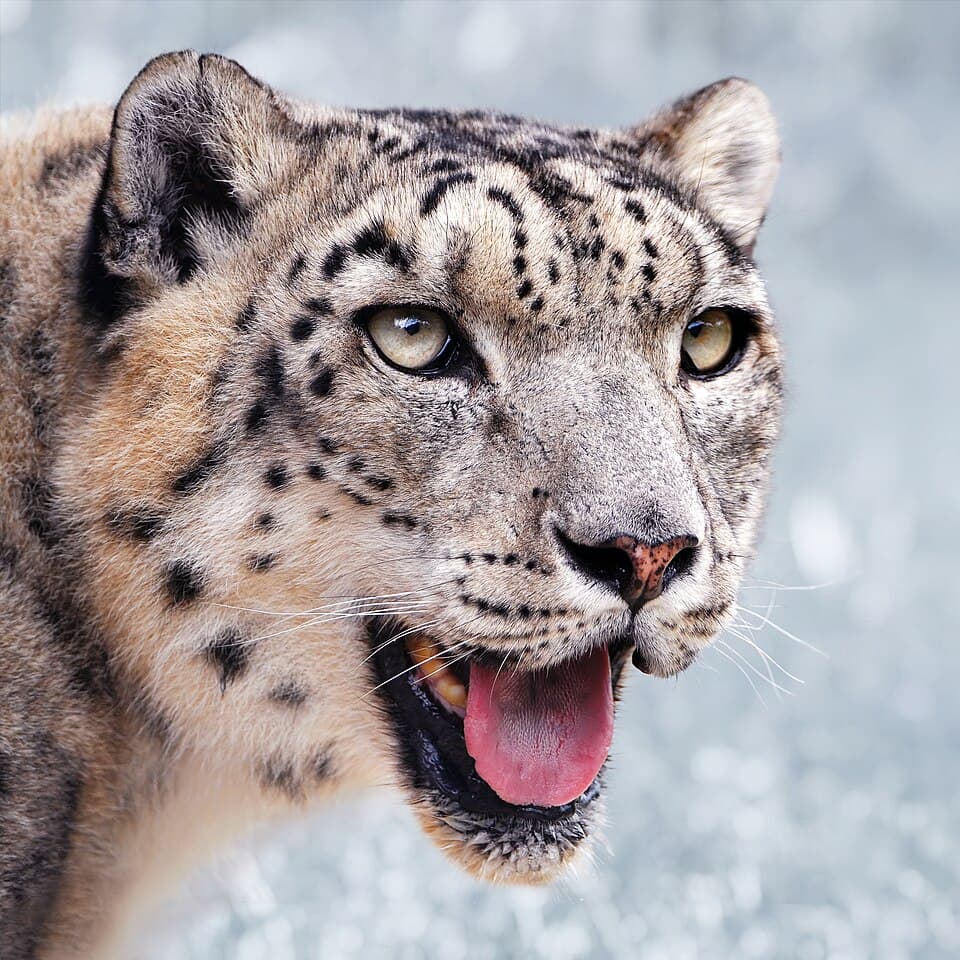
Photo: Original: Tambako The Jaguar Derivative work: User:Niabot · CC BY-SA 2.0 · Wikimedia Commons A high altitude cat, and the flagship of Himalayan conservation. India runs Project Snow Leopard for it, and the Snow Leopard Population Assessment put the national figure at roughly 700.
- Habitat and distribution
- Alpine and subalpine zones above the treeline in Ladakh, Himachal Pradesh, Uttarakhand, Sikkim and Arunachal Pradesh, mostly between 3,000 and 5,400 metres.
- What makes it distinctive
- Its tail is nearly as long as its body, used for balance on cliffs and wrapped round itself for warmth. It cannot roar: the larynx lacks the structure the other big cats have.
Bustard, including the Floricans
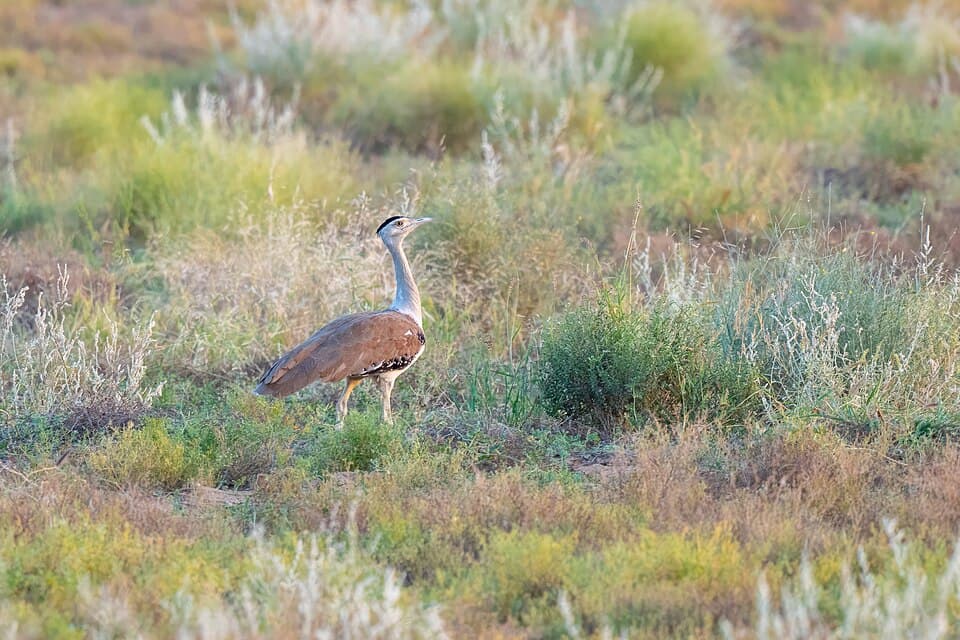
Photo: Saurabh Sawant · CC BY 4.0 · Wikimedia Commons One entry covering three Critically Endangered grassland birds. The Great Indian Bustard is down to a population counted in double figures, most of it in the Desert National Park in Rajasthan.
3 species: Great Indian Bustard CR · Bengal Florican CR · Lesser Florican CR
- Habitat and distribution
- Open grassland, scrub and cultivation. The bustard in Rajasthan and Gujarat, the Bengal Florican in the Terai and Assam, the Lesser Florican across western and central India in the monsoon.
- What makes it distinctive
- Power lines are the single largest cause of bustard death. The birds have poor frontal vision and cannot swerve in time, which is why conservation here is largely a matter of burying cables and fitting diverters. Captive breeding began in 2019 at a centre at Sam, near Jaisalmer, where the first chicks hatched that year; in 2024 the first chick bred by artificial insemination hatched at the Sudasari centre, also in Jaisalmer.
Dolphin · Ganges River DolphinPlatanista gangetica
EN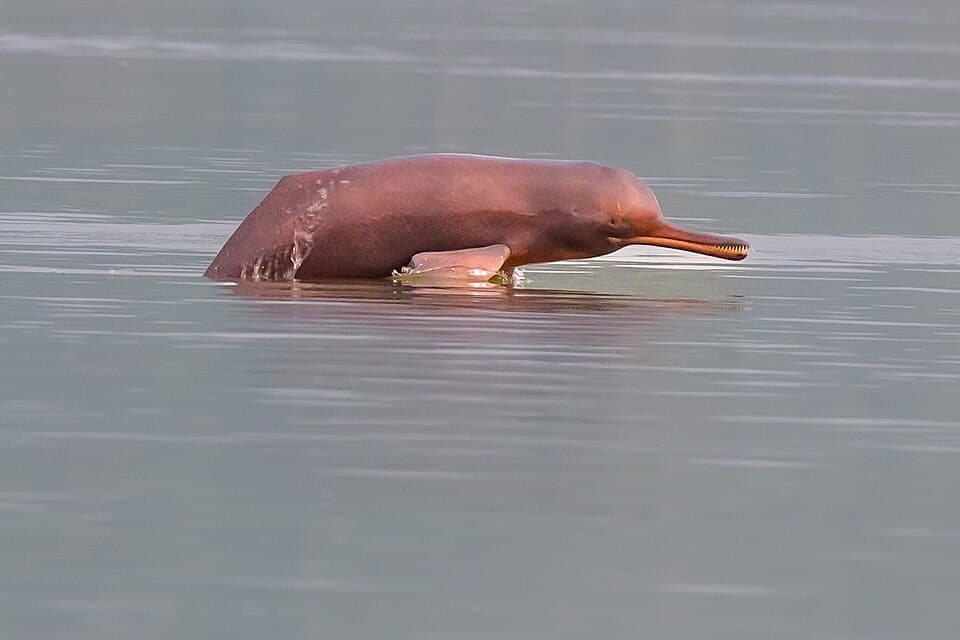
Photo: Munshi Abul Barakat · CC BY 4.0 · Wikimedia Commons India's national aquatic animal, and the subject of Project Dolphin, announced in 2020. The Vikramshila Gangetic Dolphin Sanctuary in Bihar is the only sanctuary named for it.
- Habitat and distribution
- The Ganga, Brahmaputra and Meghna systems and their larger tributaries, favouring deep pools and the confluences of rivers.
- What makes it distinctive
- It is effectively blind. The eye has no lens, and the animal finds everything by echolocation, swimming on its side with one flipper trailing the riverbed.
Hangul · Kashmir StagCervus hanglu hanglu
CR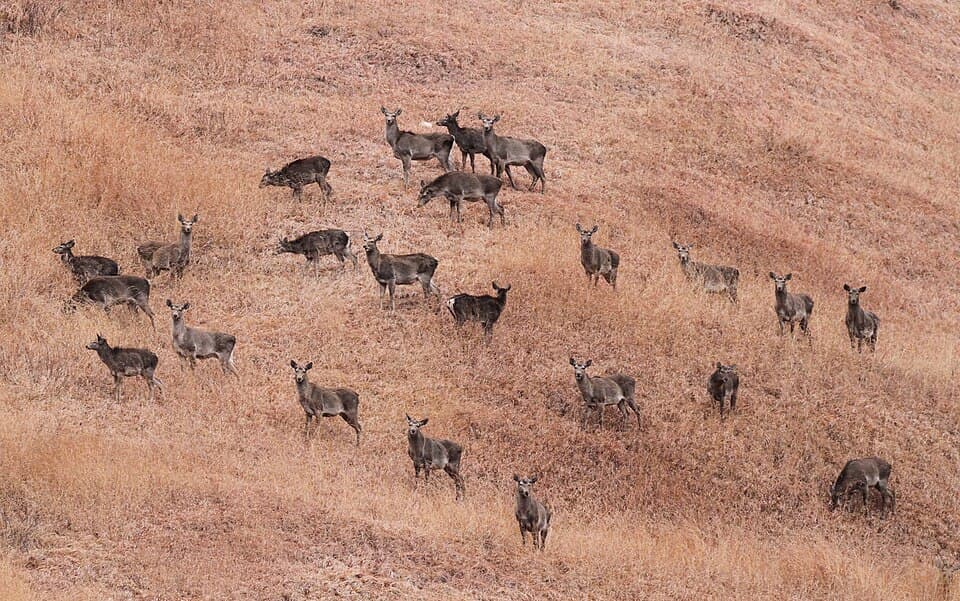
Photo: Tahirshawl · CC BY-SA 4.0 · Wikimedia Commons The only surviving red deer of the Indian subcontinent, and the state animal of Jammu and Kashmir. The population sits at roughly 300, almost all of it in one valley.
- Habitat and distribution
- Dachigam National Park in the Kashmir valley, with a few animals in the surrounding forests of the Zabarwan range.
- What makes it distinctive
- Its range has collapsed to a single park, which makes it one of the clearest cases in India of a species whose survival depends on one site rather than on a network.
Nilgiri TahrNilgiritragus hylocrius
EN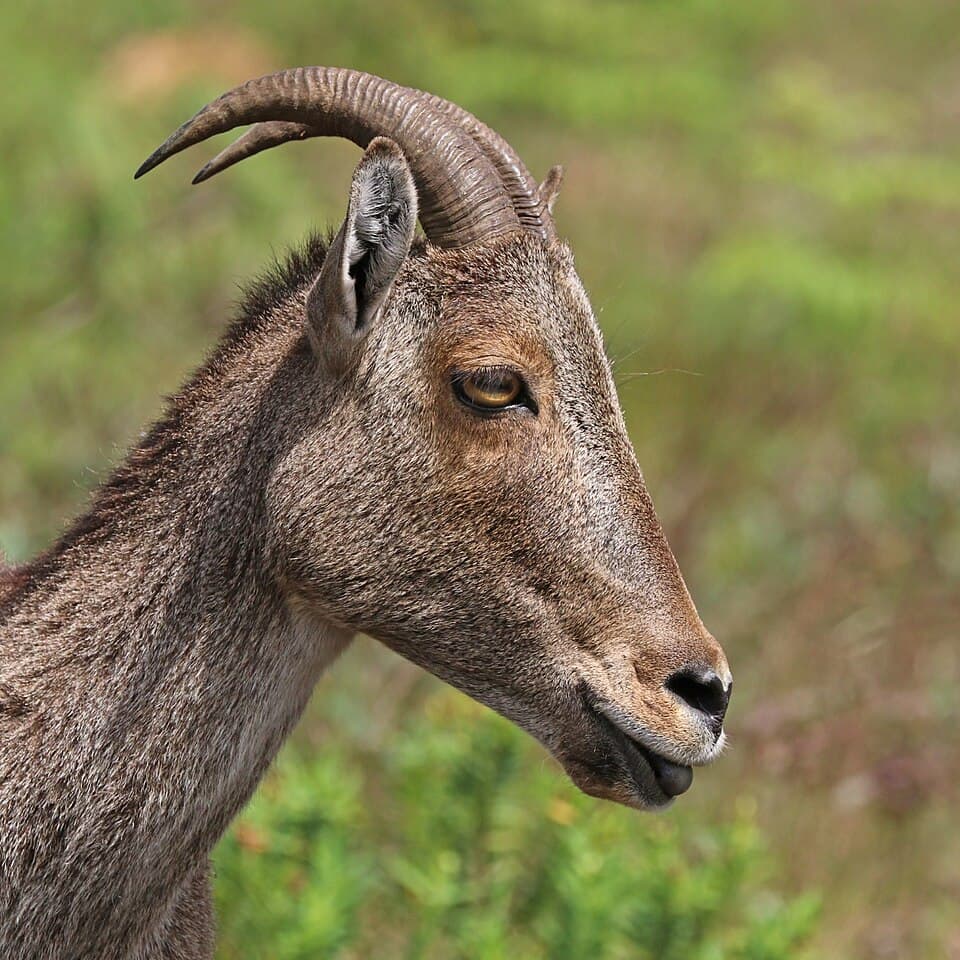
Photo: Charles J. Sharp · CC BY-SA 4.0 · Wikimedia Commons The state animal of Tamil Nadu, and the only mountain ungulate of the southern Western Ghats. Eravikulam National Park holds the largest single population.
- Habitat and distribution
- Montane grassland and shola forest above about 1,200 metres in the Western Ghats of Kerala and Tamil Nadu.
- What makes it distinctive
- The adult male carries a pale saddle across the back, which is why he is called a saddleback. It is the only member of its genus, so losing it would lose the genus.
Marine Turtles
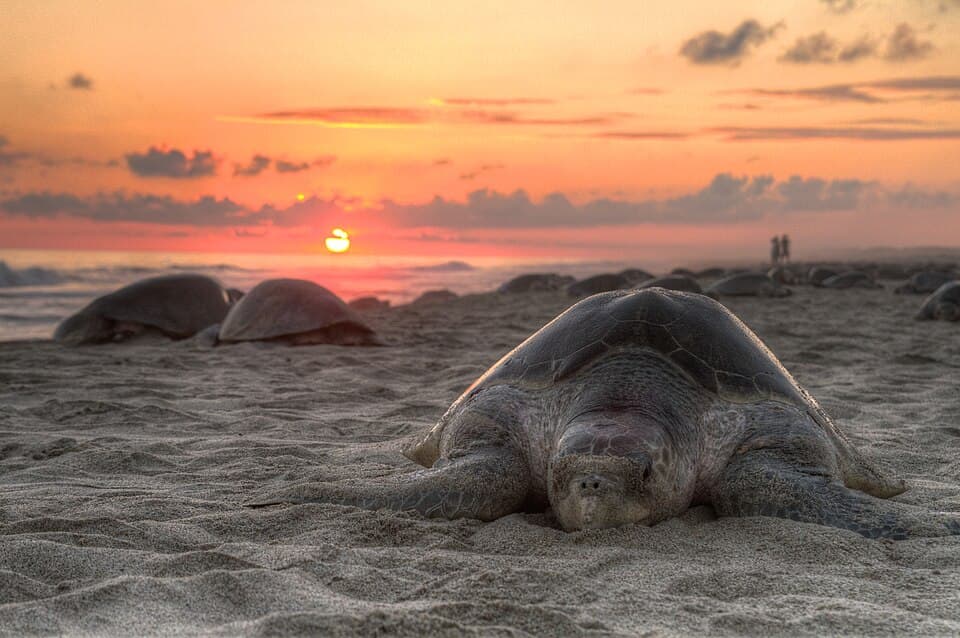
Photo: Claudio Giovenzana · CC BY-SA 3.0 · Wikimedia Commons One entry covering the five marine turtles in Indian waters. The Olive Ridley is the one the programme is most visibly about, because of the mass nesting at Gahirmatha and Rushikulya in Odisha.
5 species: Hawksbill Turtle CR · Green Sea Turtle EN · Olive Ridley Turtle VU · Leatherback Turtle VU · Loggerhead Turtle VU
- Habitat and distribution
- The coastal waters and nesting beaches of the mainland and the islands. The Leatherback nests chiefly in the Andaman and Nicobar Islands.
- What makes it distinctive
- Olive Ridleys nest in an arribada, a synchronised mass emergence in which hundreds of thousands of females come ashore over a few nights. Turtle Excluder Devices in trawl nets are the main protection at sea.
DugongDugong dugon
VU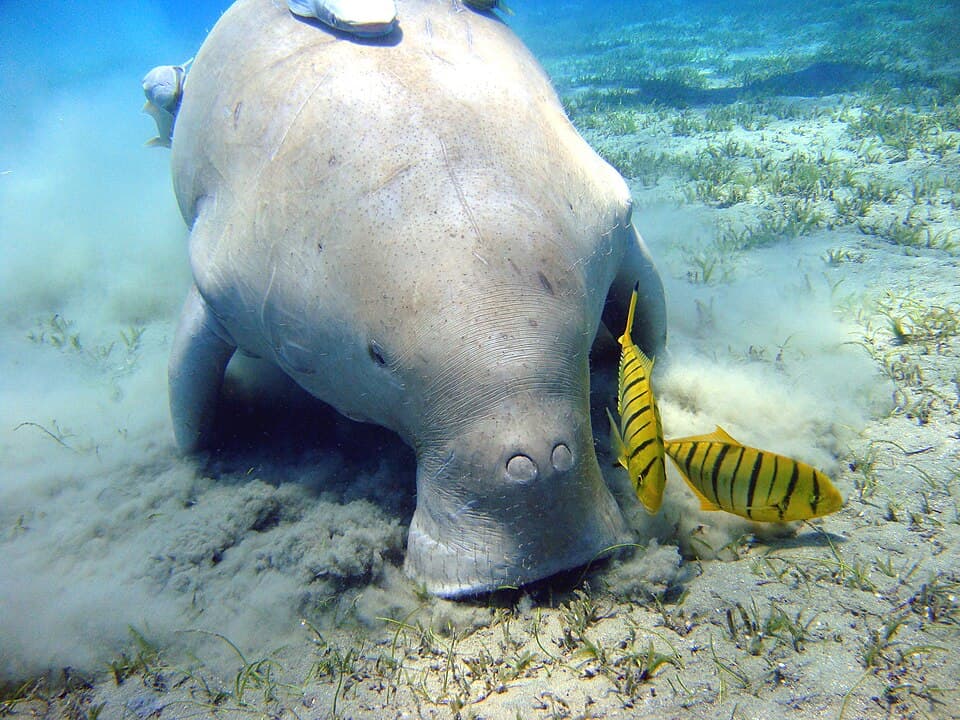
Photo: Julien Willem · CC BY-SA 3.0 · Wikimedia Commons The only strictly herbivorous marine mammal, and the state animal of the Andaman and Nicobar Islands. India notified a Dugong Conservation Reserve in Palk Bay in 2022, the first of its kind.
- Habitat and distribution
- Shallow seagrass beds in the Gulf of Mannar, Palk Bay, the Gulf of Kachchh and around the Andaman and Nicobar Islands.
- What makes it distinctive
- It is the sole surviving member of the family Dugongidae, and it eats little but seagrass, which ties its fate directly to the health of seagrass meadows.
Edible Nest SwiftletAerodramus fuciphagus
LCA small cave-nesting bird whose nest, built of hardened saliva, is the raw material of bird's nest soup. Harvesting for that trade is what put it on the list.
Least Concern globally. It is on the programme for its position in India rather than its Red List category.
- Habitat and distribution
- Limestone caves and sea caves in the Andaman and Nicobar Islands, foraging over forest and coast.
- What makes it distinctive
- The nest is made almost entirely of the bird's own saliva. India's response has been ranched harvesting, where nests are taken only after the chicks have fledged.
Asian Wild Buffalo · Wild Water BuffaloBubalus arnee
EN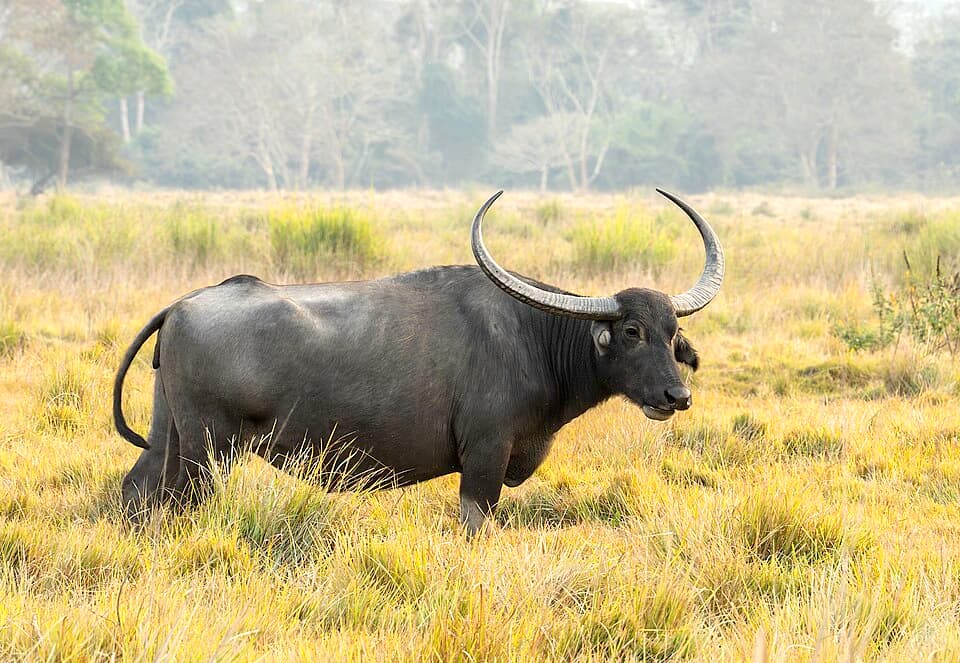
Photo: Joydeep Chakraborty · CC BY-SA 4.0 · Wikimedia Commons The wild ancestor of the domestic buffalo, and the state animal of Chhattisgarh. Assam holds the great majority of what remains, with a small and fragile population in central India.
- Habitat and distribution
- Alluvial grassland, swamp and riverine forest, chiefly Kaziranga and Manas in Assam, with remnants in Chhattisgarh at Udanti and Indravati.
- What makes it distinctive
- It carries the widest horn spread of any wild cattle. The main threat is not hunting but genetic swamping: interbreeding with domestic and feral buffalo dilutes the wild stock until it is no longer distinct.
Nicobar MegapodeMegapodius nicobariensis
VU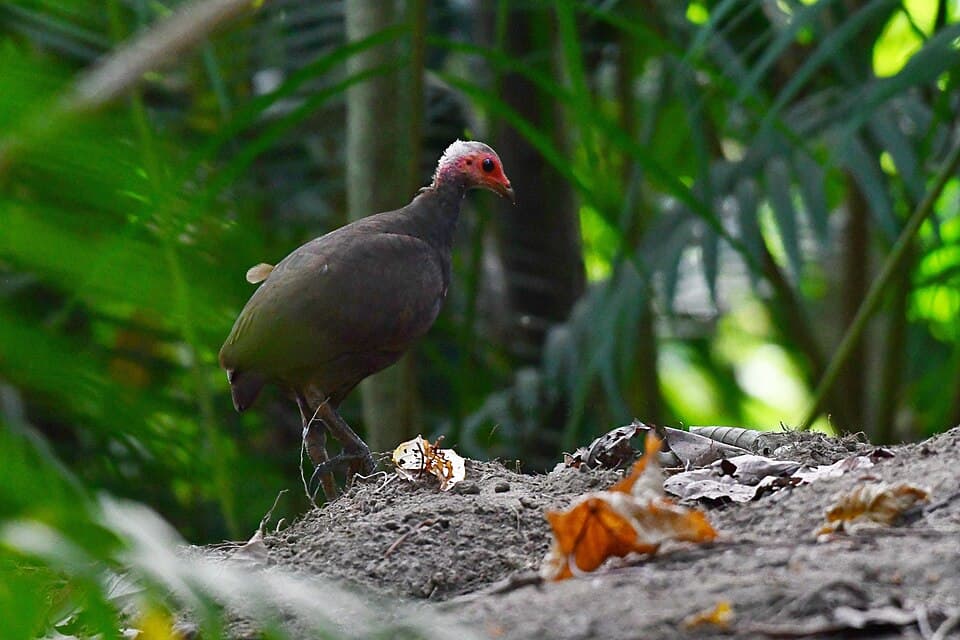
Photo: Dr jishnu · CC BY-SA 4.0 · Wikimedia Commons A ground bird found only in the Nicobar Islands. The 2004 tsunami destroyed a large share of its nesting beaches, and the population has been recovering since.
- Habitat and distribution
- Coastal forest and beach fringe on the Nicobar Islands, nowhere else on earth.
- What makes it distinctive
- It does not incubate its eggs. It buries them in a large mound of sand and rotting vegetation and lets the heat of decomposition do the work, which is why the whole species depends on a narrow strip of coast.
Manipur Brow-antlered Deer · SangaiRucervus eldii eldii
EN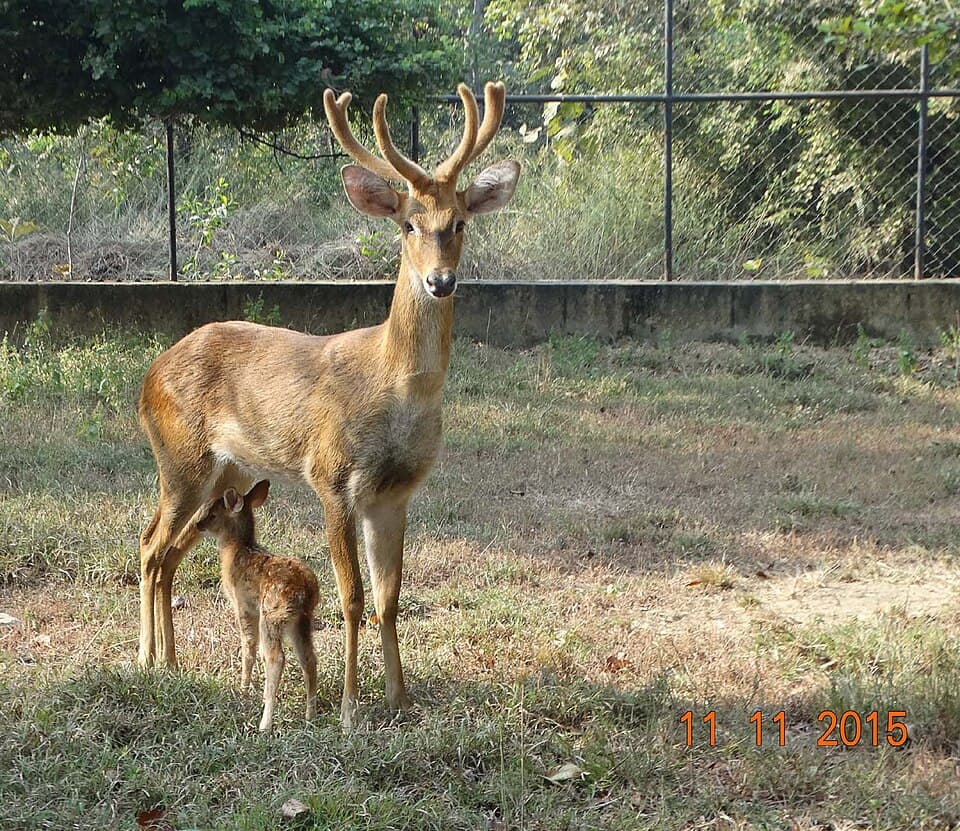
Photo: Sonampalli · CC BY-SA 4.0 · Wikimedia Commons The state animal of Manipur, and the dancing deer of Keibul Lamjao. It was believed extinct in 1951 until a handful were rediscovered, and the population is still counted in low hundreds.
- Habitat and distribution
- Keibul Lamjao National Park on Loktak Lake, the only floating national park in the world.
- What makes it distinctive
- It lives on phumdi, floating mats of vegetation, and its gait across them looks like dancing, which is where the name comes from. Its habitat literally floats, and thins when the lake is dammed.
Vultures
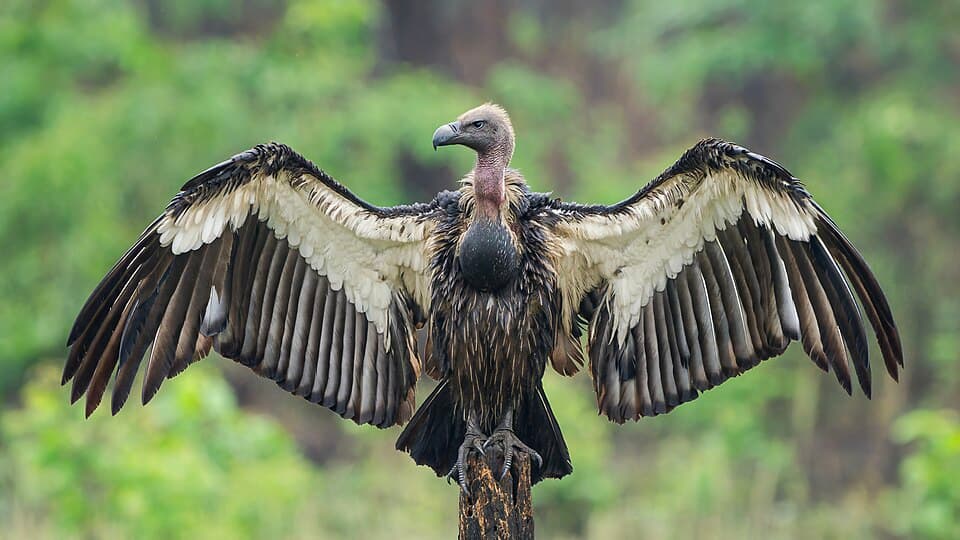
Photo: Prasan Shrestha · CC BY-SA 4.0 · Wikimedia Commons One entry covering India's threatened vultures. Their collapse in the 1990s, by more than 97 per cent, is the fastest decline recorded in any bird population.
5 species: White-rumped Vulture CR · Indian Vulture CR · Slender-billed Vulture CR · Red-headed Vulture CR · Egyptian Vulture EN
- Habitat and distribution
- Open country, scrub and cliffs across the subcontinent, with breeding colonies on escarpments and old trees.
- What makes it distinctive
- The cause was diclofenac, a veterinary painkiller given to cattle, which caused kidney failure in vultures feeding on carcasses. India banned its veterinary use in 2006, and recovery now runs through breeding centres and Vulture Safe Zones.
Malabar CivetViverra civettina
CREndemic to the Western Ghats, and possibly the most likely of all these species to be already gone. There has been no confirmed record for decades.
- Habitat and distribution
- Lowland forest and cashew plantation in the coastal Western Ghats of Kerala and Karnataka, as far as its range is known at all.
- What makes it distinctive
- It is on the list without anyone being sure it survives. Every recent report has been unverified, which makes it a rare case of a recovery programme for a species that may have nothing left to recover.
Indian Rhinoceros · Greater One-horned RhinocerosRhinoceros unicornis
VU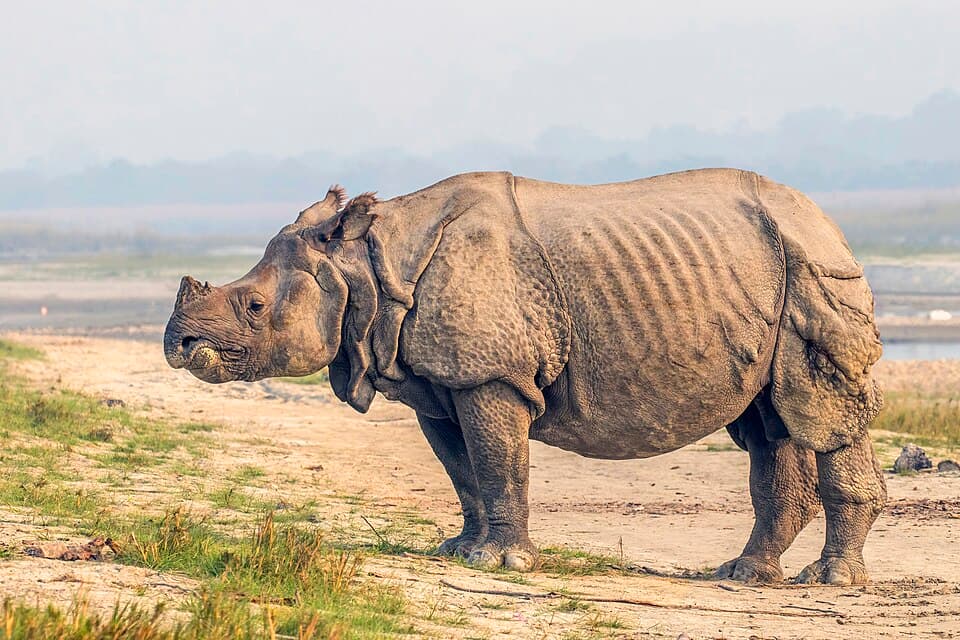
Photo: Charles J. Sharp · CC BY-SA 4.0 · Wikimedia Commons A genuine recovery story. From fewer than 200 animals at the start of the twentieth century to over 4,000 now, most of them in Assam, under the Indian Rhino Vision programme.
- Habitat and distribution
- Alluvial grassland and riverine forest of the Brahmaputra and Terai, chiefly Kaziranga, Orang, Pobitora and Manas in Assam and Dudhwa and Jaldapara further west.
- What makes it distinctive
- It has a single horn, made of keratin rather than bone, and skin folded into plates that look like armour. Pobitora carries the highest density of rhino anywhere in the world.
Asiatic LionPanthera leo persica
EN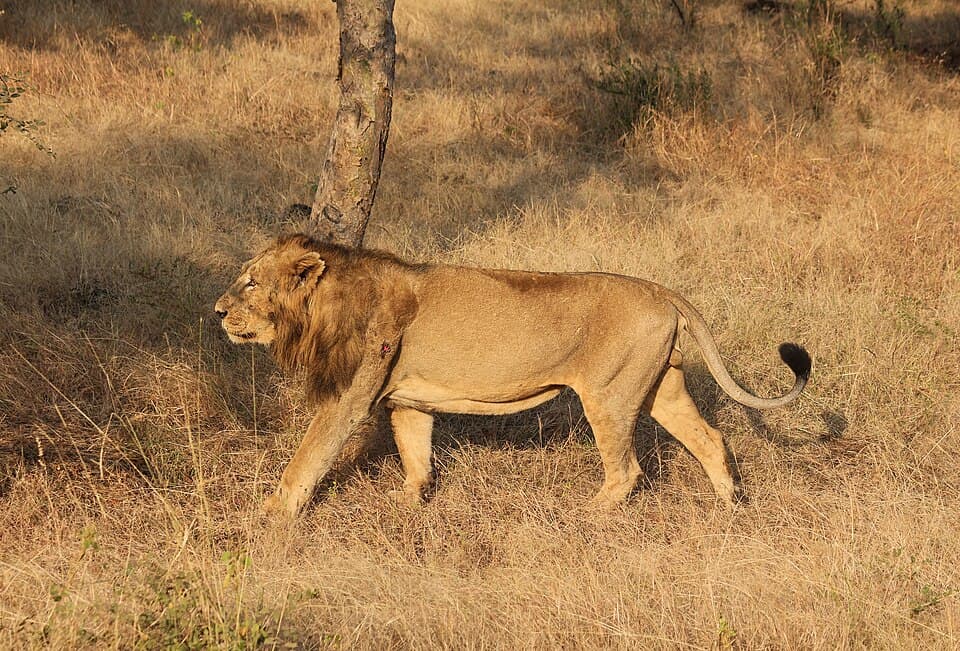
Photo: Bernard Gagnon · CC BY-SA 3.0 · Wikimedia Commons The last wild population of lions outside Africa, confined to Gujarat. Project Lion was announced in 2020, and numbers have risen steadily past 600.
- Habitat and distribution
- Dry deciduous forest and scrub of the Gir landscape in Saurashtra, now spreading into the surrounding coastal and agricultural country.
- What makes it distinctive
- It carries a fold of skin along the belly that African lions usually lack, and the male's mane is shorter, leaving the ears visible. Its concentration in one landscape is the standing worry: a single epidemic could take the lot.
Swamp Deer · BarasinghaRucervus duvaucelii
VU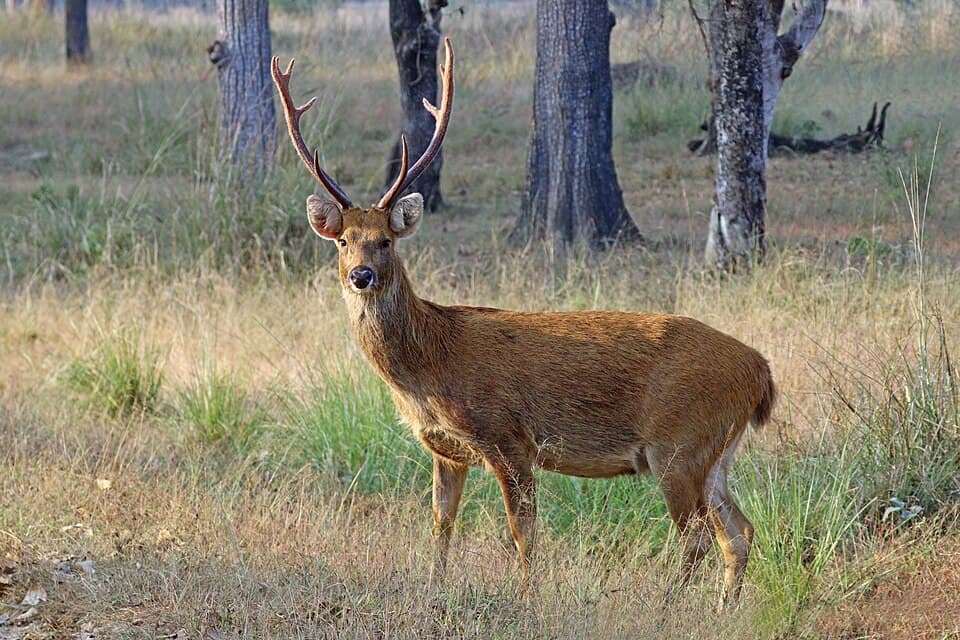
Photo: Charles J. Sharp · CC BY-SA 4.0 · Wikimedia Commons The state animal of Madhya Pradesh, in two separate forms: the hard ground race at Kanha and the wetland race of the Terai and Assam.
- Habitat and distribution
- Swamp and tall grassland at Dudhwa and along the Terai, and the hard ground of Kanha in Madhya Pradesh.
- What makes it distinctive
- The name means twelve-tined, after the antlers, which commonly carry twelve points and sometimes more. The Kanha hard ground population fell to about 66 animals in 1970 and has been brought back.
Jerdon's CourserRhinoptilus bitorquatus
CRA nocturnal bird endemic to Andhra Pradesh, believed extinct for most of the twentieth century and rediscovered in 1986 in the Sri Lankamaleswara hills.
- Habitat and distribution
- Sparse scrub jungle on rocky foothills of the Eastern Ghats in the Cuddapah and Kadapa districts of Andhra Pradesh.
- What makes it distinctive
- It was rediscovered after 86 years, and the proposed Telugu Ganga canal through its habitat became one of India's clearest conflicts between an irrigation project and a single bird.
Northern River TerrapinBatagur baska
CR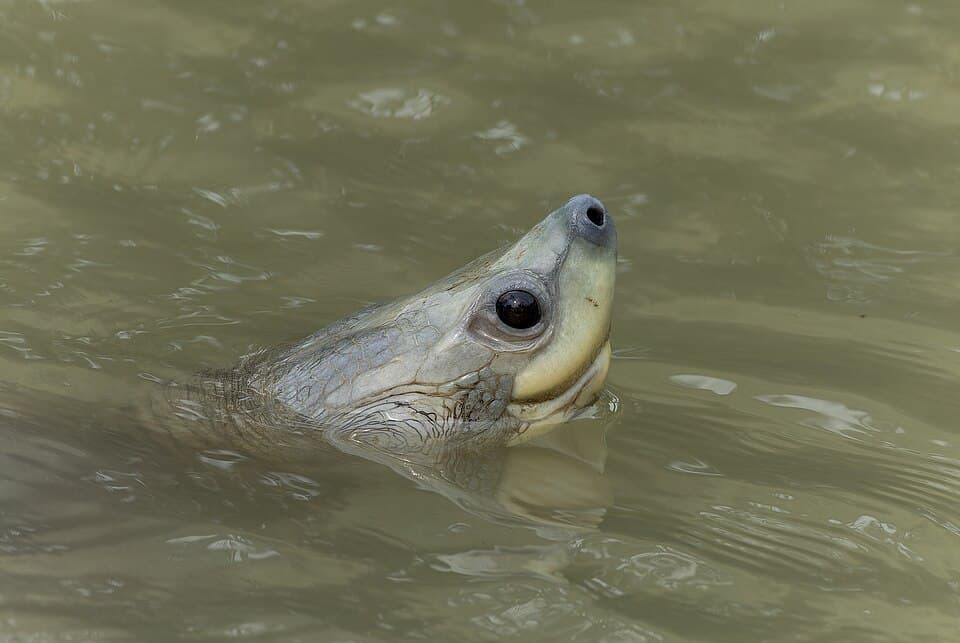
Photo: Tisha Mukherjee · CC BY-SA 4.0 · Wikimedia Commons Added 2018
One of Asia's most threatened freshwater turtles, effectively extinct in most of its former range. India's remaining animals are in the Sundarbans, supported by a captive breeding programme.
- Habitat and distribution
- Tidal rivers, estuaries and mangrove creeks of the Sundarbans in West Bengal.
- What makes it distinctive
- The breeding male's head and neck turn black and his eyes pale, a seasonal change dramatic enough that the two sexes were once taken for different species.
Clouded LeopardNeofelis nebulosa
VU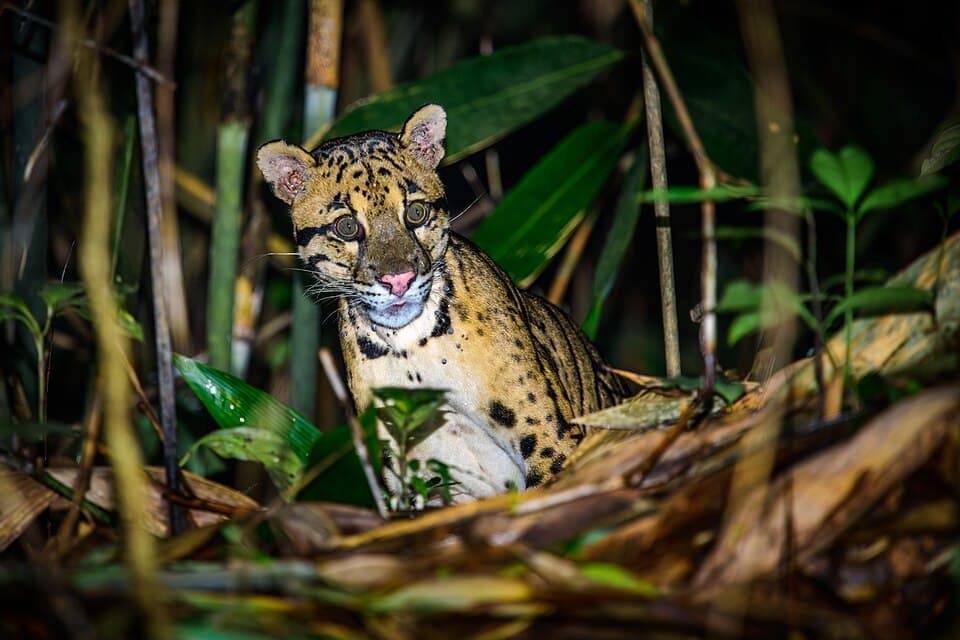
Photo: Rushenb · CC BY-SA 4.0 · Wikimedia Commons Added 2018
The state animal of Meghalaya, and the most arboreal of India's cats. Clouded Leopard National Park in Tripura is named for it.
- Habitat and distribution
- Dense evergreen and semi-evergreen forest of the North-East, from Sikkim and northern West Bengal through Assam, Meghalaya, Mizoram, Nagaland and Arunachal Pradesh.
- What makes it distinctive
- It has the longest canine teeth relative to body size of any living cat, and ankles that rotate so far it can climb down a trunk head first and hang from a branch by its hind feet.
Arabian Sea Humpback WhaleMegaptera novaeangliae
LC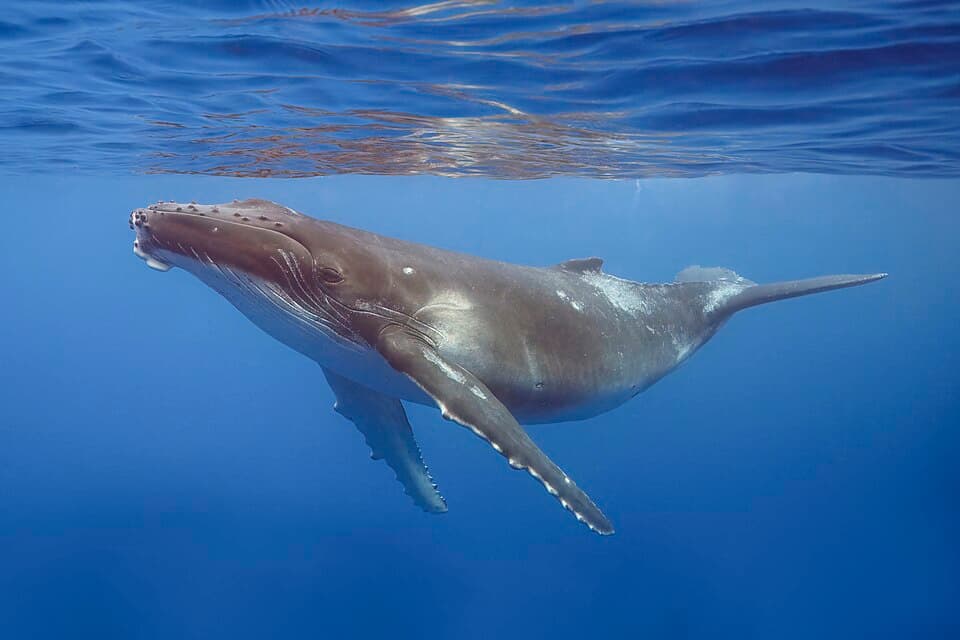
Photo: Charles J. Sharp · CC BY-SA 4.0 · Wikimedia Commons Added 2018
A population of a few hundred animals that never leaves the Arabian Sea, the only humpback whales in the world that do not migrate.
The species is Least Concern. It is the Arabian Sea subpopulation, assessed separately as Endangered, that the programme is for.
- Habitat and distribution
- The Arabian Sea along the western Indian coast, chiefly off Gujarat, Maharashtra and Kerala, with a centre of abundance off Oman.
- What makes it distinctive
- Every other humpback population migrates thousands of kilometres between feeding and breeding grounds. This one has been genetically isolated for about 70,000 years and stays put, which makes it the most distinct humpback population on earth.
Red PandaAilurus fulgens
EN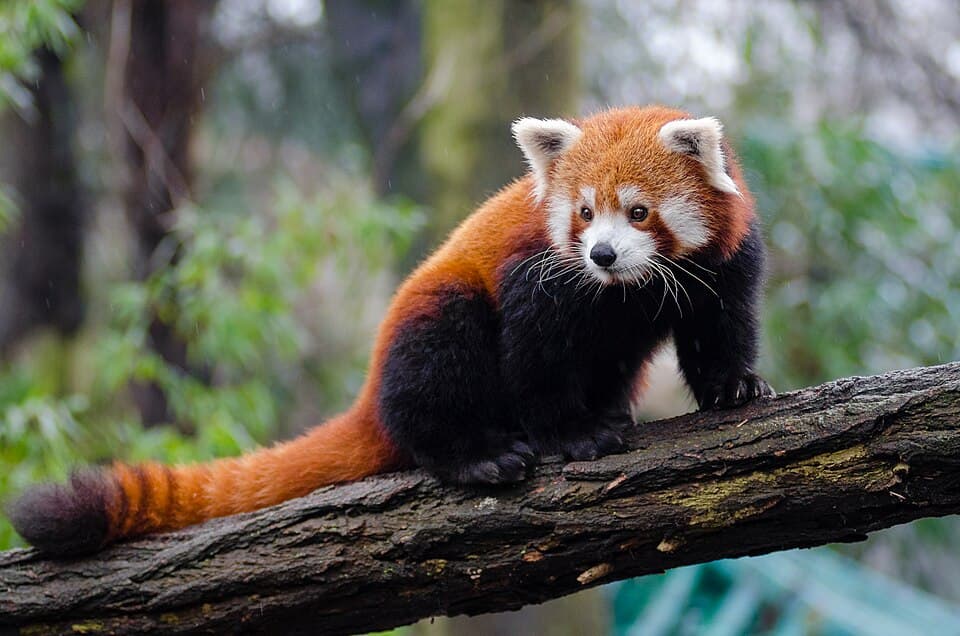
Photo: Mathias Appel · CC0 · Wikimedia Commons Added 2018
The state animal of Sikkim, and the only living member of its family. Padmaja Naidu Himalayan Zoological Park in Darjeeling runs the conservation breeding programme.
- Habitat and distribution
- Temperate broadleaf and conifer forest with bamboo undergrowth between about 2,200 and 4,800 metres in Sikkim, West Bengal and Arunachal Pradesh.
- What makes it distinctive
- It is not a bear and not a raccoon but the sole survivor of the family Ailuridae. It has a false thumb, an extended wrist bone, for gripping bamboo, which evolved separately from the giant panda's.
CaracalCaracal caracal
LC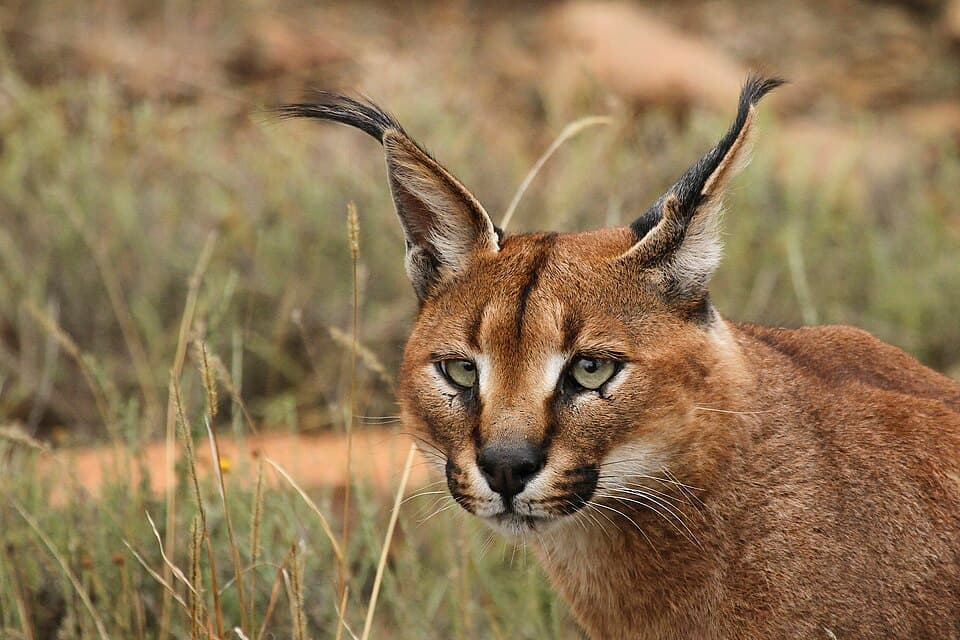
Photo: Leo za1 · CC BY-SA 3.0 · Wikimedia Commons Added 2021
The most recent addition, brought on in January 2021. India's population may be under 50 animals across Rajasthan, Gujarat and Madhya Pradesh.
Least Concern globally, and abundant in Africa. In India it is close to gone, which is why it is on a national list and not a global one.
- Habitat and distribution
- Dry scrub, ravine and semi-arid grassland in the Kutch and Malwa landscapes and the Ranthambore region.
- What makes it distinctive
- Its ears carry long black tufts and it can leap several metres to take a bird out of the air. It was a hunting animal in medieval India, trained like a cheetah, and the word siyahgosh, black ear, is the older Indian name.


_female_head.jpg)


_at_Kaziranga_National_Park,_Assam,_India_1.jpg)


_6.jpg)

_male.jpg)


_calf_Moorea_2.jpg)
.jpg)

Related current affairs
The topics that keep up with the news on this.