History atlas · Theme M3
हिन्दी — Read in HindiThe second Turkish invasion and the Rajput kingdoms
1150 to 1210 CE
In the twelfth century the Chahamanas of Ajmer rose over their neighbours, taking Delhi from the Tomaras and fighting the Chaulukyas, the Chandellas and the Gahadavalas. Muhammad of Ghor, beaten in Gujarat in 1178, came instead through the Punjab, took Lahore in 1186, lost to Prithviraj III at Tarain in 1191 and won there in 1192. His commanders then took the plain in two campaigns, Aibak in the west and Bakhtiyar Khalji in the east, where Nalanda and Vikramashila were sacked and Bakhtiyar's army was destroyed in Kamarupa. When Ghor was killed in 1206 Aibak made the Indian conquests a kingdom of their own.
The Rajput powers, About 1175 CE: The Chahamanas held Ajmer and Delhi, the Gahadavalas Kanauj and Varanasi, the Chaulukyas Gujarat and the Chandellas Mahoba, while Muhammad of Ghor took Multan in 1175 and Uch in 1176 and was routed at Kasahrada in 1178.
- Chahamanas of Ajmer and Delhi
- Gahadavalas of Kanauj and Varanasi
- Chaulukyas of Gujarat
- Chandellas of Mahoba
- Capital
- Site
- Settlement
- Battlefield
- Monastery
- UNESCO World Heritage Site
- Destroyed, with year
- Raided, with year
- Held against the raider
- Battle, with year
Literary sources
- Chronicles in Persian
- Tabaqat i Nasiri (Minhaj i Siraj, c. 1260): the main account of the conquest and of Bengal, from men who served under the conquerors.
- Taj ul Maasir (Hasan Nizami): a contemporary, ornate history of the conquest.
- Sanskrit and bardic works
- Prithviraja Vijaya (Jayanaka): a poem of Prithviraj's own court, contemporary but breaking off before Tarain.
- Prithviraj Raso (attributed to Chand Bardai): later and legendary, the source of the Samyukta story.
- Hammira Mahakavya (Nayachandra Suri, 15th century): the Chahamanas of Ranthambhore.
Foreign accounts
- Dharmasvamin, a Tibetan monk, saw Nalanda in ruins in 1235.
- Taranatha, a Tibetan historian, wrote of the fall of the monasteries in 1608.
Inscriptions
- The Kanai Barasi rock inscription near Guwahati, dated 1206, records the Turks who came to Kamarupa destroyed.
Coins
- Coins struck after 1192 carry both Prithviraj's name and Muhammad bin Sam's.
- Ghor's gold coins from the north carry the goddess Lakshmi and his name in Nagari.
Archaeology and monuments
- The Quwwat ul Islam mosque at Delhi and the Adhai din ka Jhonpra at Ajmer were built from temple pillars.
- The ruins of Nalanda and Vikramashila show the end of the monasteries.
North India about 1150
- After the Pratiharas fell, north India was shared among Rajput kingdoms that fought one another for land and rank. (The Rajput kingdoms)
- The Chahamanas, or Chauhans, held Ajmer and the land around Sambhar lake.
- The Tomaras held Delhi, then called Dhillika.
- The Gahadavalas held Kanauj and Varanasi and the middle Ganga plain.
- The Chaulukyas, or Solankis, held Gujarat, and the Chandellas held Bundelkhand.
The Chahamanas build a kingdom
- The Chahamanas began as vassals of the Pratiharas, at Shakambhari near Sambhar lake.
- Early in the 12th century Ajayaraja founded Ajayameru, the city of Ajmer, as their capital.
- His son Arnoraja defeated the Turks near Ajmer, but lost to the Chaulukya Kumarapala of Gujarat about 1150.
Vigraharaja IV takes Delhi
- Vigraharaja IV (c. 1150 to 1164) took Delhi from the Tomaras, who stayed on there as his vassals.
- With Delhi, the Chahamanas held the road from the Punjab into the Ganga plain.
- He was also a poet, and the Delhi Topra pillar carries his boast of driving out the mlecchas.
Prithviraj III
- Prithviraj III became king as a boy about 1177, under his mother Karpuradevi and the minister Kadambavasa.
- In 1182 he attacked the Chandella Paramardi, sacked Mahoba and took much of Bundelkhand.
- That war lives on in the bardic songs of Alha and Udal, Paramardi's warriors.
- He fought the Chaulukya Bhima II of Gujarat until a peace about 1187.
- By the late 1180s he was the strongest king in north India, ruling from Ajmer and Delhi.
Rivals, not allies
- The Chahamanas and the Gahadavalas under Jayachandra were rivals for Delhi and the Doab.
- The legend of Prithviraj carrying off Jayachandra's daughter Samyukta comes from the late Raso, but the enmity was real.
- So each kingdom faced Muhammad of Ghor alone.
Twelfth century rulers
| Dynasty | Capital | Rulers | Rivals |
|---|---|---|---|
| Chahamanas | Shakambhari, then Ajmer; Delhi from Vigraharaja IV | Ajayaraja, Arnoraja, Vigraharaja IV, Prithviraj III | Lost to Kumarapala about 1150; sacked Mahoba in 1182; fought the Gahadavalas over Delhi and the Doab |
| Tomaras | Delhi, with Lal Kot | Anangapala | Lost Delhi to Vigraharaja IV and stayed on as Chahamana vassals |
| Gahadavalas | Kanauj and Varanasi | Chandradeva, Govindachandra, Jayachandra | Against the Chahamanas over Delhi and the Doab; sent no help in 1191 |
| Chaulukyas | Anhilwara | Jayasimha Siddharaja, Kumarapala, Mularaja II, Bhima II | Against the Chahamanas; Naiki Devi regent for the boy kings |
| Chandellas | Mahoba | Paramardi | Mahoba sacked by Prithviraj III in 1182 |
The man
- Muizzuddin Muhammad bin Sam, also called Shihabuddin, is known as Muhammad of Ghor.
- He ruled Ghazni for his elder brother Ghiyasuddin, and the conquest of India was his charge.
- He was patient after defeat, and came to hold land, not just to raid it.
- He led his army through ghulams, slave commanders trained in his household and loyal to him alone.
The first moves, 1175 to 1176
- In 1175 he took Multan from its Ismaili rulers, the old prize of the Arabs and of Mahmud.
- In 1176 he took Uch, on the Indus below Multan.
Defeat at Kasahrada, 1178
- In 1178 he marched across the desert to strike Gujarat, the richest kingdom of the west.
- The Chaulukya king Mularaja II was a boy, and his mother Naiki Devi led the defence as regent.
- At Kasahrada, at the foot of Mount Abu, the Gujarat army routed him.
- He never tried the Gujarat road again.
The Punjab road and Lahore
- Instead he took the Punjab from the last Ghaznavids, piece by piece: Peshawar in 1179 and Sialkot in the years after.
- In 1186 he took Lahore and its king Khusrau Malik, and the Ghaznavid line ended.
- With Lahore he had what Mahmud never had: a base inside India, supplied from the Punjab.
The cause
- In 1191 Ghor took Tabarhind, today's Bathinda, a Chahamana fort on the edge of the Punjab.
- Prithviraj marched north to meet him, with the Tomara chief of Delhi, Govindaraja, among his commanders.
The battle
- The armies met at Tarain, near Thanesar, on the road from the Punjab to Delhi.
- Govindaraja, on an elephant, wounded Ghor with his lance, and a Khalji soldier carried the Sultan off the field.
- The Ghurid army broke and fled: Prithviraj had won.
After the battle
- Prithviraj did not pursue the beaten army, and spent over a year retaking Bathinda instead.
- The Rajputs treated the battle as a frontier repulse, not the first round of a war.
- Ghor went home, and spent the year rebuilding his army for one purpose.
- A destroyed army cannot return, but a beaten one can, and this one did.
Ghor prepares
- Ghor came back in 1192 with a larger army of mounted archers, trained to avoid the charge that had beaten him.
- He sent word of peace to Prithviraj while he prepared, to slow the Rajput mustering.
The battle
- Ghor divided his horsemen into five divisions and kept four in reserve.
- The fifth harried the Rajput line with arrows and fell back whenever it was charged, a feigned retreat.
- When the Rajput army was tired and broken up, Ghor sent in his reserve, and the line collapsed.
- Govindaraja was killed in the battle.
The end of Prithviraj
- Prithviraj was captured near Sursuti, today's Sirsa.
- Minhaj says he was killed at once.
- Hasan Nizami says he was kept as a vassal at Ajmer and executed later for rebellion, and coins bearing both names support this.
- His son Govindaraja was left at Ajmer as a vassal, and later moved to Ranthambhore.
A watershed
- The road to Delhi lay open, and the Chahamana kingdom was gone.
- Jayachandra had sent no help, and his own turn came two years later.
- Tarain 1192 is the battle from which Turkish rule in north India begins.
Qutbuddin Aibak
- Qutbuddin Aibak was a Turkish ghulam, bought as a boy and given to Ghor.
- Ghor left him in charge in India after Tarain, and he led the campaigns of the west.
Delhi and Ajmer, 1192 to 1193
- Aibak took Meerut and Delhi in 1192 to 1193 and made Delhi his base.
- At Delhi he began the Quwwat ul Islam mosque, built from the pillars of twenty seven temples.
- At Ajmer he put down the revolt of Prithviraj's brother Hariraja.
Chandawar, 1194
- In 1194 Ghor came back and, with Aibak, met Jayachandra at Chandawar, near Firozabad.
- Jayachandra was killed, and Varanasi was sacked.
- The Gahadavala kingdom, the greatest of the Ganga plain, fell two years after the Chahamanas.
The west and centre, 1195 to 1203
- In 1197 Aibak took Anhilwara, the Chaulukya capital, avenging Kasahrada.
- He took Gwalior, and in 1202 the Chandella fort of Kalinjar from Paramardi.
- At Ajmer a college was turned into the Adhai din ka Jhonpra mosque.
- Ghor's gold coins struck in the north kept the goddess Lakshmi, an old coin type used by the new ruler.
Bakhtiyar
- Muhammad bin Bakhtiyar Khalji was not a ghulam but a free Khalji Turk, who had been refused service at Ghazni and Delhi.
- He won land near Mirzapur in the service of a Ghurid officer, and raided east into Bihar on his own account.
The monasteries of Bihar
- Minhaj tells of a raid on a walled place full of shaven headed men and books, which the raiders found was a college, a vihara.
- This is usually read as Odantapuri, and Minhaj says the monks there were killed.
- Nalanda and Vikramashila were sacked in the same campaigns, about 1200 to 1203.
- Tibetan sources say Shakyashribhadra, the head of Vikramashila, fled to Tibet with his monks.
- When the Tibetan monk Dharmasvamin came in 1235, he found Nalanda in ruins with a handful of monks still teaching.
- The story that the library burned for months is tradition, not record.
- Buddhism was already in long decline in India, and the sack was its final blow. (Buddhism and Jainism: later development and decline)
Bengal, 1204
- In 1204 Bakhtiyar rode into Nadia ahead of his army with a small band of horsemen.
- The old Sena king Lakshmana Sena fled to east Bengal, where the Senas ruled on for some decades.
- Bakhtiyar made Lakhnauti, near Gaur, the capital of the new Turkish province of Bengal.
Defeat in Kamarupa, 1206
- In 1206 Bakhtiyar marched north through Kamarupa, in today's Assam, toward Tibet.
- On the way back his army was trapped at a river by the forces of Kamarupa and destroyed, and only a few men returned.
- The Kanai Barasi rock inscription near Guwahati, dated 1206, records the Turks who came to Kamarupa destroyed.
- Assamese tradition names the king of Kamarupa Prithu.
- Bakhtiyar died at Devkot soon after, killed, Minhaj says, by his own officer Ali Mardan.
The death of Muhammad of Ghor
- Ghor was killed in March 1206 at Damyak on the Jhelum, by Khokhars by one account and Ismailis by another.
- He left no son, and his empire passed to his commanders.
Three heirs
- Yalduz held Ghazni, Qubacha held Multan and Uch, and Aibak held Lahore and Delhi.
- Aibak tied the others to him by marriage, taking Yalduz's daughter, giving his sister to Qubacha and his daughter to Iltutmish.
Aibak chooses India
- Aibak was raised to rule at Lahore in 1206.
- About 1208 Ghor's nephew Ghiyasuddin Mahmud sent him his formal freedom and the title of Sultan.
- When Yalduz claimed Delhi, Aibak took Ghazni briefly, was driven out, and from then on ruled India alone.
- That choice made the Indian conquests a kingdom of their own, not a province of Ghazni: the Delhi Sultanate.
- Aibak died in 1210 after a fall at polo in Lahore. (The Delhi Sultanate: five dynasties, 1206 to 1526)
Raider and conqueror
- Mahmud of Ghazni raided and went home; Muhammad of Ghor conquered and left governors to hold the land.
The two battles of Tarain
- At Tarain Prithviraj III won in 1191 and lost in 1192.
Kasahrada
- Kasahrada, 1178, was a Ghurid defeat, by the Chaulukya army of Naiki Devi.
Bakhtiyar was free
- Bakhtiyar Khalji was a free Khalji soldier, not a slave; Aibak, Yalduz and Qubacha were ghulams.
Three monasteries
- Odantapuri is usually read as the vihara of Minhaj's story; Nalanda and Vikramashila were sacked in the same campaigns.
The Senas
- Lakshmana Sena fled Nadia in 1204, but the Senas ruled on in east Bengal.
1206
- Aibak's rule from 1206, not Tarain in 1192, is the start of the Delhi Sultanate.
Muhammad Ghori
king; also Muhammad of Ghor, Muizzuddin Muhammad bin Sam, Shihabuddin
Muizzuddin Muhammad bin Sam, the Ghurid conqueror; routed at Kasahrada in 1178, took Lahore in 1186, lost at Tarain in 1191 and won there in 1192; killed at Damyak in 1206.
Ghiyasuddin Muhammad
king
The elder Ghurid brother, who held Khorasan and gave Muhammad of Ghor the mandate for India.
Khusrau Malik
king
The last Ghaznavid, who lost Lahore to Muhammad of Ghor in 1186.
Naiki Devi
queen regent
Chaulukya regent for her son Mularaja II; her army routed Muhammad of Ghor at Kasahrada in 1178.
Mularaja II
king
The boy Chaulukya king whose army, under his mother Naiki Devi, won at Kasahrada in 1178.
Bhima II
king
Chaulukya king in whose minority Naiki Devi ruled; Aibak took Anhilwara in 1197.
Ajayaraja
king
Chahamana who founded Ajayameru, Ajmer, early in the twelfth century.
Arnoraja
king
Chahamana who turned back the Turks near Ajmer and lost to Kumarapala about 1150.
Vigraharaja IV
king
Chahamana, about 1150 to 1164 CE; took Delhi from the Tomaras and made his line the leading power of the northwest.
Prithviraj III
king; also Prithviraj Chauhan, Rai Pithora
Chahamana, about 1177 to 1192 CE; won at Tarain in 1191, lost there in 1192 and was captured near Sursuti.
Karpuradevi
queen mother
Prithviraj III's mother, under whom he became king as a boy.
Kadambavasa
minister
The minister who governed with Karpuradevi in Prithviraj III's boyhood.
Govindaraja (Tomara)
chief
Tomara chief of Delhi and Chahamana vassal; wounded Muhammad of Ghor at Tarain in 1191 and was killed there in 1192.
Hariraja
prince
Prithviraj III's brother, who revolted after 1192; Aibak held Ajmer against him.
Anangapala Tomara
king
Tomara king of Delhi, remembered as the builder of Lal Kot.
Chandradeva
king
The first Gahadavala king of Kanauj and Varanasi.
Govindachandra
king
Gahadavala, 1114 to 1155 CE.
Jayachandra
king; also Jaichand
Gahadavala, 1170 to 1194 CE; sent Prithviraj no help in 1191 and was killed at Chandawar in 1194.
Jayasimha Siddharaja
king
Chaulukya king of Gujarat before Kumarapala.
Kumarapala
king
Chaulukya king who defeated the Chahamana Arnoraja about 1150.
Paramardideva
king; also Paramardi
Chandella, whose capital Mahoba Prithviraj III sacked in 1182; lost Kalinjar to Aibak in 1202.
Alha and Udal
legend
The heroes of the bardic Alha Khand, which remembers Prithviraj III's war on the Chandellas of Mahoba.
Jayanaka
poet
Court poet of Prithviraj III; the Prithviraja Vijaya, which breaks off before Tarain.
Chand Bardai
poet
Attributed author of the Prithviraj Raso, later than Prithviraj and legendary in its episodes.
Qutb ud din Aibak
king
Ghor's ghulam; took Delhi, won at Chandawar in 1194, was raised to rule at Lahore in 1206 and died at polo in 1210.
Bakhtiyar Khilji
commander; also Bakhtiyar Khalji, Muhammad bin Bakhtiyar Khalji
Muhammad bin Bakhtiyar Khalji, a free Khalji Turk, not a ghulam; took Nadia in 1204, lost his army in Kamarupa and was killed at Devkot in 1206.
Lakshmana Sena
king
The old Sena king who fled Nadia in 1204 to east Bengal, where the Senas ruled on.
Prithu of Kamarupa
king
The king of Kamarupa whom Assamese tradition names as the victor over Bakhtiyar in 1206.
Ali Mardan
officer
Bakhtiyar's officer, who killed him at Devkot in 1206, Minhaj says.
Yalduz
governor
Ghor's ghulam at Ghazni; claimed Delhi after 1206, and his daughter married Aibak.
Qubacha
governor
Ghor's ghulam at Multan and Uch, married to Aibak's sister.
Iltutmish
sultan
Ghor's ghulam and Aibak's son in law.
Minhaj i Siraj
historian
Minhaj i Siraj Juzjani; the Tabaqat i Nasiri, about 1260, the main source for the conquest and for Bengal.
Hasan Nizami
historian
Author of the Taj ul Maasir, a contemporary Persian account of the conquest in an ornate style.
Dharmasvamin
monk
Tibetan monk at Nalanda in 1234 to 1236, who found it in ruins with a handful of monks still teaching.

Ana Sagar, Ajmer
The Ana Sagar lake at Ajmer, the Chahamana capital, with the later marble pavilions on its bank and the hills behind.
Hemant Shesh, CC BY-SA 3.0, via Wikimedia Commons
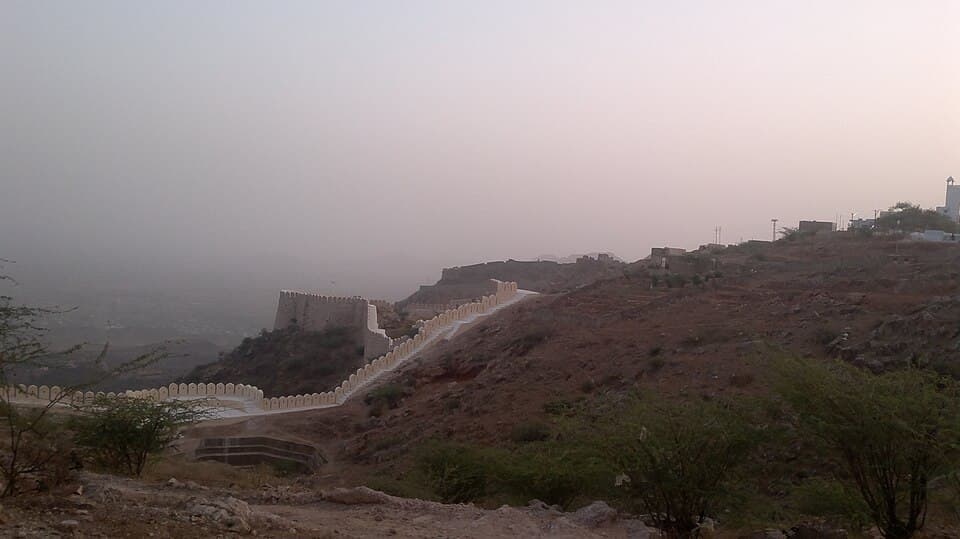
Taragarh fort, Ajmer
The walls of Taragarh running along the hill above Ajmer, the Chahamana capital.
Mahendra Nikum, CC BY-SA 4.0, via Wikimedia Commons
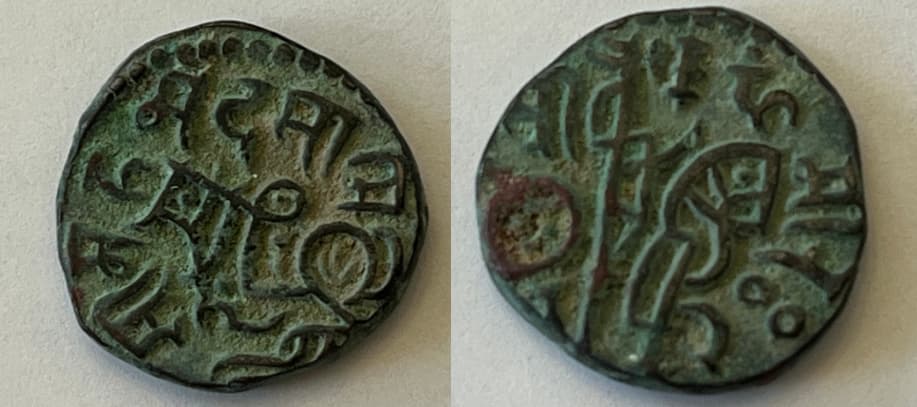
A coin of Prithviraj III
A billon jital of Prithviraj III, with a bull on one side and a horseman with his name in Nagari on the other.
Quezerque, CC BY-SA 4.0, via Wikimedia Commons
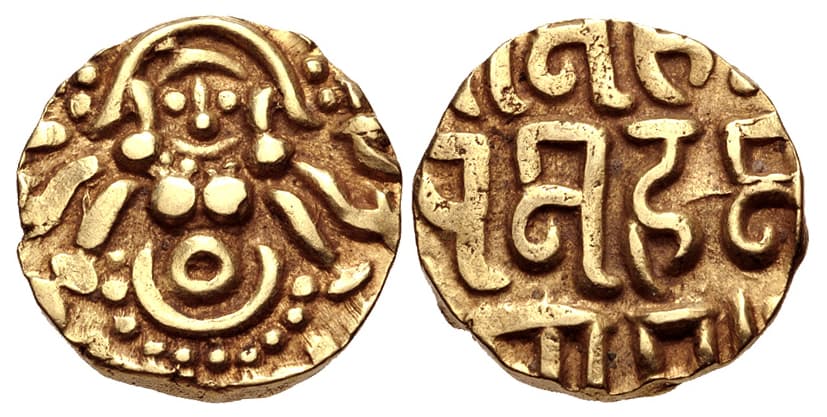
Ghor's Lakshmi coin
A gold coin of Muhammad bin Sam with the goddess Lakshmi seated on one side and his name in Nagari on the other.
CNG Coins, CC BY-SA 3.0, via Wikimedia Commons
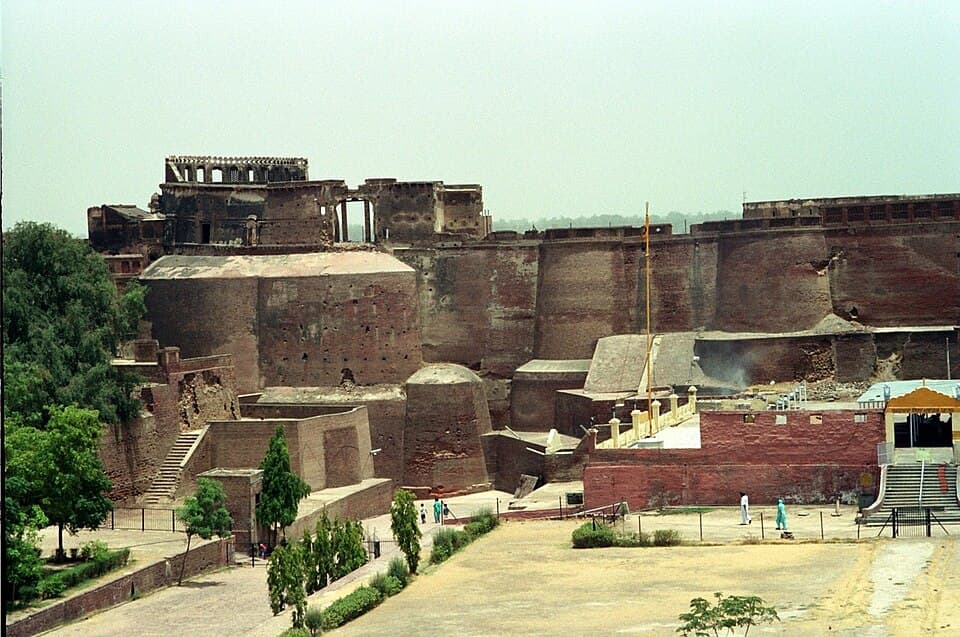
Bathinda fort
The brick walls and towers of the fort at Bathinda, the Tabarhind that Ghor took in 1191.
Guneeta, Public domain, via Wikimedia Commons
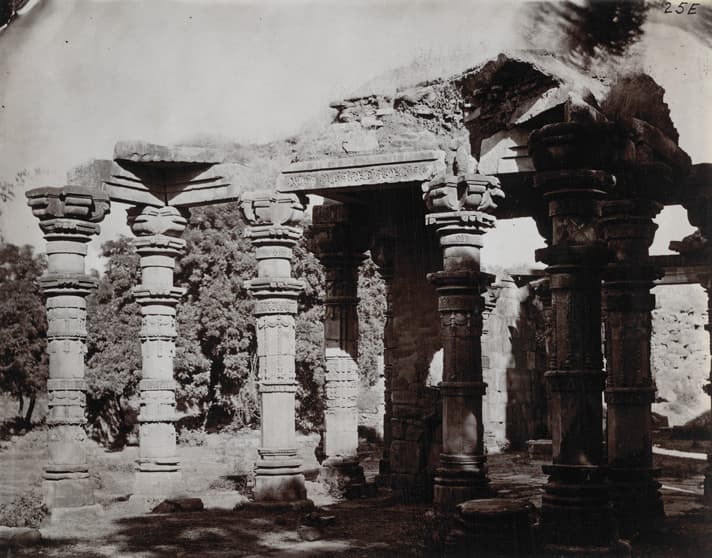
The Quwwat ul Islam pillars
Carved temple pillars standing in the colonnade of the Quwwat ul Islam mosque at Delhi, photographed in 1870.
Joseph David Beglar, Public domain, via Wikimedia Commons
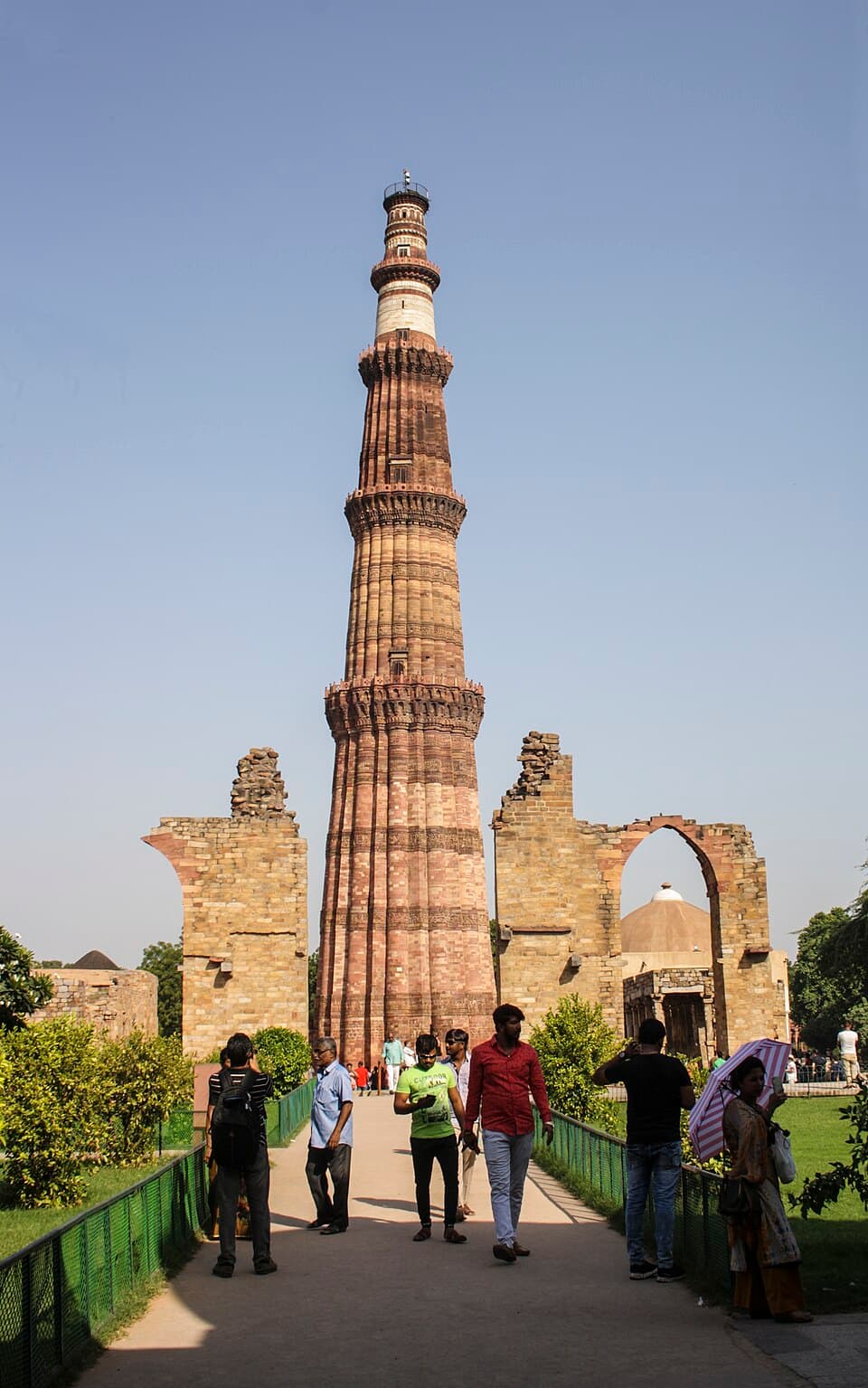
The Qutb Minar
The Qutb Minar at Delhi among the ruined arches of the Quwwat ul Islam mosque.
Indrajit Das, CC BY-SA 4.0, via Wikimedia Commons
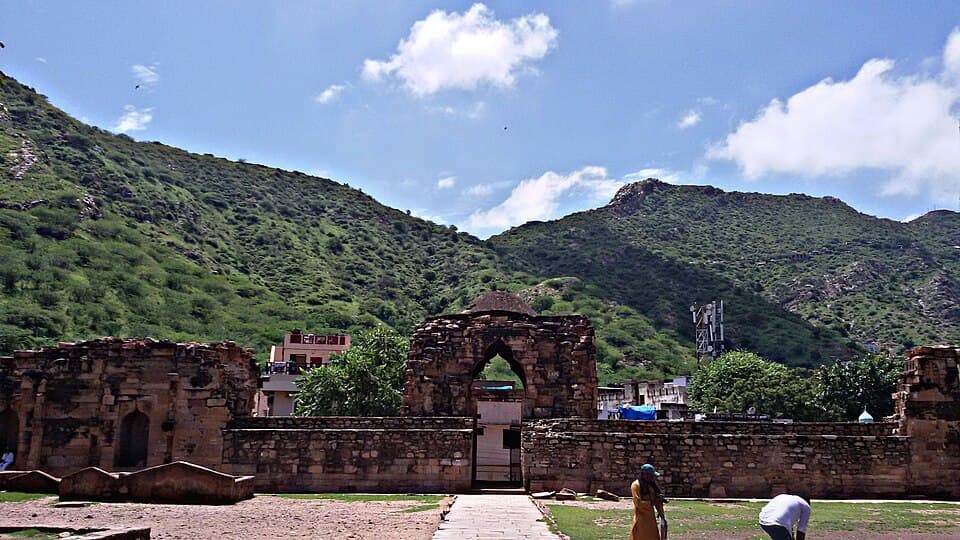
Adhai din ka Jhonpra, Ajmer
The arched screen of the Adhai din ka Jhonpra mosque at Ajmer, below the hills.
Rameezm raza, CC BY-SA 4.0, via Wikimedia Commons
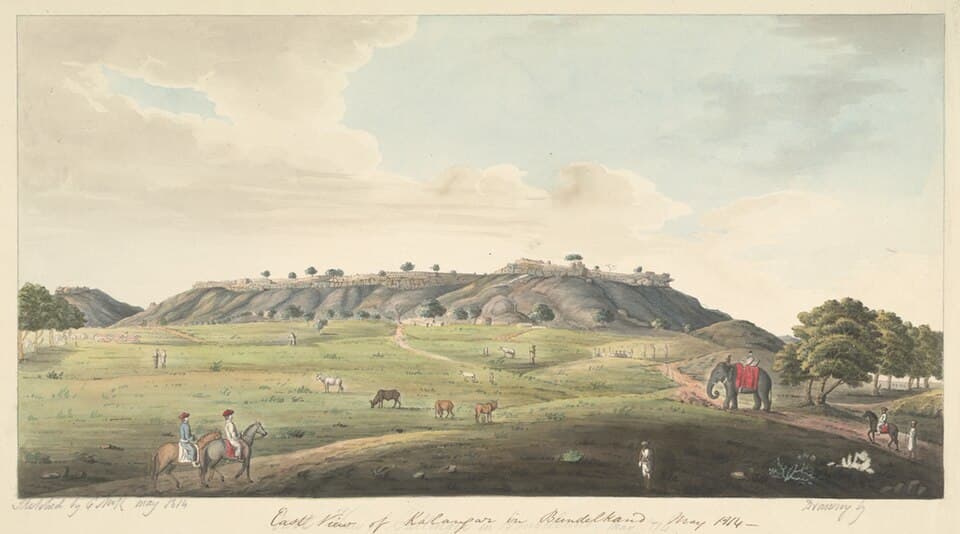
Kalinjar fort
The Chandella fort of Kalinjar on its flat topped hill, drawn in May 1814.
Colin Mackenzie, Public domain, via Wikimedia Commons
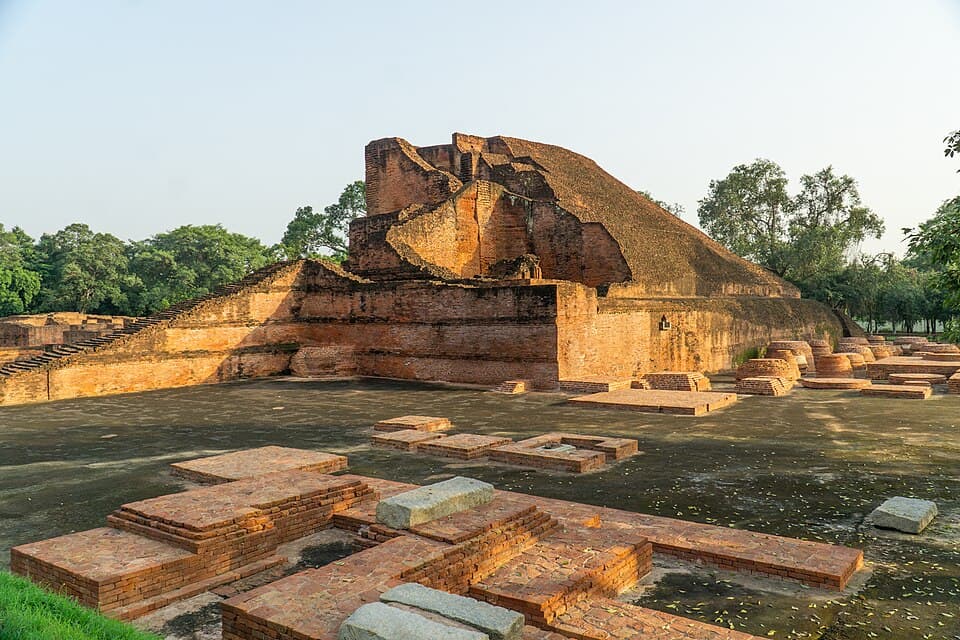
Nalanda
The brick stupa of Temple 3, the Sariputta stupa, among the excavated ruins of Nalanda.
Sumitsurai, CC BY-SA 4.0, via Wikimedia Commons
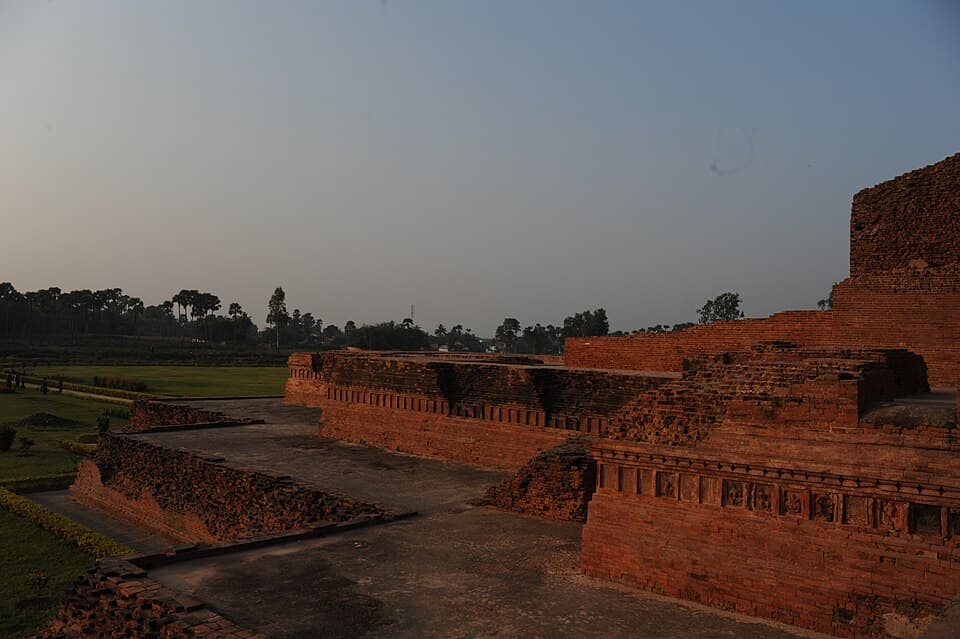
Vikramashila
The excavated brick terraces of the monastery at Vikramashila, Antichak, Bhagalpur district.
Ayan Sadhu 70, CC BY-SA 4.0, via Wikimedia Commons
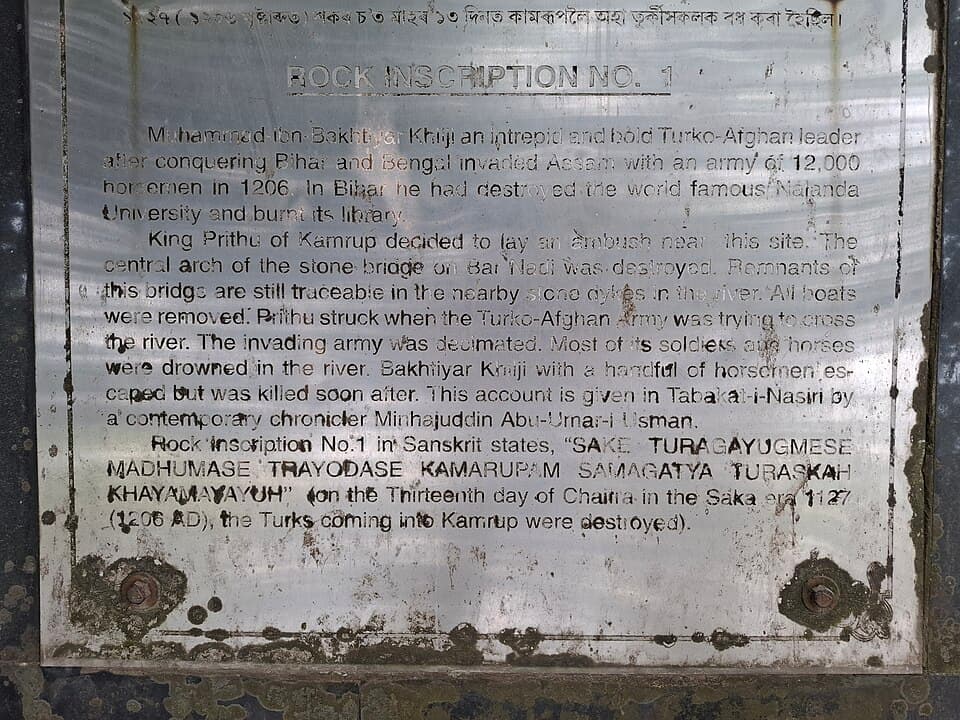
Kanai Barasi inscription
The plaque at Kanai Barasi, North Guwahati, giving the Sanskrit text of rock inscription No. 1, dated Shaka 1127, on the Turks destroyed in Kamarupa.
Pinakpani, CC BY 4.0, via Wikimedia Commons
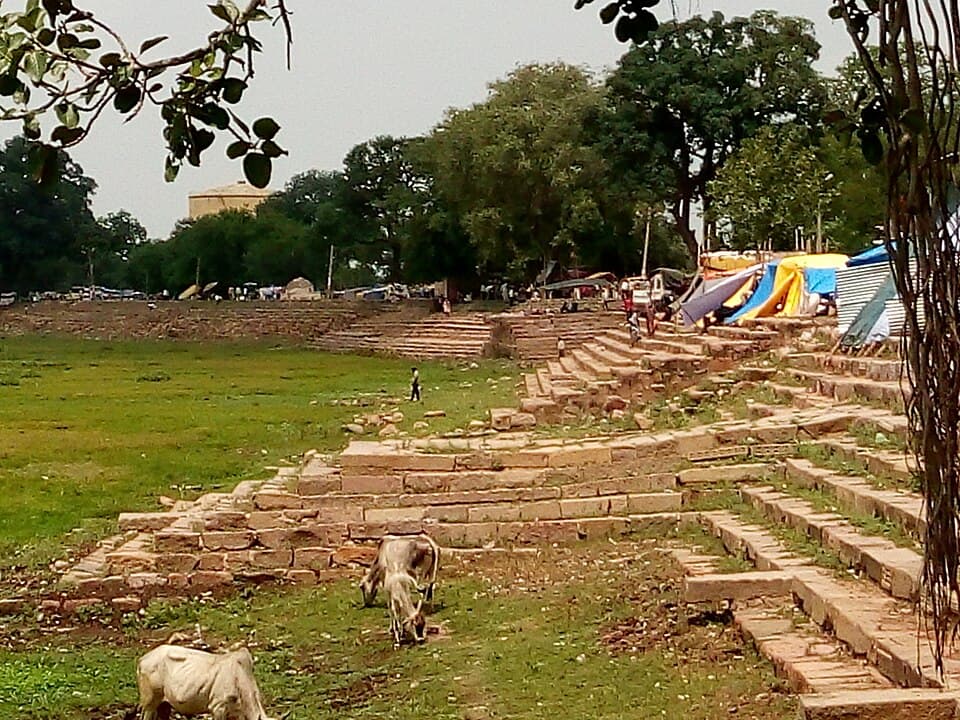
Kirat Sagar, Mahoba
The stone stepped bank of the Kirat Sagar, one of the Chandella lakes of Mahoba.
Yogendra awasthi, CC BY-SA 4.0, via Wikimedia Commons
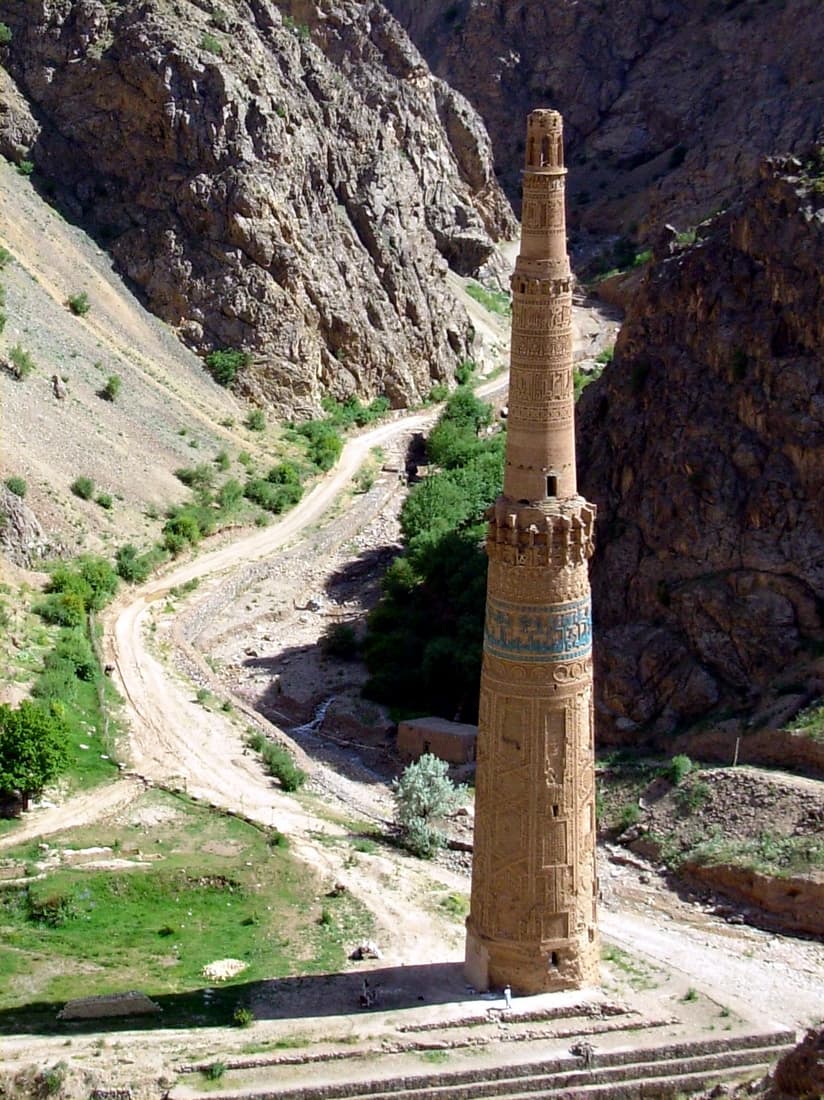
The Minaret of Jam
The Ghurid minaret of Jam rising from its river valley in Ghor, Afghanistan.
David Adamec, Public domain, via Wikimedia Commons


.jpg)


- Ghulam
- A military slave bought young, trained and educated, and loyal to his master alone; Muhammad of Ghor's ghulams became the first rulers of the Delhi Sultanate.
- Iqta
- A grant of land or revenue rights to an officer in lieu of salary, from which he kept a set force; the core of the Sultanate's system.
- Prithviraja Vijaya
- Jayanaka's Sanskrit poem from Prithviraj III's court, contemporary but breaking off before Tarain.
- Prithviraj Raso
- The epic on Prithviraj III attributed to Chand Bardai, later than the events and legendary in many episodes.
- Tarain
- The field near Thanesar, about 110 km north of Delhi, where Prithviraj III won in 1191 and lost in 1192.
- Feigned retreat
- A horse archers' tactic of seeming to flee so that the enemy breaks formation in pursuit, then turning on him; Ghor used it at Tarain in 1192.
- Quwwat ul Islam
- Might of Islam: the first mosque at Delhi, begun about 1193 under Aibak, built from the pillars of 27 Hindu and Jain temples.
- Adhai din ka Jhonpra
- The mosque built at Ajmer after the Ghurid conquest, the counterpart of the Quwwat ul Islam at Delhi.
- Vihara
- A Buddhist monastery; in Minhaj's story, the college the raiders sacked, which gave Bihar its name.
- Turushka
- Sanskrit for the Turks, as in the Kanai Barasi inscription of 1206.
- Mleccha
- Sanskrit for foreigners outside the Brahmanical order, used of the Arabs and later the Turks; ritual outsider status more than moral inferiority.
- Lal Kot
- The fort of Delhi built by the Tomaras, remembered under their king Anangapala.
- Qila Rai Pithora
- Rai Pithora's fort: Prithviraj III's Delhi around Lal Kot, where the Quwwat ul Islam was built.
- Khanqah
- A Sufi hospice giving food, shelter and guidance to visitors of every background; Moinuddin Chishti's at Ajmer was the first important Chishti khanqah in India.
- Chahamana
- The Rajput dynasty, also called the Chauhans, of Shakambhari, then Ajmer and Delhi, which ended with Prithviraj III in 1192.
- Gahadavala
- The dynasty of Kanauj and Varanasi, whose last king Jayachandra was killed at Chandawar in 1194.
- Tomara
- The rulers of Delhi, builders of Lal Kot, who stayed on as Chahamana vassals after Vigraharaja IV took Delhi.
- Chaulukya
- The dynasty of Gujarat, also called the Solankis, ruling from Anhilwara, whose army routed Ghor at Kasahrada in 1178.
- Chandella
- The dynasty of Bundelkhand, ruling from Mahoba with the fort of Kalinjar; Paramardi was its king at the conquest.
- Kamarupa
- The kingdom of Assam around Guwahati, where Bakhtiyar Khalji's army was destroyed in 1206.
Why did the Rajputs lose?
The Rajputs did not lose for want of courage, which their enemies' own chronicles record and which won Tarain in 1191. They lost to a better organised enemy, and to their own divisions.
Disunity
- Each kingdom fought alone: Jayachandra sent no help to Tarain, and Prithviraj had spent his strength against the Chandellas and Chaulukyas.
Two kinds of army
- Ghor's ghulam commanders were professionals whose careers depended on conquest; the Rajput army was a gathering of chiefs, each with his own levy and his own honour.
Tactics
- Mounted archers, reserves and the feigned retreat beat heavy cavalry and elephants that could win only by a direct charge.
No pursuit and no depth
- Rajput warfare looked for one decisive battle; after 1191 there was no pursuit, and after 1192 there was no second line of defence.
Geography and base
- Ghor held Lahore and the Punjab, so his army could rest and refit inside India.
Complacency
- The victory of 1191 was read as the end of the danger, while Ghor spent the year preparing for the next battle.
How did Prithviraj III die?
Killed at once
- Minhaj writes that Prithviraj was killed at once after his capture near Sursuti.
A vassal, then executed
- Hasan Nizami writes that he was kept as a vassal at Ajmer and executed for rebellion.
- Coins struck after 1192 carry both Prithviraj's name and Muhammad bin Sam's.
The Raso's story
- The Prithviraj Raso has Prithviraj capture and kill Ghor, an episode held to be legendary.
The joint coins support Hasan Nizami's account of a vassal at Ajmer executed for rebellion; the Raso's ending is legend.
Was the fall of Nalanda the end of Buddhism in India?
The final blow
- Nalanda trained monks and scholars from across Asia, and its sack removed a centre of transmission that could not be replaced.
- Monks fled to Tibet and Nepal with manuscripts, which is why Tibetan Buddhism keeps so much Vajrayana material lost in India.
Already in decline
- The Brahmanical revival and Bhakti had long eroded Buddhism's popular base, and it was losing royal patronage.
- In 1235 Dharmasvamin still found monks teaching at Nalanda under Rahula Shribhadra.
The sack was the final blow to the institutional base of a tradition already weakened, not the solitary cause of its decline.