Ecology & Environment
Threatened Species of India
Critically Endangered, Endangered and Vulnerable species.
IUCN statuses change, so keep them updated from current affairs.
Three categories mean threatened: Critically Endangered, Endangered and Vulnerable. What each of them means, and the categories either side of them, is set out below the list.
Critically Endangered
18 speciesGreat Indian BustardArdeotis nigriceps
BirdEndemic · Indian subcontinent
Arid and semi-arid grassland, scrub and cropland. Core population in and around Desert National Park, Jaisalmer.
State bird of Rajasthan and among the heaviest flying birds. Fewer than 150 birds survive. Collision with overhead power lines is the single largest cause of adult mortality; the Supreme Court ordered undergrounding in 2021 and modified that order in March 2024. Conservation breeding centres at Sam and Ramdevra.
Rajasthan · Gujarat · Maharashtra · Karnataka · Andhra Pradesh
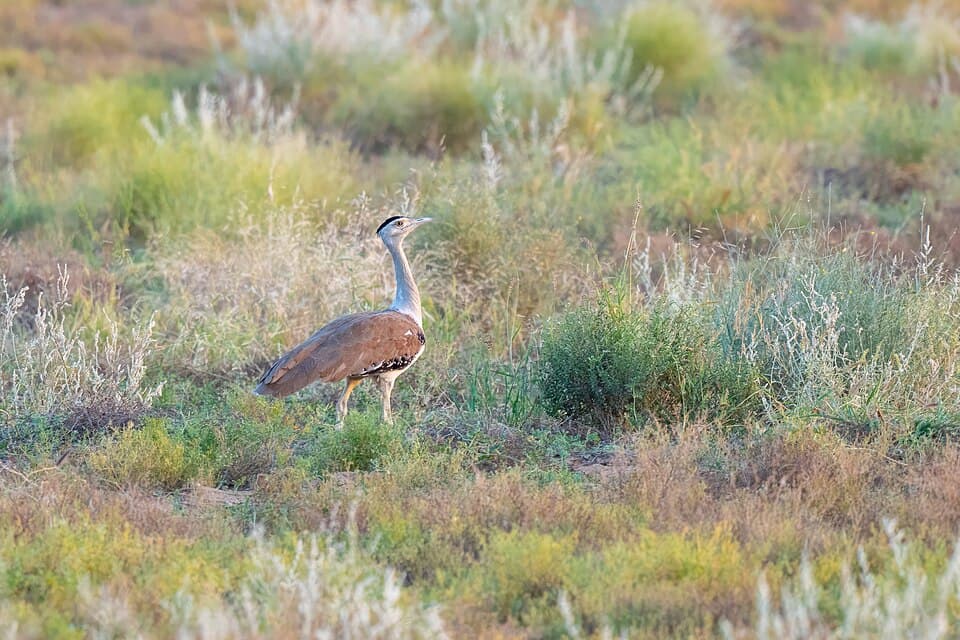
Photo: Saurabh Sawant · CC BY 4.0 · Wikimedia Commons Lesser FloricanSypheotides indicus
BirdEndemic · Indian subcontinent
Tall monsoon grassland and cropland; breeds during the south west monsoon.
The smallest bustard in the world. The male leaps repeatedly above the grass in a display flight. Uplisted to Critically Endangered in 2020 after a very steep decline.
Rajasthan · Gujarat · Madhya Pradesh · Maharashtra · Andhra Pradesh
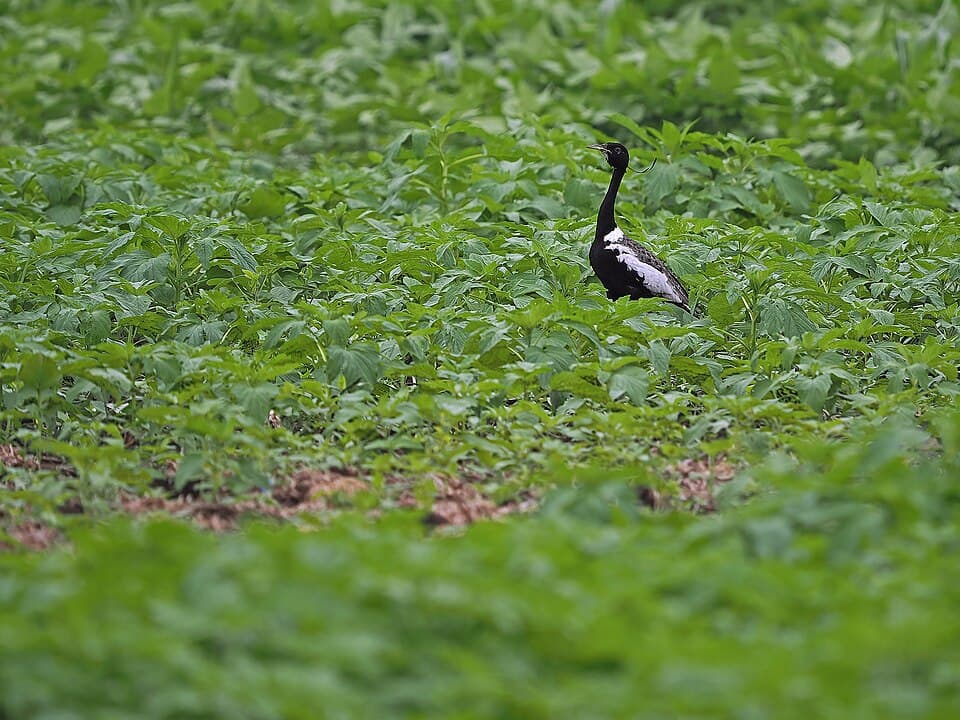
Photo: James Eaton · CC0 · Wikimedia Commons Bengal FloricanHoubaropsis bengalensis
Bird
Alluvial grassland of the Terai and the Brahmaputra floodplain. Strongholds at Manas and Kaziranga.
Males perform a spectacular leaping display. The Indian population is the largest remaining anywhere.
Assam · Uttar Pradesh · Arunachal Pradesh · West Bengal
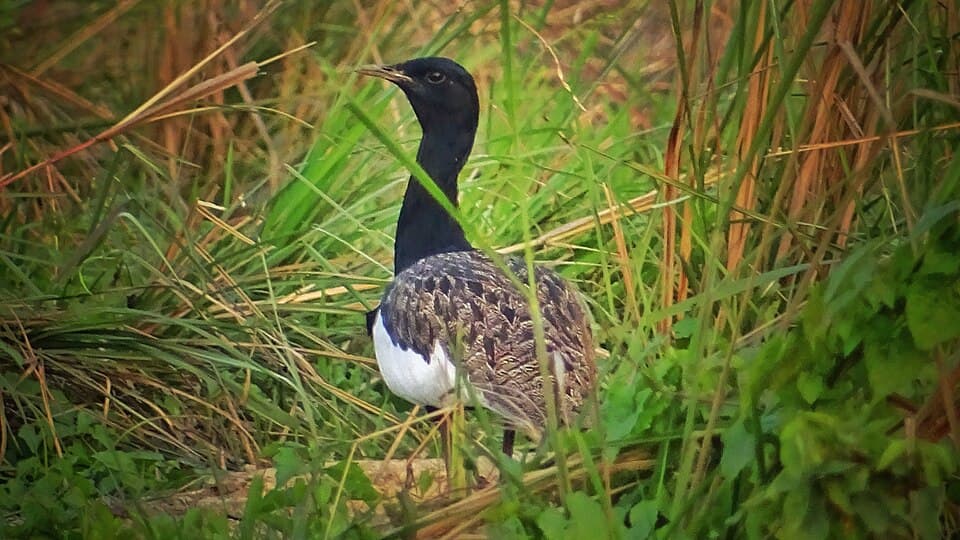
Photo: Daudabdullah · CC BY-SA 4.0 · Wikimedia Commons Baer's PochardAythya baeri
Bird
Deep freshwater lakes and marshes in winter, notably Loktak Lake and the Assam beels.
A migratory diving duck that breeds in eastern Russia and north east China.
Assam · Manipur · Bihar · Uttar Pradesh · West Bengal
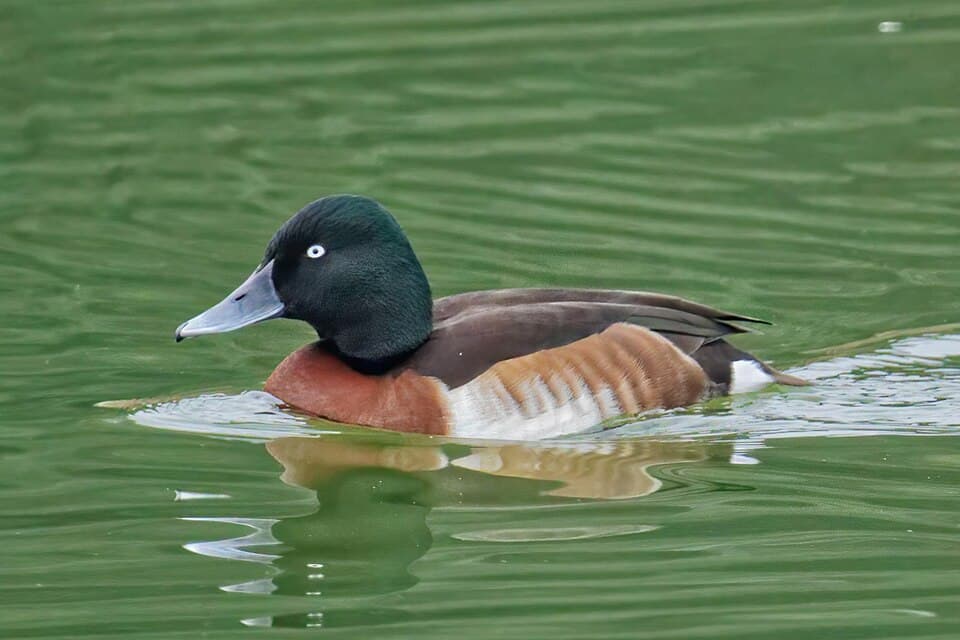
Photo: Sun Jiao (Interaccoonale) · CC BY 4.0 · Wikimedia Commons Siberian CraneLeucogeranus leucogeranus
Bird
Shallow freshwater marshes. Formerly wintered at Keoladeo Ghana National Park, Bharatpur.
The western population that came to India has not been recorded since 2002 and is effectively lost. Its decline is the standard illustration of flyway-level conservation failure.
Rajasthan
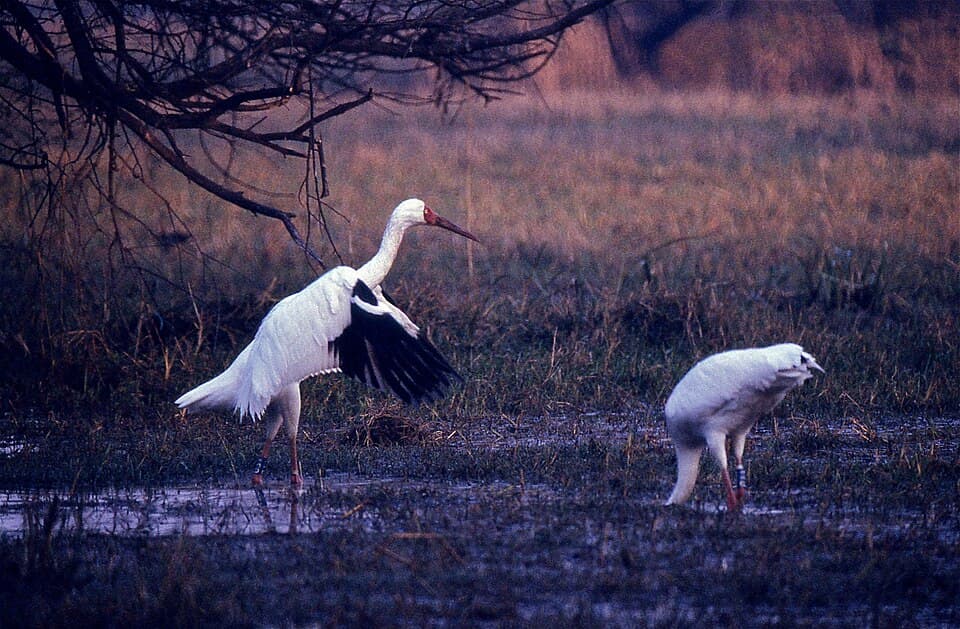
Photo: Bernard DUPONT from FRANCE · CC BY-SA 2.0 · Wikimedia Commons Sociable LapwingVanellus gregarius
Bird
Dry short grassland, fallow fields and the margins of wetlands in winter.
Breeds in the Central Asian steppe. Recorded at Sultanpur, Nalsarovar and the Banni grasslands.
Rajasthan · Gujarat · Haryana · Punjab · Maharashtra
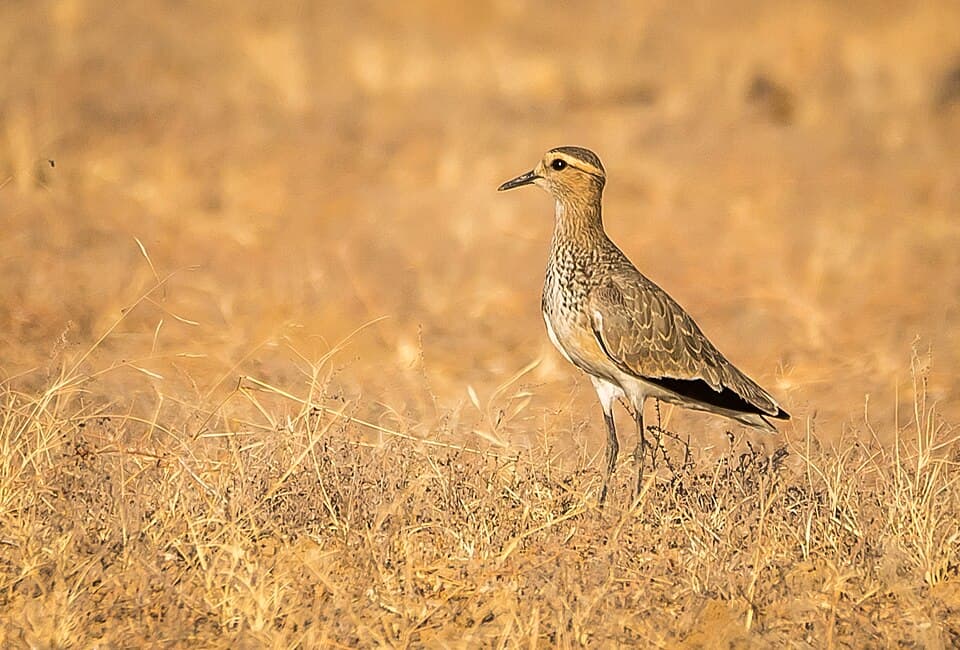
Photo: Sanjeev Kumar Goyal · CC BY-SA 4.0 · Wikimedia Commons Spoon-billed SandpiperCalidris pygmaea
Bird
Intertidal mudflats and saltpans of the east coast, notably Chilika Lake and Point Calimere.
Named for its unique spatulate bill, used with a side to side sweeping action. Breeds only in north east Russia.
Odisha · West Bengal · Tamil Nadu · Andhra Pradesh
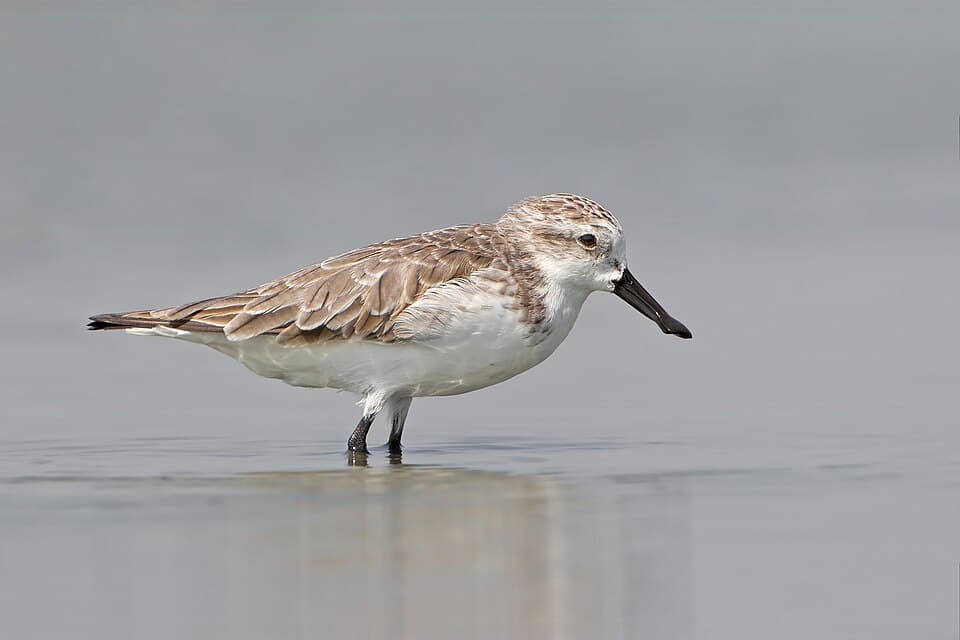
Photo: JJ Harrison (https://www.jjharrison.com.au/) · CC BY-SA 3.0 · Wikimedia Commons White-bellied HeronArdea insignis
Bird
Undisturbed rivers and riverine wetland in the eastern Himalayan foothills. Recorded at Namdapha and, since 2026, at Glaw Lake in the Kamlang Tiger Reserve.
One of the largest and rarest herons in the world, with perhaps 60 birds left globally.
Arunachal Pradesh · Assam
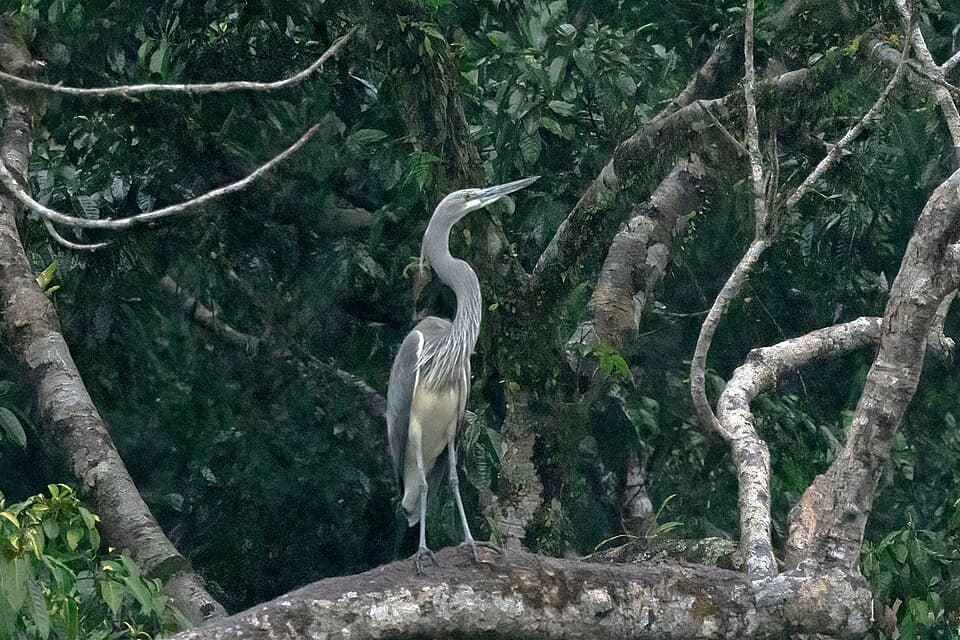
Photo: Rajkimar99 · CC BY-SA 4.0 · Wikimedia Commons Yellow-breasted BuntingEmberiza aureola
Bird
Reedbeds, paddy stubble and tall grassland in winter.
Once one of the most abundant birds in Eurasia. Mass trapping for food in East Asia drove a collapse of about 90 per cent, taking it from Least Concern to Critically Endangered in under twenty years.
Assam · West Bengal · Manipur · Nagaland · Bihar
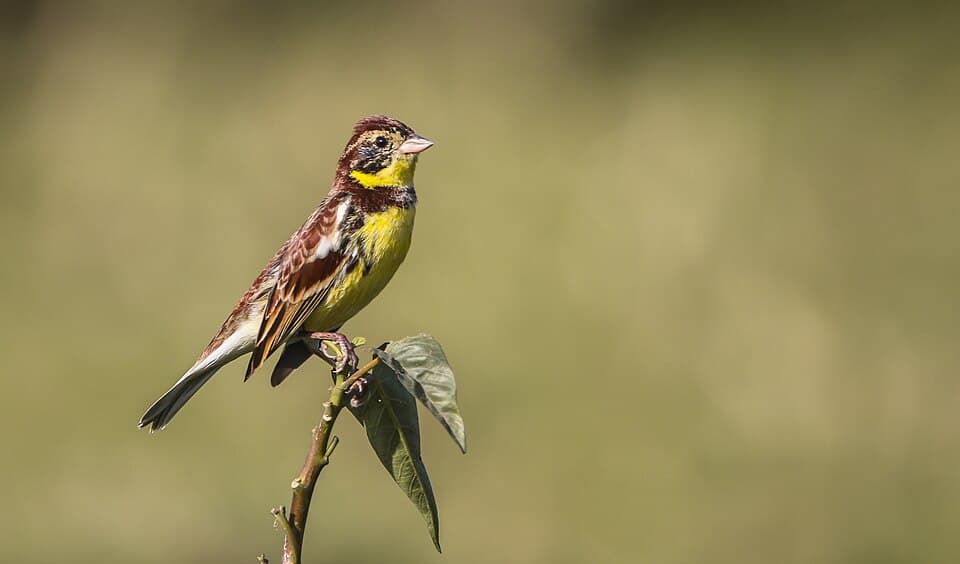
Photo: Manshanta Ghimire · CC BY-SA 4.0 · Wikimedia Commons Bugun LiocichlaLiocichla bugunorum
BirdEndemic · Eaglenest, Arunachal Pradesh
Dense scrub and secondary growth between 2,000 and 2,350 m in and around Eaglenest Wildlife Sanctuary.
Described only in 2006, the first new bird species described from India in over half a century. Named after the Bugun community, whose community reserve protects it. Fewer than 20 birds known.
Arunachal Pradesh
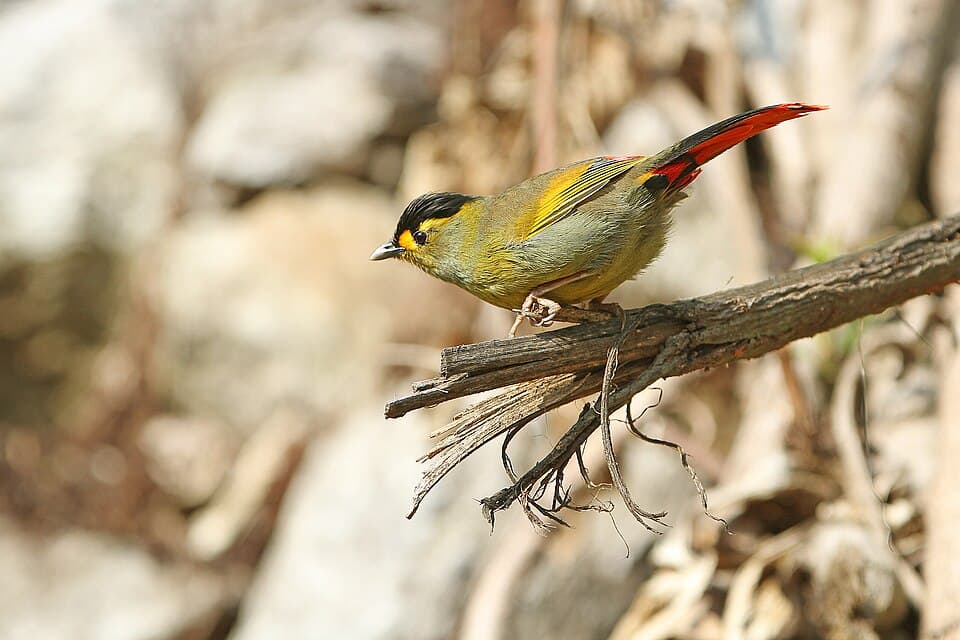
Photo: James Eaton · CC0 · Wikimedia Commons Jerdon's CourserRhinoptilus bitorquatus
BirdEndemic · Eastern Ghats, Andhra Pradesh
Sparse scrub jungle with bare ground in the Sri Lankamalleswara Wildlife Sanctuary and the Penna valley.
A nocturnal courser rediscovered in 1986 by Bharat Bhushan using traditional trapper knowledge, after being presumed extinct for 86 years. Not confirmed since 2009.
Andhra Pradesh
Himalayan QuailOphrysia superciliosa
BirdEndemic · Western Himalaya
Tall grass and scrub on steep slopes around Mussoorie and Nainital, 1,600 to 2,400 m.
Possibly Extinct. The last confirmed record is from 1876.
Uttarakhand
Pink-headed DuckRhodonessa caryophyllacea
Bird
Secluded pools and elephant grass swamps of the Ganga and Brahmaputra floodplains.
Possibly Extinct; last certain Indian record 1949. The male's pink head was unique among ducks.
Bihar · West Bengal · Assam · Uttar Pradesh
White-rumped VultureGyps bengalensis
Bird
Open country, village outskirts and forest edge across the plains.
Once possibly the most abundant large raptor in the world. Populations fell by more than 99 per cent in the 1990s from diclofenac poisoning acquired at cattle carcasses. Veterinary diclofenac was banned in 2006 and meloxicam promoted as the safe substitute.
Assam · Madhya Pradesh · Rajasthan · Gujarat · Haryana · Punjab · Uttar Pradesh · Bihar · Maharashtra · Karnataka · West Bengal
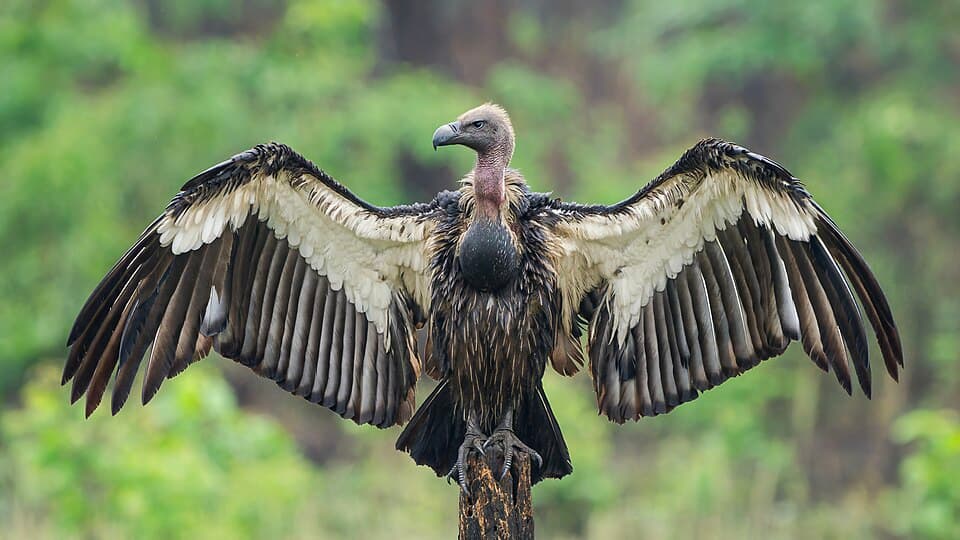
Photo: Prasan Shrestha · CC BY-SA 4.0 · Wikimedia Commons Indian Vulture or Long-billed VultureGyps indicus
BirdEndemic · Indian subcontinent
Cliffs, gorges and ruins in the Deccan and central India. Nests colonially on rock faces.
One of the three Gyps vultures devastated by diclofenac. Vulture Safe Zones and the Jatayu conservation breeding centres at Pinjore, Rajabhatkhawa and Rani are the recovery programme.
Rajasthan · Madhya Pradesh · Maharashtra · Karnataka · Gujarat · Andhra Pradesh · Telangana
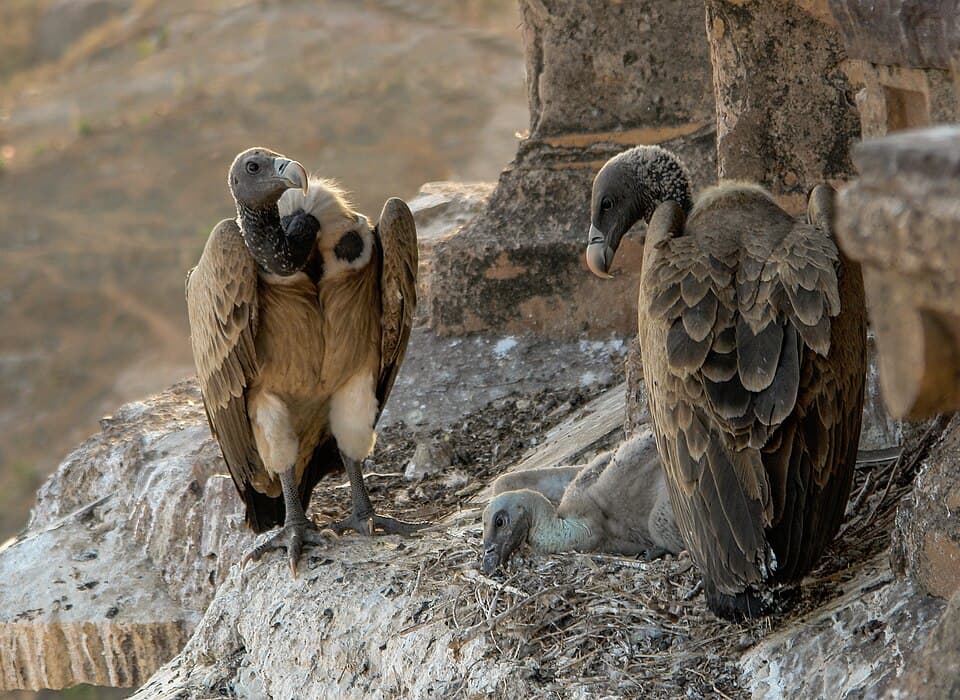
Photo: Yann (talk) · CC BY-SA 4.0 · Wikimedia Commons Slender-billed VultureGyps tenuirostris
Bird
Terai and Brahmaputra floodplain, nesting in tall trees rather than on cliffs.
The rarest of the Indian Gyps vultures, separated from the Indian vulture as a full species in 2001.
Assam · West Bengal · Bihar · Uttar Pradesh · Arunachal Pradesh
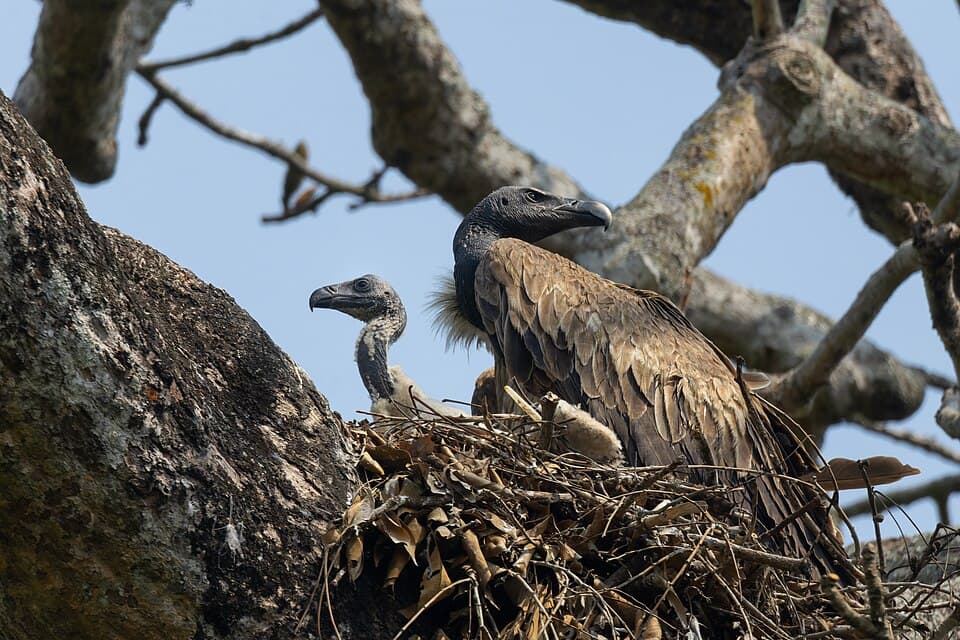
Photo: Tisha Mukherjee · CC BY-SA 4.0 · Wikimedia Commons Red-headed VultureSarcogyps calvus
Bird
Open wooded country and dry deciduous forest, generally away from towns.
Also called the king vulture for the bare red head and neck. Solitary rather than colonial, and usually first at a carcass.
Madhya Pradesh · Rajasthan · Maharashtra · Assam · Uttar Pradesh · Karnataka · Bihar
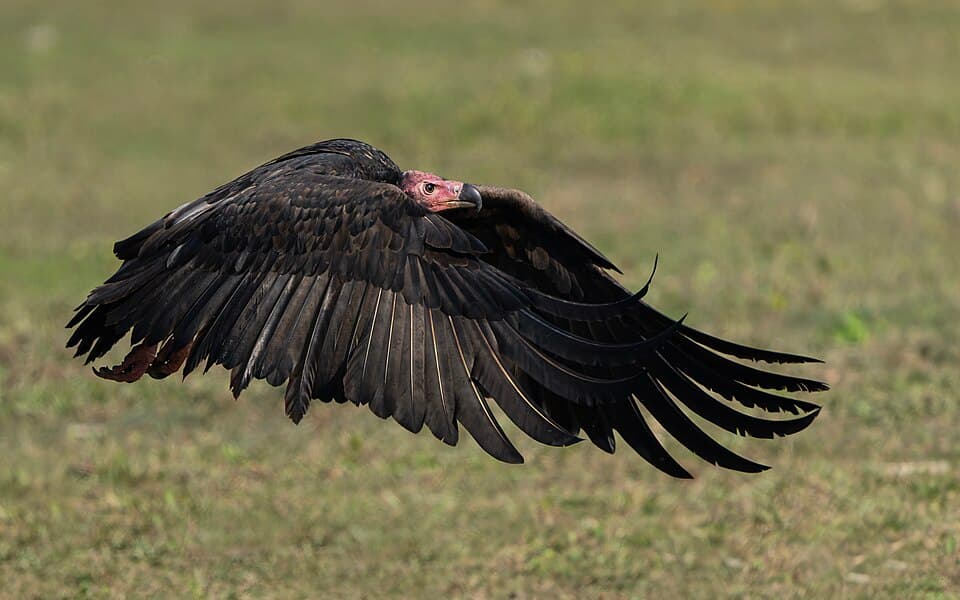
Photo: Prasan Shrestha · CC BY-SA 4.0 · Wikimedia Commons Masked FinfootHeliopais personatus
Bird
Shaded, slow-moving forest streams and mangrove creeks, including the Sundarbans.
An extremely secretive waterbird with lobed toes. Possibly no longer resident in India.
Assam · West Bengal
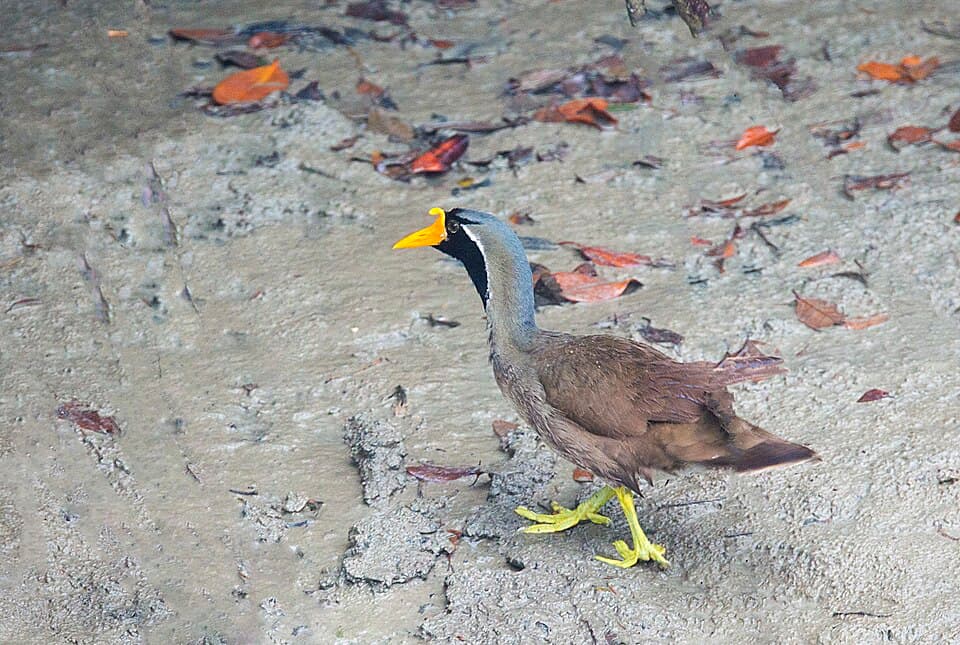
Photo: Touhid biplob · CC BY-SA 4.0 · Wikimedia Commons


_(20243040418).jpg)
.jpg)


What the categories mean
IUCN Red List- EXExtinctNo reasonable doubt the last individual has died.
- EWExtinct in the WildSurvives only in cultivation, captivity or as a naturalised population outside its range.
- CRCritically EndangeredFacing an extremely high risk of extinction in the wild.
- ENEndangeredFacing a very high risk of extinction in the wild.
- VUVulnerableFacing a high risk of extinction in the wild.
- NTNear ThreatenedClose to qualifying as threatened, or likely to qualify soon. Not itself a threatened category.
- LCLeast ConcernAssessed, and does not qualify for any category above. Widespread and abundant species sit here.
The three that mean threatened. This page lists those and nothing else.
Outside the scale
- DDData DeficientNot enough information to assess the risk. It is a statement about the evidence, not about the species.
- NENot EvaluatedHas not yet been assessed against the criteria.
Recent status changes
12 to knowAssessments that have moved. Some of these species are no longer threatened and so are not in the list above.
Greater Adjutant
Downlisted from Endangered to Near Threatened in the 2023 Red List update, after the Hargila Army community programme in Assam raised nests in Kamrup from 28 in 2010 to more than 250. It should no longer be taught as Endangered.
Lesser Adjutant
Downlisted from Vulnerable to Near Threatened in 2023.
Painted Stork
Downlisted from Near Threatened to Least Concern in 2023.
Snow Leopard
Downlisted from Endangered to Vulnerable in 2017. Many Indian study materials still say Endangered.
Fishing Cat
Downlisted from Endangered to Vulnerable in 2016.
Asiatic Lion
The subspecies Panthera leo persica is assessed Endangered; the species Panthera leo is assessed Vulnerable. Both statements appear in print, so specify which you mean.
Himalayan Brown Bear
Often listed as Endangered or Critically Endangered in Indian material. The IUCN assesses the species Ursus arctos as Least Concern and has not assessed the Himalayan subspecies separately. It is Schedule I under the Wild Life (Protection) Act, which is a different thing from an IUCN category.
Red Sanders
Uplisted from Near Threatened to Endangered; older materials, including the handout, still say Near Threatened.
Indian Wild Ass
The species Equus hemionus is Near Threatened, not Endangered. The khur population in the Rann of Kachchh has grown steadily.
Blackbuck
Least Concern since 2017, not Near Threatened. It remains Schedule I in India.
Black-necked Crane
Downlisted from Vulnerable to Near Threatened in 2020.
Indian Leopard
Often taught as Near Threatened from older lists; the species has been Vulnerable since 2016.
What is being done
Species Recovery ProgrammeThe Government of India runs targeted recovery programmes for 22 entries covering 32 species, under the Integrated Development of Wildlife Habitats scheme. Three of them are Least Concern on the Red List and are on the national list all the same, because a programme answers to what has happened in India rather than to the species everywhere.
The Species Recovery Programme →Related current affairs
The topics that keep up with the news on this.