Ecology & Environment
Threatened Species of India
Critically Endangered, Endangered and Vulnerable species.
IUCN statuses change, so keep them updated from current affairs.
Three categories mean threatened: Critically Endangered, Endangered and Vulnerable. What each of them means, and the categories either side of them, is set out below the list.
Critically Endangered
8 speciesGharialGavialis gangeticus
Reptile
Deep, fast-flowing rivers with sandbanks for nesting and basking. The National Chambal Sanctuary holds the bulk of the world population.
The only surviving member of its family and instantly recognised by the male's bulbous nasal 'ghara'. Fish-eating and almost helpless on land. Reintroduced into the Beas Conservation Reserve in Punjab from 2017.
Uttar Pradesh · Madhya Pradesh · Rajasthan · Bihar · Odisha · Punjab
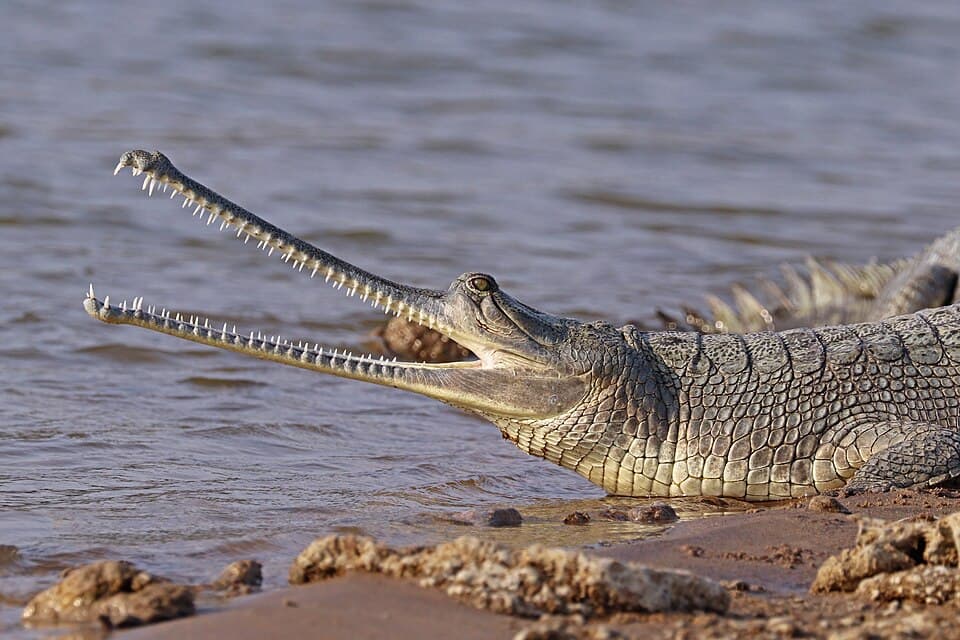
Photo: Charles J. Sharp · CC BY-SA 4.0 · Wikimedia Commons Red-crowned Roofed TurtleBatagur kachuga
Reptile
Deep flowing rivers with sandy nesting banks. Effectively confined to the Chambal.
The 'jewel of the Ganga'. Breeding males flush red, blue, yellow and white on the head and neck. Fewer than 500 adult females survive.
Uttar Pradesh · Madhya Pradesh · Rajasthan
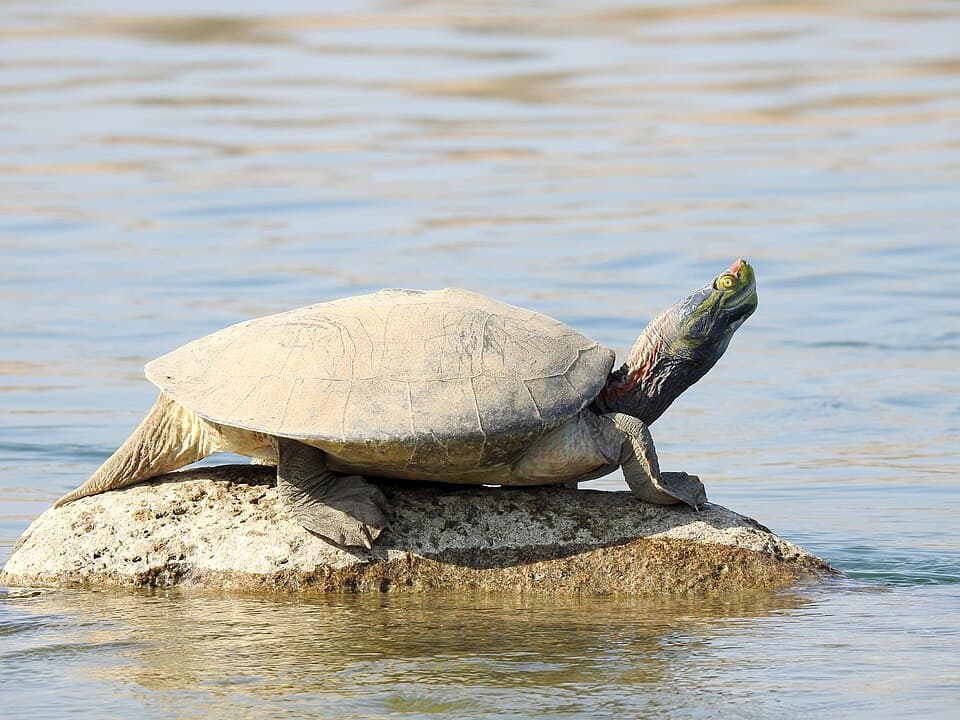
Photo: Hari arcw · CC BY-SA 4.0 · Wikimedia Commons Three-striped Roofed TurtleBatagur dhongoka
Reptile
Large rivers of the Ganga and Brahmaputra basins, notably the Chambal.
Uplisted to Critically Endangered in 2019. Recorded from Rudrasagar Lake in Tripura, a Ramsar site.
Uttar Pradesh · Madhya Pradesh · Rajasthan · Bihar · Assam
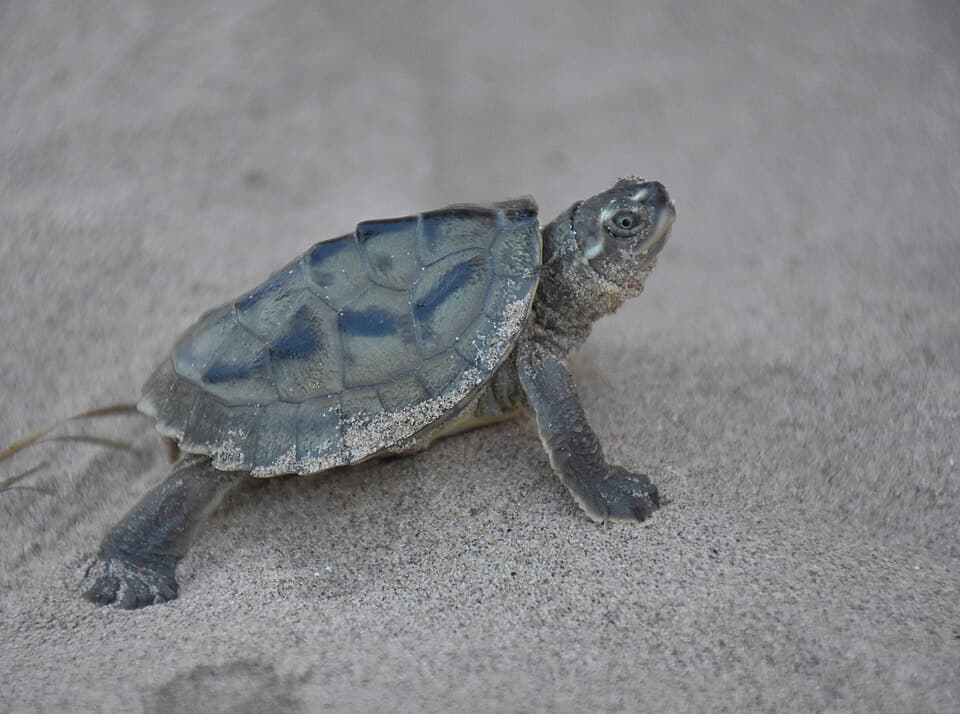
Photo: Hari arcw · CC BY-SA 4.0 · Wikimedia Commons Northern River TerrapinBatagur baska
Reptile
Tidal estuaries and mangrove creeks of the Sundarbans and Bhitarkanika.
Almost extinct in the wild in India; survives largely through assisted breeding at Sajnekhali.
West Bengal · Odisha
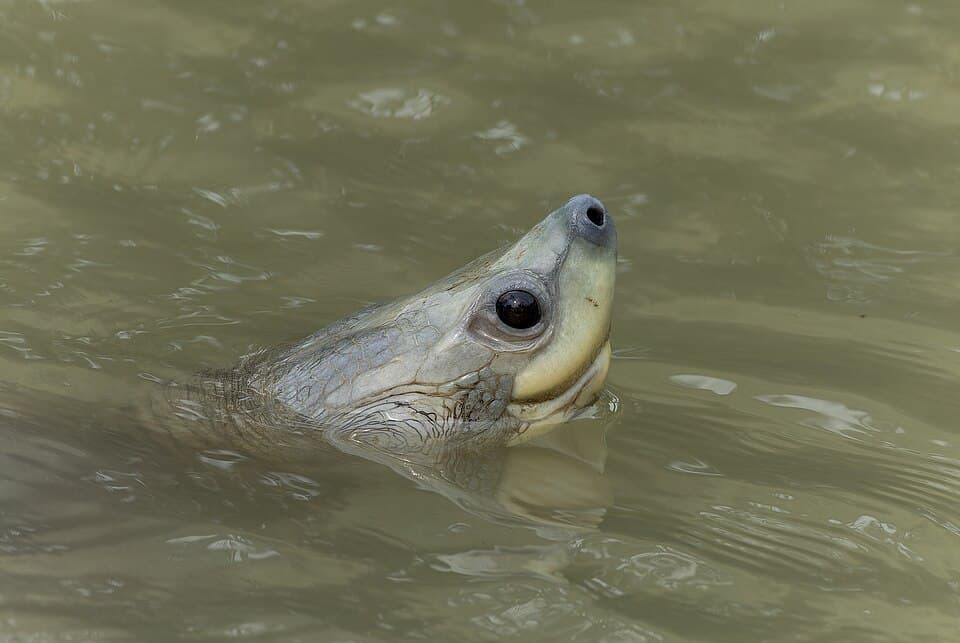
Photo: Tisha Mukherjee · CC BY-SA 4.0 · Wikimedia Commons Hawksbill TurtleEretmochelys imbricata
Reptile
Coral reefs and rocky coasts. Nests on island beaches in the Andamans and Lakshadweep.
The source of 'tortoiseshell'. It feeds largely on sponges, which helps maintain reef structure.
Andaman & Nicobar Islands · Lakshadweep · Tamil Nadu · Gujarat · Odisha
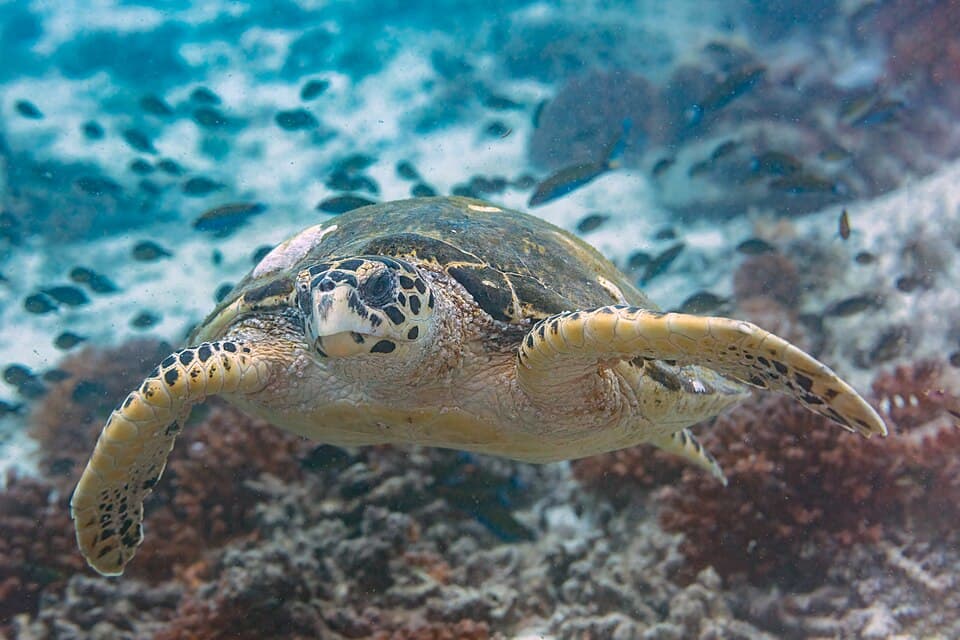
Photo: Diego Delso · CC BY-SA 4.0 · Wikimedia Commons Cantor's Giant Softshell TurtlePelochelys cantorii
Reptile
Sandy or muddy beds of large rivers and estuaries, notably the Chandragiri river in Kerala.
Spends nearly all its life buried in sand with only the eyes and mouth exposed, surfacing about twice a day to breathe.
Kerala · Odisha · West Bengal · Andhra Pradesh
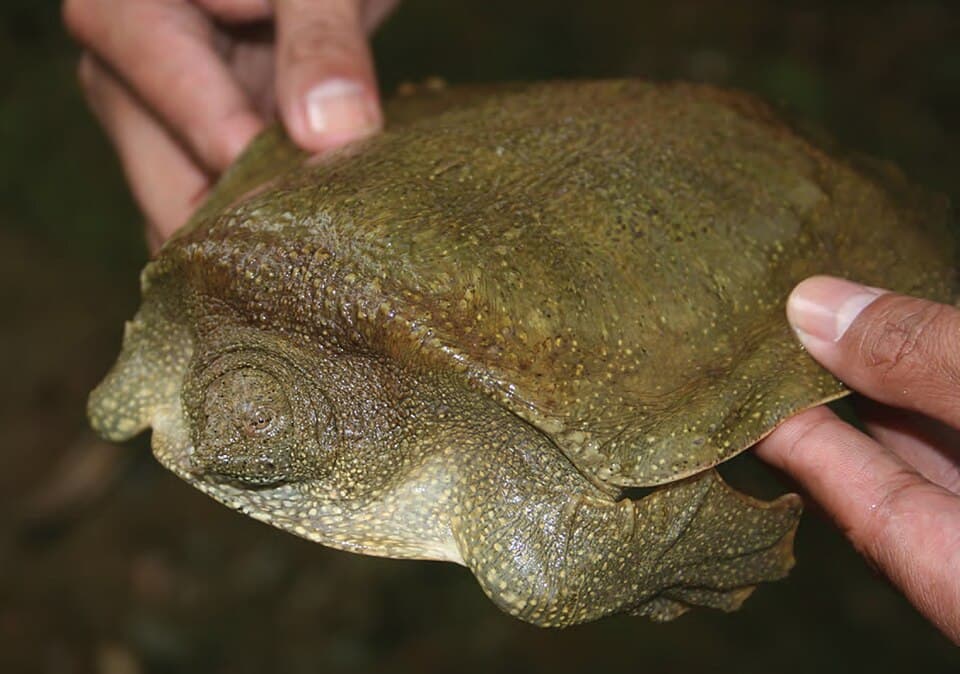
Photo: Brown R, Siler C, Oliveros C, Welton L, Rock A, Swab J, Van Weerd M, van Beijnen J, Rodriguez D, Jose E, Diesmos A · CC BY 3.0 · Wikimedia Commons Leith's Softshell TurtleNilssonia leithii
ReptileEndemic · Peninsular India
Rivers and reservoirs of the Deccan, including the Cauvery, Krishna and Godavari.
Uplisted from Vulnerable to Critically Endangered in 2019 after heavy harvesting for the meat trade.
Karnataka · Tamil Nadu · Kerala · Maharashtra · Andhra Pradesh
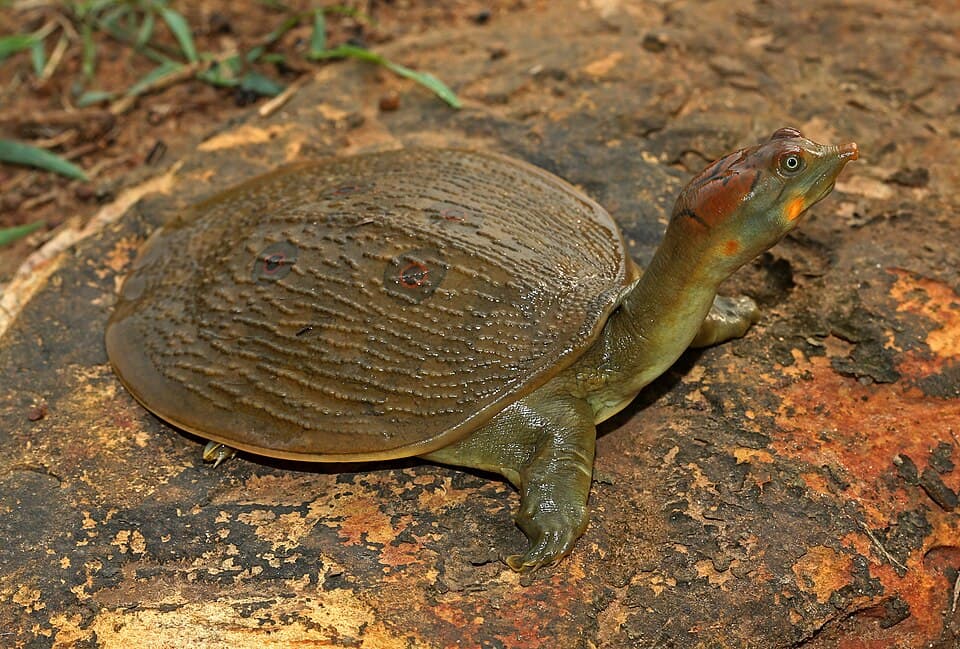
Photo: Davidvraju · CC BY-SA 4.0 · Wikimedia Commons Black Softshell TurtleNilssonia nigricans
Reptile
Temple ponds and the Brahmaputra floodplain. The Hayagriva Madhava temple pond at Hajo is the best known site.
Was once classified Extinct in the Wild, surviving only in temple ponds where it is fed by devotees. Wild populations have since been confirmed.
Assam · Tripura
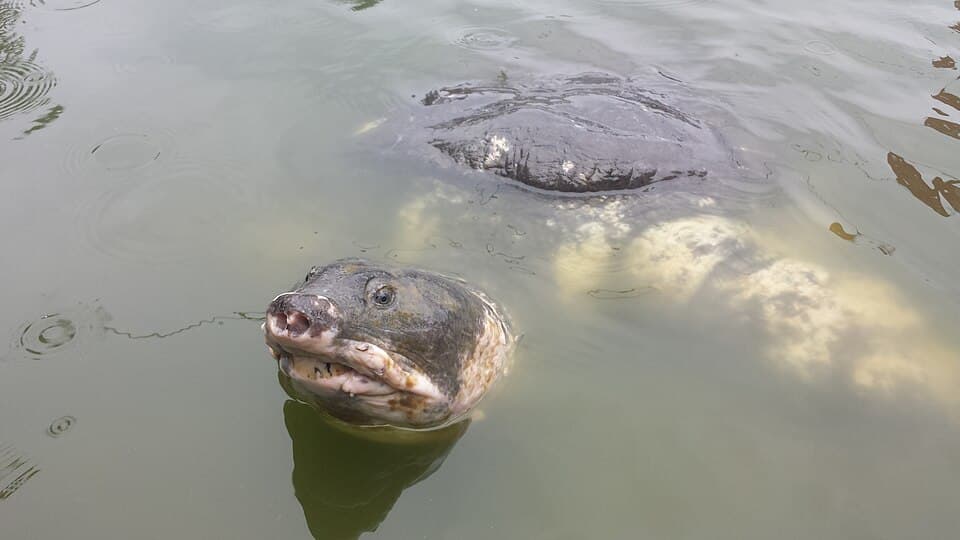
Photo: Mar11 · CC BY 4.0 · Wikimedia Commons
_female_head.jpg)


,_islas_Ad_Dimaniyat,_Om%C3%A1n,_2024-08-13,_DD_69.jpg)


What the categories mean
IUCN Red List- EXExtinctNo reasonable doubt the last individual has died.
- EWExtinct in the WildSurvives only in cultivation, captivity or as a naturalised population outside its range.
- CRCritically EndangeredFacing an extremely high risk of extinction in the wild.
- ENEndangeredFacing a very high risk of extinction in the wild.
- VUVulnerableFacing a high risk of extinction in the wild.
- NTNear ThreatenedClose to qualifying as threatened, or likely to qualify soon. Not itself a threatened category.
- LCLeast ConcernAssessed, and does not qualify for any category above. Widespread and abundant species sit here.
The three that mean threatened. This page lists those and nothing else.
Outside the scale
- DDData DeficientNot enough information to assess the risk. It is a statement about the evidence, not about the species.
- NENot EvaluatedHas not yet been assessed against the criteria.
Recent status changes
12 to knowAssessments that have moved. Some of these species are no longer threatened and so are not in the list above.
Greater Adjutant
Downlisted from Endangered to Near Threatened in the 2023 Red List update, after the Hargila Army community programme in Assam raised nests in Kamrup from 28 in 2010 to more than 250. It should no longer be taught as Endangered.
Lesser Adjutant
Downlisted from Vulnerable to Near Threatened in 2023.
Painted Stork
Downlisted from Near Threatened to Least Concern in 2023.
Snow Leopard
Downlisted from Endangered to Vulnerable in 2017. Many Indian study materials still say Endangered.
Fishing Cat
Downlisted from Endangered to Vulnerable in 2016.
Asiatic Lion
The subspecies Panthera leo persica is assessed Endangered; the species Panthera leo is assessed Vulnerable. Both statements appear in print, so specify which you mean.
Himalayan Brown Bear
Often listed as Endangered or Critically Endangered in Indian material. The IUCN assesses the species Ursus arctos as Least Concern and has not assessed the Himalayan subspecies separately. It is Schedule I under the Wild Life (Protection) Act, which is a different thing from an IUCN category.
Red Sanders
Uplisted from Near Threatened to Endangered; older materials, including the handout, still say Near Threatened.
Indian Wild Ass
The species Equus hemionus is Near Threatened, not Endangered. The khur population in the Rann of Kachchh has grown steadily.
Blackbuck
Least Concern since 2017, not Near Threatened. It remains Schedule I in India.
Black-necked Crane
Downlisted from Vulnerable to Near Threatened in 2020.
Indian Leopard
Often taught as Near Threatened from older lists; the species has been Vulnerable since 2016.
What is being done
Species Recovery ProgrammeThe Government of India runs targeted recovery programmes for 22 entries covering 32 species, under the Integrated Development of Wildlife Habitats scheme. Three of them are Least Concern on the Red List and are on the national list all the same, because a programme answers to what has happened in India rather than to the species everywhere.
The Species Recovery Programme →Related current affairs
The topics that keep up with the news on this.