Ecology & Environment
Threatened Species of India
Critically Endangered, Endangered and Vulnerable species.
IUCN statuses change, so keep them updated from current affairs.
Three categories mean threatened: Critically Endangered, Endangered and Vulnerable. What each of them means, and the categories either side of them, is set out below the list.
Critically Endangered
24 speciesAndaman White-toothed ShrewCrocidura andamanensis
MammalEndemic · Andaman Islands
Leaf litter of tropical evergreen forest on South Andaman Island.
A nocturnal insectivore known from a handful of specimens. One of three shrews endemic to the islands, all Critically Endangered.
Andaman & Nicobar Islands
Jenkins's Andaman Spiny ShrewCrocidura jenkinsi
MammalEndemic · Andaman Islands
Forest floor of Mount Harriet, now Mount Manipur, on South Andaman.
Known only from the type locality. Distinguished by stiff, spiny guard hairs.
Andaman & Nicobar Islands
Nicobar White-tailed ShrewCrocidura nicobarica
MammalEndemic · Great Nicobar
Coastal forest of Great Nicobar around Campbell Bay.
Restricted to a very small area now overlapped by the Great Nicobar development project.
Andaman & Nicobar Islands
Kashmir Stag or HangulCervus hanglu hanglu
MammalEndemic · Kashmir Himalaya
Temperate riverine and coniferous forest, 1,700 to 4,000 m, almost entirely inside Dachigam National Park.
The only surviving red deer of the Indian subcontinent and the state animal of Jammu and Kashmir. Population about 300. Project Hangul and a second home at Tral Wildlife Sanctuary are the main interventions.
Jammu & Kashmir
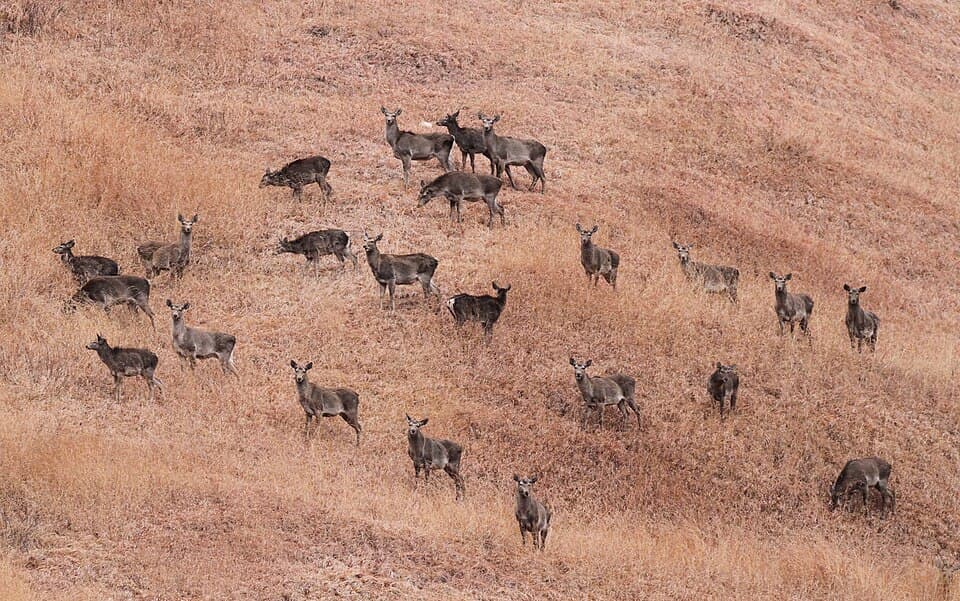
Photo: Tahirshawl · CC BY-SA 4.0 · Wikimedia Commons Elvira Rat or Large Rock RatCremnomys elvira
MammalEndemic · Eastern Ghats
Rocky slopes with dry deciduous and scrub forest in the Eastern Ghats around Salem.
A nocturnal, seed-eating rodent known from very few localities.
Tamil Nadu
Malabar CivetViverra civettina
MammalEndemic · Western Ghats
Lowland forest, cashew plantations and degraded coastal thickets of the Malabar coast.
Possibly already extinct. There has been no confirmed record for decades. Historically hunted for civetone, used in perfumery.
Kerala · Karnataka
Namdapha Flying SquirrelBiswamoyopterus biswasi
MammalEndemic · Namdapha
Tropical evergreen forest in the Noa-Dihing valley, Namdapha National Park.
Known from a single specimen collected in 1981. Among the rarest mammals in the world.
Arunachal Pradesh
Kondana Soft-furred RatMillardia kondana
MammalEndemic · Sinhagad plateau
Grass and scrub on the Sinhagad plateau near Pune, above 900 m.
Confined to an area of a few square kilometres under heavy tourism pressure.
Maharashtra
Great Indian BustardArdeotis nigriceps
BirdEndemic · Indian subcontinent
Arid and semi-arid grassland, scrub and cropland. Core population in and around Desert National Park, Jaisalmer.
State bird of Rajasthan and among the heaviest flying birds. Fewer than 150 birds survive. Collision with overhead power lines is the single largest cause of adult mortality; the Supreme Court ordered undergrounding in 2021 and modified that order in March 2024. Conservation breeding centres at Sam and Ramdevra.
Rajasthan · Gujarat · Maharashtra · Karnataka · Andhra Pradesh
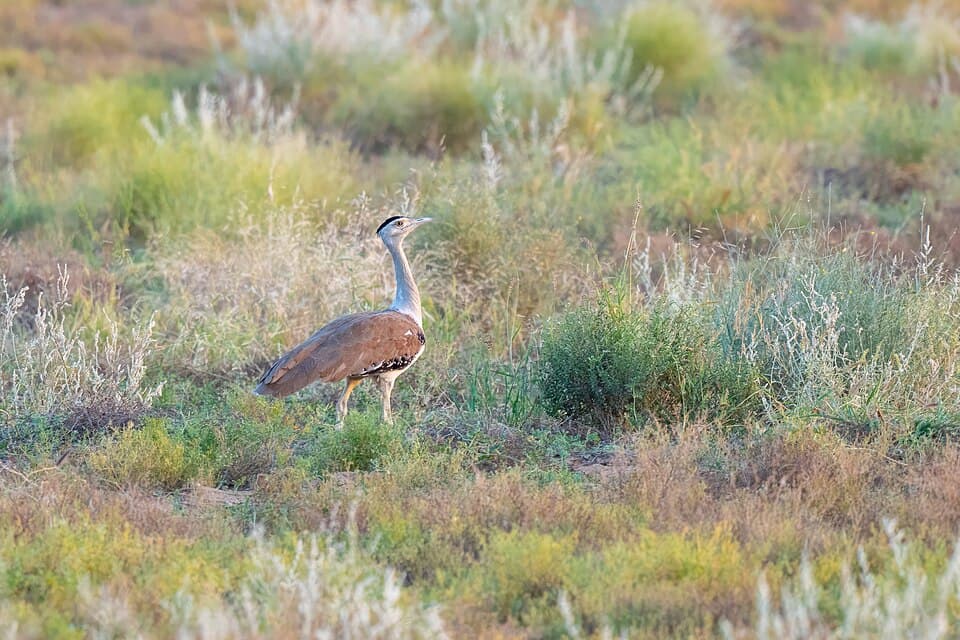
Photo: Saurabh Sawant · CC BY 4.0 · Wikimedia Commons Lesser FloricanSypheotides indicus
BirdEndemic · Indian subcontinent
Tall monsoon grassland and cropland; breeds during the south west monsoon.
The smallest bustard in the world. The male leaps repeatedly above the grass in a display flight. Uplisted to Critically Endangered in 2020 after a very steep decline.
Rajasthan · Gujarat · Madhya Pradesh · Maharashtra · Andhra Pradesh
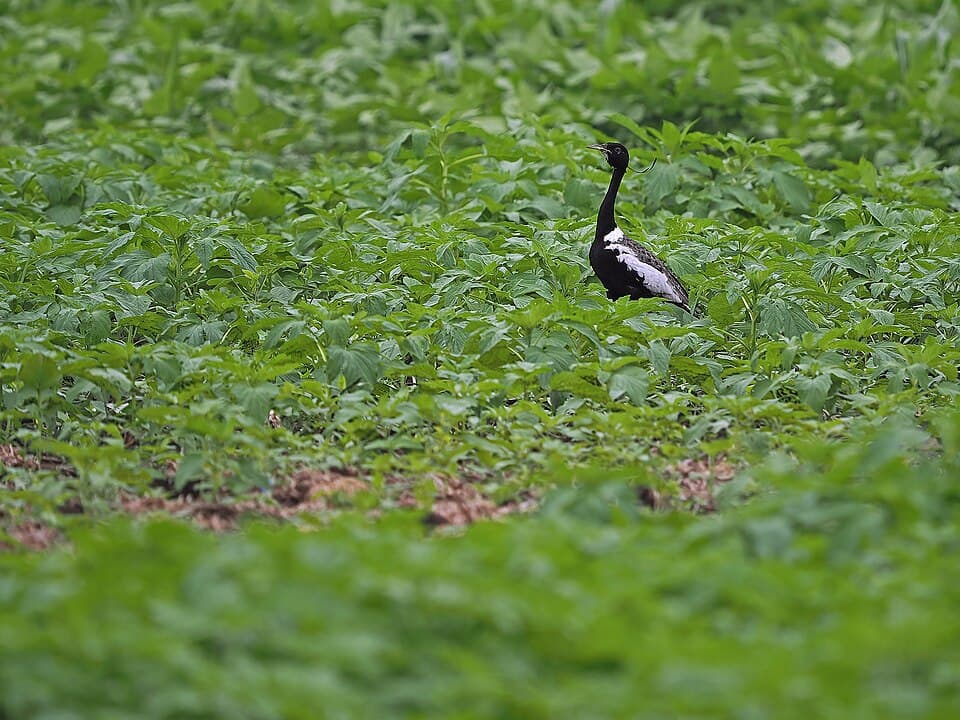
Photo: James Eaton · CC0 · Wikimedia Commons Bugun LiocichlaLiocichla bugunorum
BirdEndemic · Eaglenest, Arunachal Pradesh
Dense scrub and secondary growth between 2,000 and 2,350 m in and around Eaglenest Wildlife Sanctuary.
Described only in 2006, the first new bird species described from India in over half a century. Named after the Bugun community, whose community reserve protects it. Fewer than 20 birds known.
Arunachal Pradesh
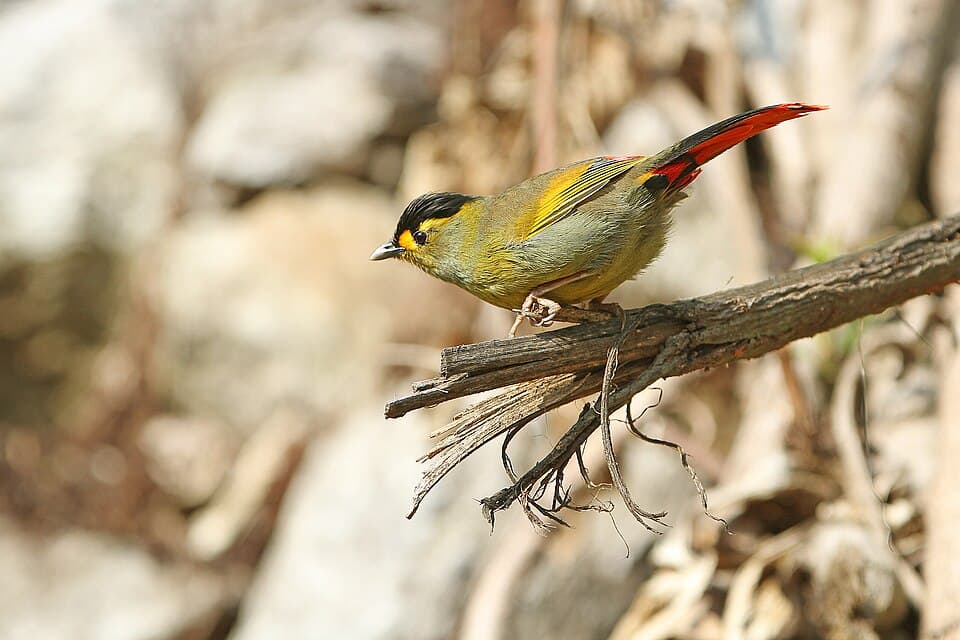
Photo: James Eaton · CC0 · Wikimedia Commons Jerdon's CourserRhinoptilus bitorquatus
BirdEndemic · Eastern Ghats, Andhra Pradesh
Sparse scrub jungle with bare ground in the Sri Lankamalleswara Wildlife Sanctuary and the Penna valley.
A nocturnal courser rediscovered in 1986 by Bharat Bhushan using traditional trapper knowledge, after being presumed extinct for 86 years. Not confirmed since 2009.
Andhra Pradesh
Himalayan QuailOphrysia superciliosa
BirdEndemic · Western Himalaya
Tall grass and scrub on steep slopes around Mussoorie and Nainital, 1,600 to 2,400 m.
Possibly Extinct. The last confirmed record is from 1876.
Uttarakhand
Indian Vulture or Long-billed VultureGyps indicus
BirdEndemic · Indian subcontinent
Cliffs, gorges and ruins in the Deccan and central India. Nests colonially on rock faces.
One of the three Gyps vultures devastated by diclofenac. Vulture Safe Zones and the Jatayu conservation breeding centres at Pinjore, Rajabhatkhawa and Rani are the recovery programme.
Rajasthan · Madhya Pradesh · Maharashtra · Karnataka · Gujarat · Andhra Pradesh · Telangana
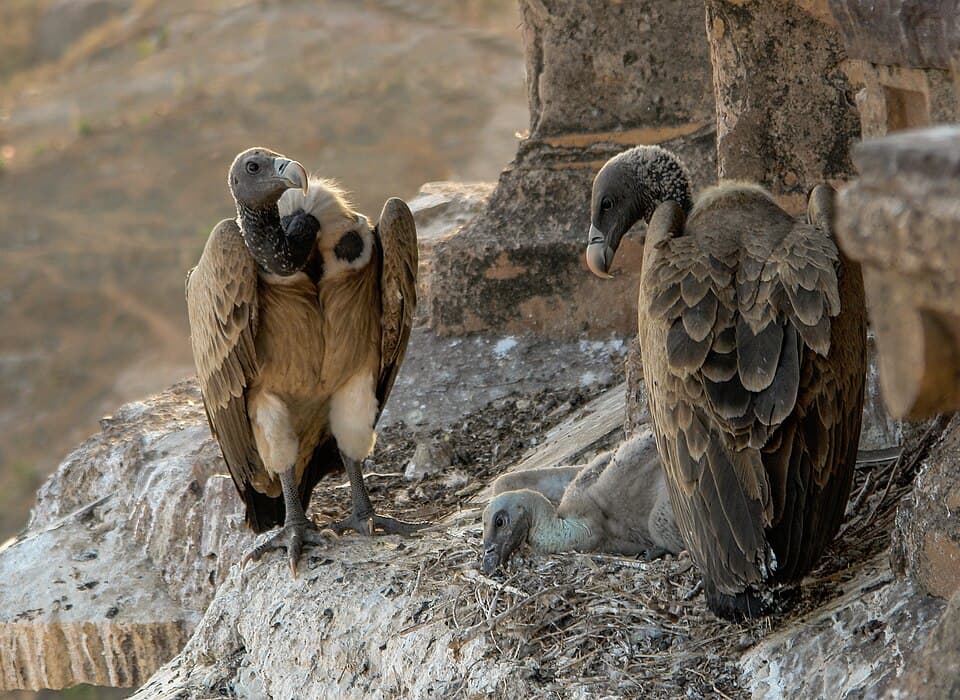
Photo: Yann (talk) · CC BY-SA 4.0 · Wikimedia Commons Leith's Softshell TurtleNilssonia leithii
ReptileEndemic · Peninsular India
Rivers and reservoirs of the Deccan, including the Cauvery, Krishna and Godavari.
Uplisted from Vulnerable to Critically Endangered in 2019 after heavy harvesting for the meat trade.
Karnataka · Tamil Nadu · Kerala · Maharashtra · Andhra Pradesh
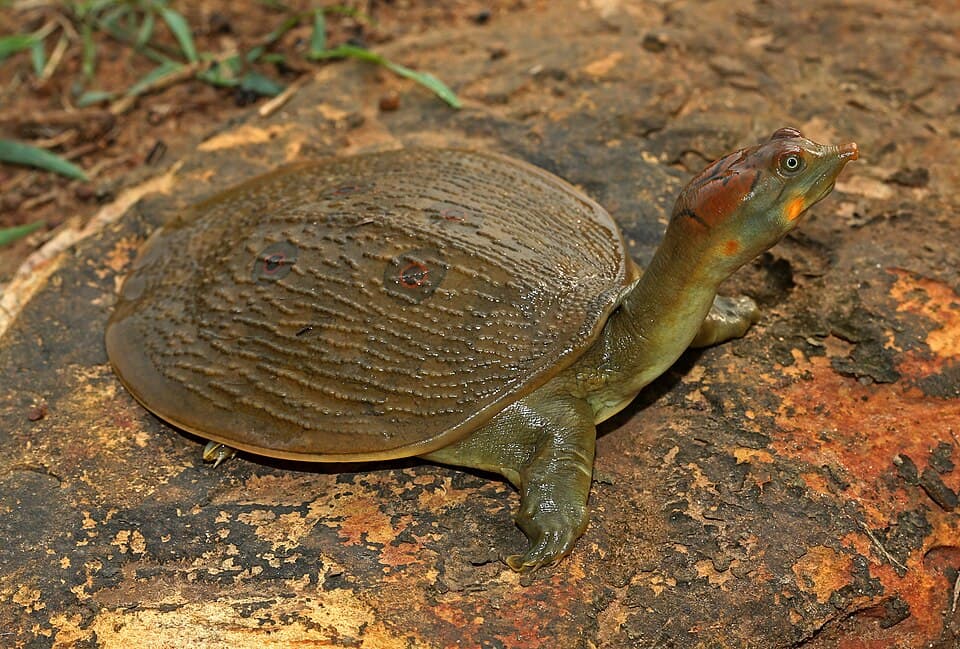
Photo: Davidvraju · CC BY-SA 4.0 · Wikimedia Commons Hump-backed MahseerTor remadevii
FishEndemic · Cauvery basin
Fast-flowing pools and rapids of the Cauvery and its tributaries, especially around Bhavani and the Moyar.
The 'tiger of the water', a legendary angling fish. Formally described only in 2018 and assessed as Critically Endangered the same year. Threatened by introduced mahseer stocked from other basins.
Karnataka · Tamil Nadu · Kerala
Anamalai Flying FrogRhacophorus pseudomalabaricus
AmphibianEndemic · Anamalai Hills, Western Ghats
Canopy of evergreen forest in the Anamalai and Cardamom hills, 1,000 to 1,400 m.
Glides between trees using extensive webbing between the toes. Breeds in tree holes and foam nests over water.
Kerala · Tamil Nadu
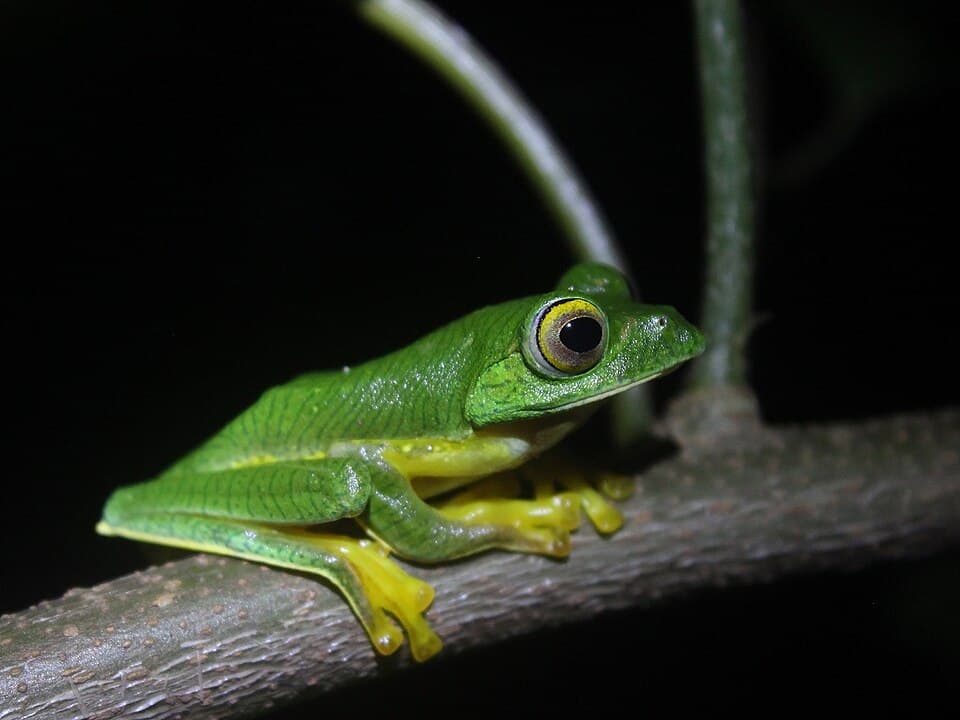
Photo: Vijay Karthick · CC BY-SA 4.0 · Wikimedia Commons Resplendent Shrub FrogRaorchestes resplendens
AmphibianEndemic · Anamudi summit
Restricted to about three square kilometres of grassland on the summit of Anamudi in Eravikulam National Park.
A stout orange-red frog with one of the smallest ranges of any vertebrate. Develops directly from egg to froglet with no tadpole stage.
Kerala
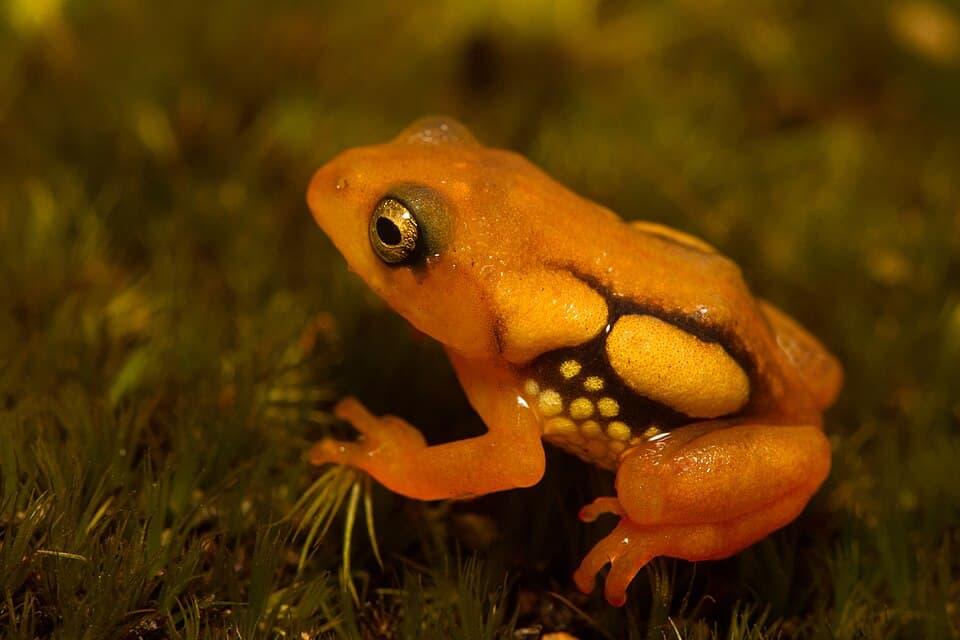
Photo: David V. Raju · CC BY-SA 4.0 · Wikimedia Commons Peacock Tarantula or Gooty SapphirePoecilotheria metallica
InvertebrateEndemic · Eastern Ghats
A single reserve forest patch of dry deciduous woodland near Gooty in the Nandyal and Giddalur belt.
Brilliant metallic blue, arboreal and highly sought in the illegal pet trade. Known from an area of well under 100 square kilometres.
Andhra Pradesh
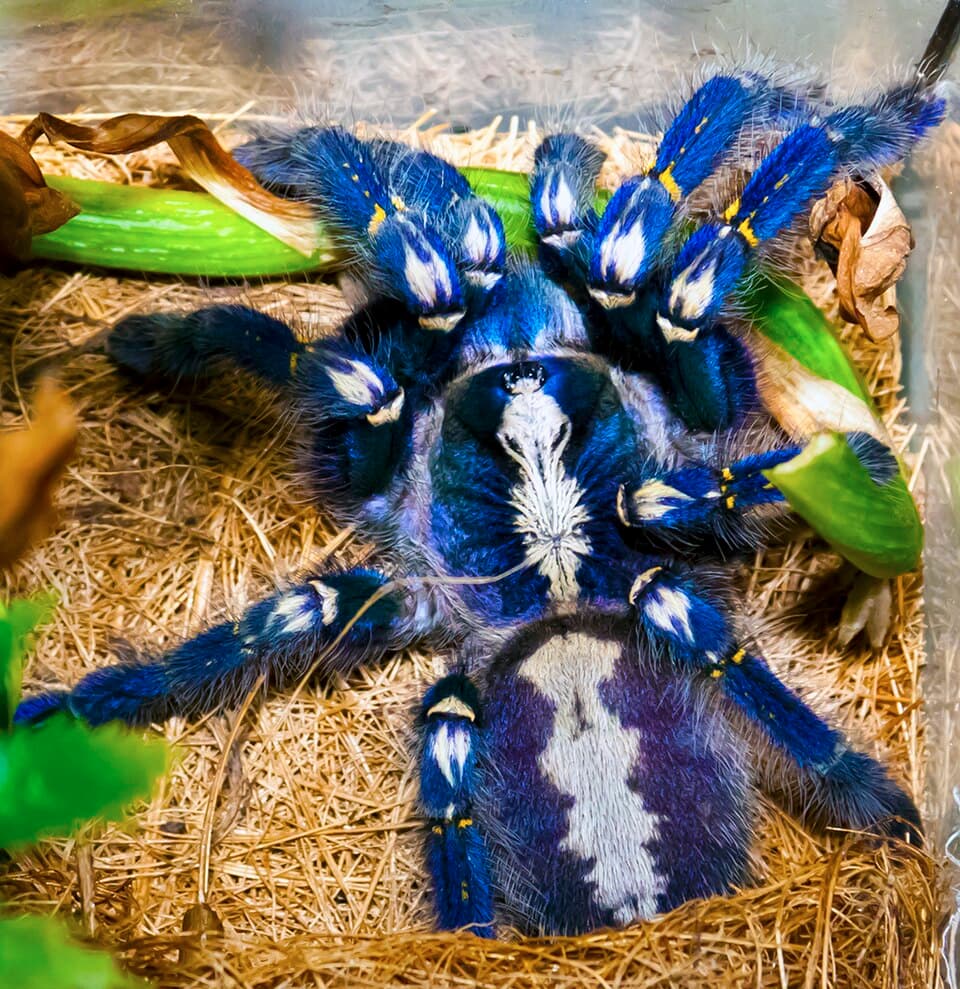
Photo: MLursus · CC BY-SA 2.0 · Wikimedia Commons Pyrostria laljiiPyrostria laljii
PlantEndemic · Andaman Islands
Semi-evergreen forest of South Andaman, in the Wandoor and Jarawa reserve belt.
Described in 2019 and the first Indian record of its genus, a member of the coffee family Rubiaceae. Named after the botanist Lal Ji Singh. A slender tree with a distinctive hollow-based trunk.
Andaman & Nicobar Islands
Dipterocarpus bourdilloniiDipterocarpus bourdillonii
PlantEndemic · Western Ghats
Lowland wet evergreen forest below 800 m.
A giant emergent timber tree of the dipterocarp family. Regeneration is poor because the winged fruit needs closed canopy to germinate.
Kerala · Tamil Nadu · Karnataka
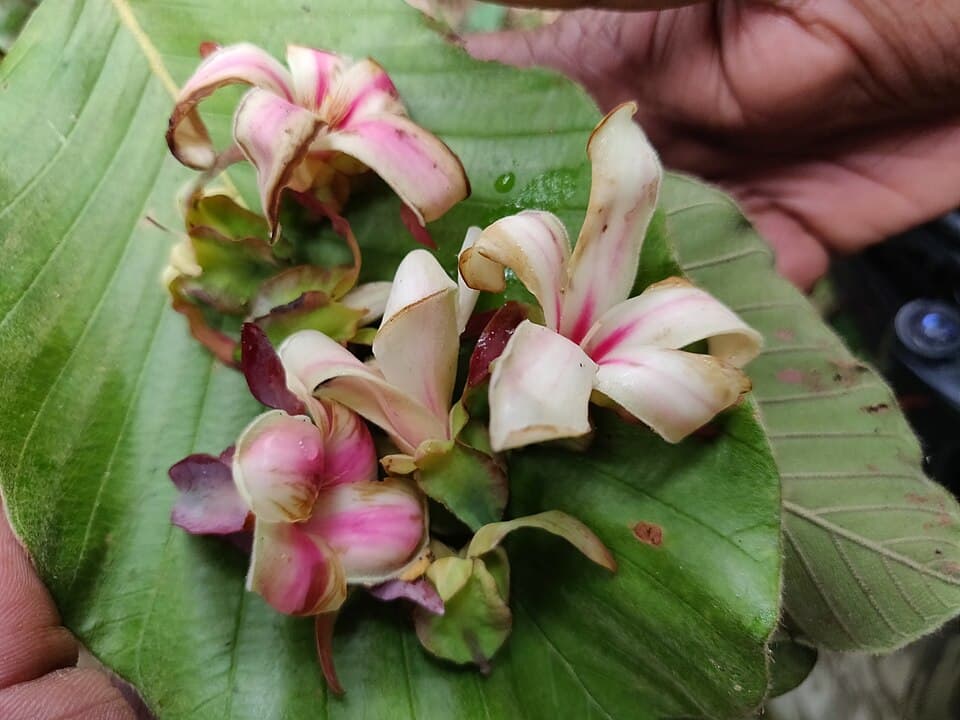
Photo: T R Shankar Raman · CC BY 4.0 · Wikimedia Commons Madhuca insignisMadhuca insignis
PlantEndemic · Western Ghats, Karnataka
Riparian evergreen forest along the Kumaradhara and Netravati rivers.
Rediscovered in 2000 after being presumed extinct for over a century. Threatened by hydroelectric projects on its river banks.
Karnataka
Syzygium travancoricumSyzygium travancoricum
PlantEndemic · Western Ghats, Kerala
Fragments of Myristica swamp forest in Travancore and the Kollam belt.
Survives largely in sacred groves. Myristica swamps are among the most threatened freshwater swamp systems in India.
Kerala
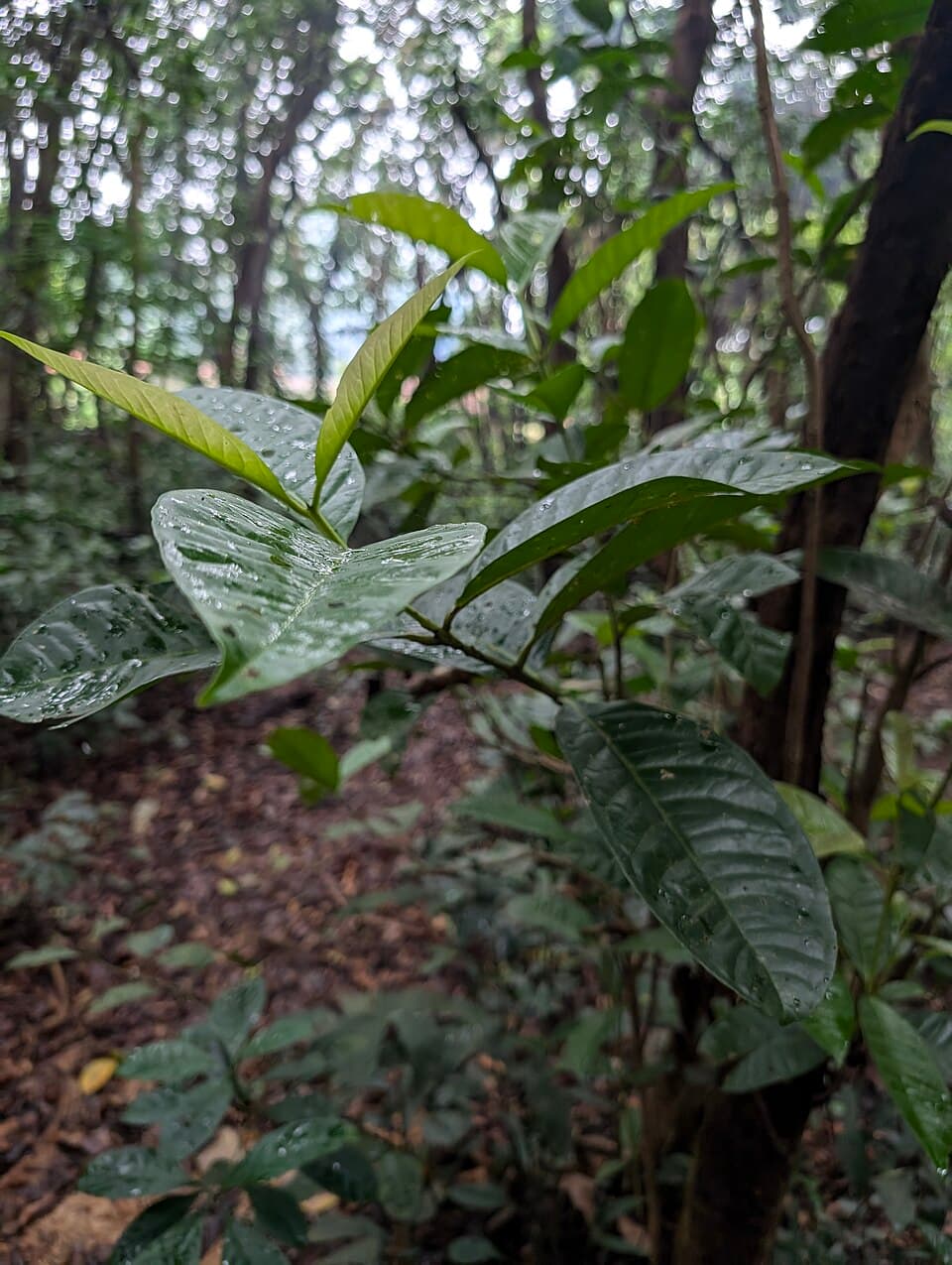
Photo: Vijayanrajapuram · CC BY-SA 4.0 · Wikimedia Commons Kolar Leaf-nosed BatHipposideros hypophyllus
MammalEndemic · Kolar district, Karnataka
One cave at Hanumanahalli.
Known from a single roost, which Karnataka notified as the Kolar Leaf-nosed Bat Conservation Reserve in 2019.
Karnataka


What the categories mean
IUCN Red List- EXExtinctNo reasonable doubt the last individual has died.
- EWExtinct in the WildSurvives only in cultivation, captivity or as a naturalised population outside its range.
- CRCritically EndangeredFacing an extremely high risk of extinction in the wild.
- ENEndangeredFacing a very high risk of extinction in the wild.
- VUVulnerableFacing a high risk of extinction in the wild.
- NTNear ThreatenedClose to qualifying as threatened, or likely to qualify soon. Not itself a threatened category.
- LCLeast ConcernAssessed, and does not qualify for any category above. Widespread and abundant species sit here.
The three that mean threatened. This page lists those and nothing else.
Outside the scale
- DDData DeficientNot enough information to assess the risk. It is a statement about the evidence, not about the species.
- NENot EvaluatedHas not yet been assessed against the criteria.
Recent status changes
12 to knowAssessments that have moved. Some of these species are no longer threatened and so are not in the list above.
Greater Adjutant
Downlisted from Endangered to Near Threatened in the 2023 Red List update, after the Hargila Army community programme in Assam raised nests in Kamrup from 28 in 2010 to more than 250. It should no longer be taught as Endangered.
Lesser Adjutant
Downlisted from Vulnerable to Near Threatened in 2023.
Painted Stork
Downlisted from Near Threatened to Least Concern in 2023.
Snow Leopard
Downlisted from Endangered to Vulnerable in 2017. Many Indian study materials still say Endangered.
Fishing Cat
Downlisted from Endangered to Vulnerable in 2016.
Asiatic Lion
The subspecies Panthera leo persica is assessed Endangered; the species Panthera leo is assessed Vulnerable. Both statements appear in print, so specify which you mean.
Himalayan Brown Bear
Often listed as Endangered or Critically Endangered in Indian material. The IUCN assesses the species Ursus arctos as Least Concern and has not assessed the Himalayan subspecies separately. It is Schedule I under the Wild Life (Protection) Act, which is a different thing from an IUCN category.
Red Sanders
Uplisted from Near Threatened to Endangered; older materials, including the handout, still say Near Threatened.
Indian Wild Ass
The species Equus hemionus is Near Threatened, not Endangered. The khur population in the Rann of Kachchh has grown steadily.
Blackbuck
Least Concern since 2017, not Near Threatened. It remains Schedule I in India.
Black-necked Crane
Downlisted from Vulnerable to Near Threatened in 2020.
Indian Leopard
Often taught as Near Threatened from older lists; the species has been Vulnerable since 2016.
What is being done
Species Recovery ProgrammeThe Government of India runs targeted recovery programmes for 22 entries covering 32 species, under the Integrated Development of Wildlife Habitats scheme. Three of them are Least Concern on the Red List and are on the national list all the same, because a programme answers to what has happened in India rather than to the species everywhere.
The Species Recovery Programme →Related current affairs
The topics that keep up with the news on this.