Ecology & Environment
Threatened Species of India
Critically Endangered, Endangered and Vulnerable species.
IUCN statuses change, so keep them updated from current affairs.
Three categories mean threatened: Critically Endangered, Endangered and Vulnerable. What each of them means, and the categories either side of them, is set out below the list.
Critically Endangered
9 speciesAndaman White-toothed ShrewCrocidura andamanensis
MammalEndemic · Andaman Islands
Leaf litter of tropical evergreen forest on South Andaman Island.
A nocturnal insectivore known from a handful of specimens. One of three shrews endemic to the islands, all Critically Endangered.
Andaman & Nicobar Islands
Jenkins's Andaman Spiny ShrewCrocidura jenkinsi
MammalEndemic · Andaman Islands
Forest floor of Mount Harriet, now Mount Manipur, on South Andaman.
Known only from the type locality. Distinguished by stiff, spiny guard hairs.
Andaman & Nicobar Islands
Nicobar White-tailed ShrewCrocidura nicobarica
MammalEndemic · Great Nicobar
Coastal forest of Great Nicobar around Campbell Bay.
Restricted to a very small area now overlapped by the Great Nicobar development project.
Andaman & Nicobar Islands
Kashmir Stag or HangulCervus hanglu hanglu
MammalEndemic · Kashmir Himalaya
Temperate riverine and coniferous forest, 1,700 to 4,000 m, almost entirely inside Dachigam National Park.
The only surviving red deer of the Indian subcontinent and the state animal of Jammu and Kashmir. Population about 300. Project Hangul and a second home at Tral Wildlife Sanctuary are the main interventions.
Jammu & Kashmir
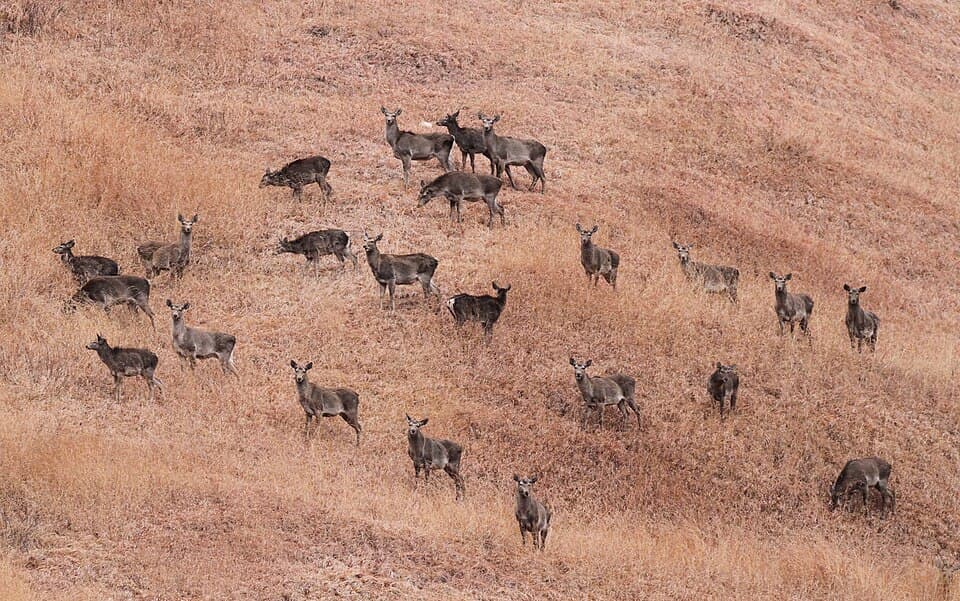
Photo: Tahirshawl · CC BY-SA 4.0 · Wikimedia Commons Elvira Rat or Large Rock RatCremnomys elvira
MammalEndemic · Eastern Ghats
Rocky slopes with dry deciduous and scrub forest in the Eastern Ghats around Salem.
A nocturnal, seed-eating rodent known from very few localities.
Tamil Nadu
Malabar CivetViverra civettina
MammalEndemic · Western Ghats
Lowland forest, cashew plantations and degraded coastal thickets of the Malabar coast.
Possibly already extinct. There has been no confirmed record for decades. Historically hunted for civetone, used in perfumery.
Kerala · Karnataka
Namdapha Flying SquirrelBiswamoyopterus biswasi
MammalEndemic · Namdapha
Tropical evergreen forest in the Noa-Dihing valley, Namdapha National Park.
Known from a single specimen collected in 1981. Among the rarest mammals in the world.
Arunachal Pradesh
Kondana Soft-furred RatMillardia kondana
MammalEndemic · Sinhagad plateau
Grass and scrub on the Sinhagad plateau near Pune, above 900 m.
Confined to an area of a few square kilometres under heavy tourism pressure.
Maharashtra
Kolar Leaf-nosed BatHipposideros hypophyllus
MammalEndemic · Kolar district, Karnataka
One cave at Hanumanahalli.
Known from a single roost, which Karnataka notified as the Kolar Leaf-nosed Bat Conservation Reserve in 2019.
Karnataka

Endangered
6 speciesAsiatic LionPanthera leo persica
MammalEndemic · Gir landscape, Gujarat
Dry deciduous teak forest, thorn scrub and adjoining farmland and coastal tracts of the Saurashtra peninsula.
The only wild lions outside Africa, about 891 animals in the 2025 census. Smaller than African lions, with a distinctive longitudinal fold of skin along the belly and a sparser mane that leaves the ears visible. Note the assessment nuance: the subspecies is Endangered, while the species Panthera leo is Vulnerable.
Gujarat
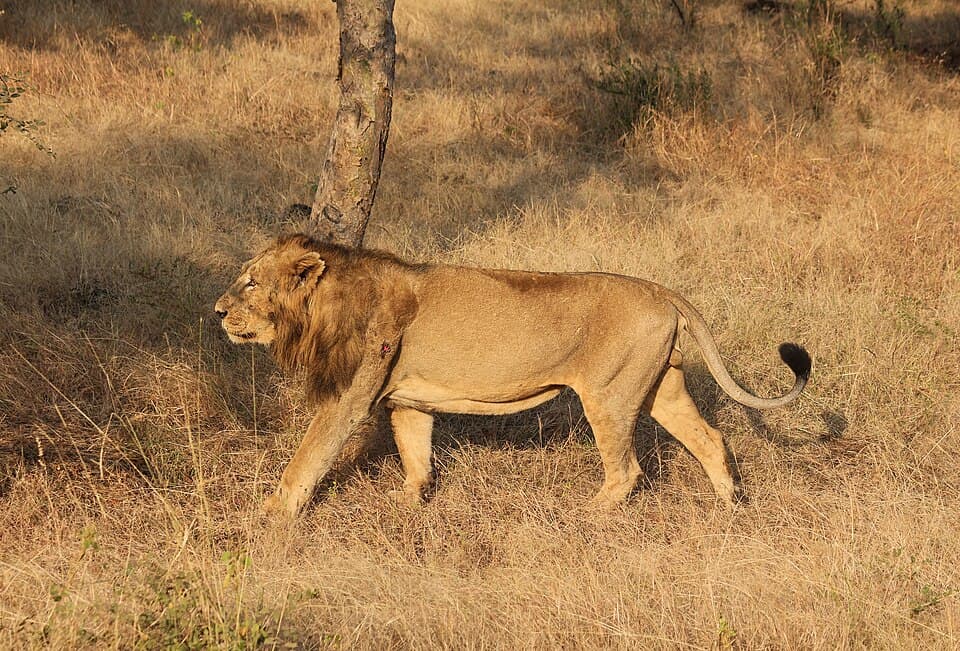
Photo: Bernard Gagnon · CC BY-SA 3.0 · Wikimedia Commons Lion-tailed MacaqueMacaca silenus
MammalEndemic · Western Ghats
Upper canopy of wet evergreen rainforest, 600 to 1,400 m. Silent Valley, Anamalai and Kudremukh are the strongholds.
Named for the tufted tail. The silver-white mane around a black face is unmistakable. One of the most arboreal macaques, rarely descending to the ground, which makes it exceptionally sensitive to forest fragmentation by plantations.
Kerala · Tamil Nadu · Karnataka
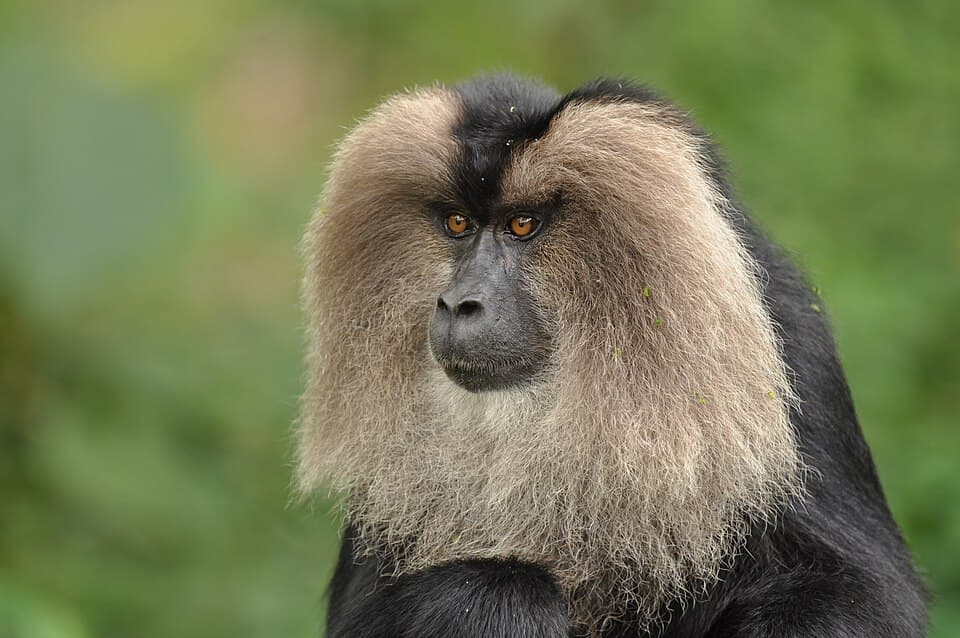
Photo: T. R. Shankar Raman · CC BY 3.0 · Wikimedia Commons Nilgiri TahrNilgiritragus hylocrius
MammalEndemic · Western Ghats
Shola grassland mosaic and steep rocky slopes, 1,200 to 2,600 m. Eravikulam National Park holds the largest single population.
State animal of Tamil Nadu and the only mountain ungulate in southern India. The sole species of its genus. Adult males, called saddlebacks, develop a pale grey saddle. The 2025 synchronised census counted 2,668 animals. Project Nilgiri Tahr began in 2023.
Tamil Nadu · Kerala
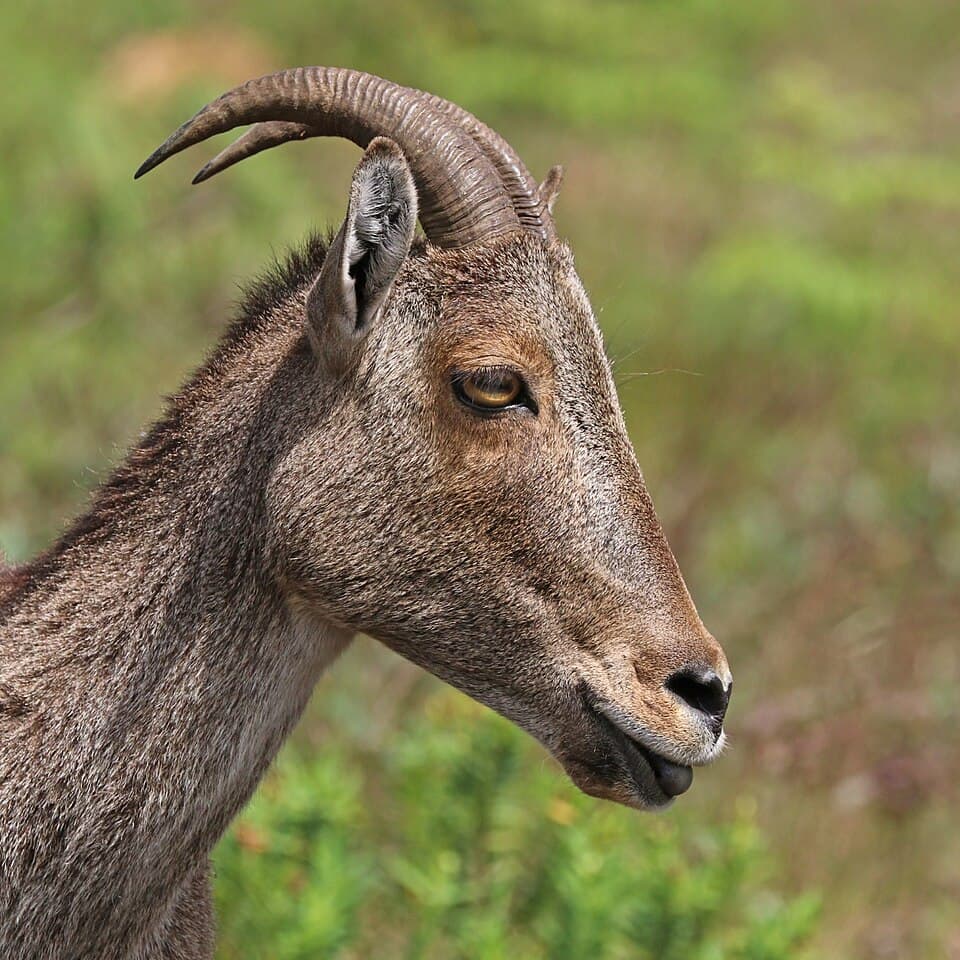
Photo: Charles J. Sharp · CC BY-SA 4.0 · Wikimedia Commons Sangai or Manipur Brow-antlered DeerRucervus eldii eldii
MammalEndemic · Loktak Lake, Manipur
Phumdis, the floating mats of vegetation on Loktak Lake, inside Keibul Lamjao National Park.
State animal of Manipur and the flagship of the only floating national park in the world. Called the dancing deer for its springy gait on the unstable phumdi surface, an adaptation of the hooves to spongy ground. Distinct from the Barasingha, which is a different species.
Manipur
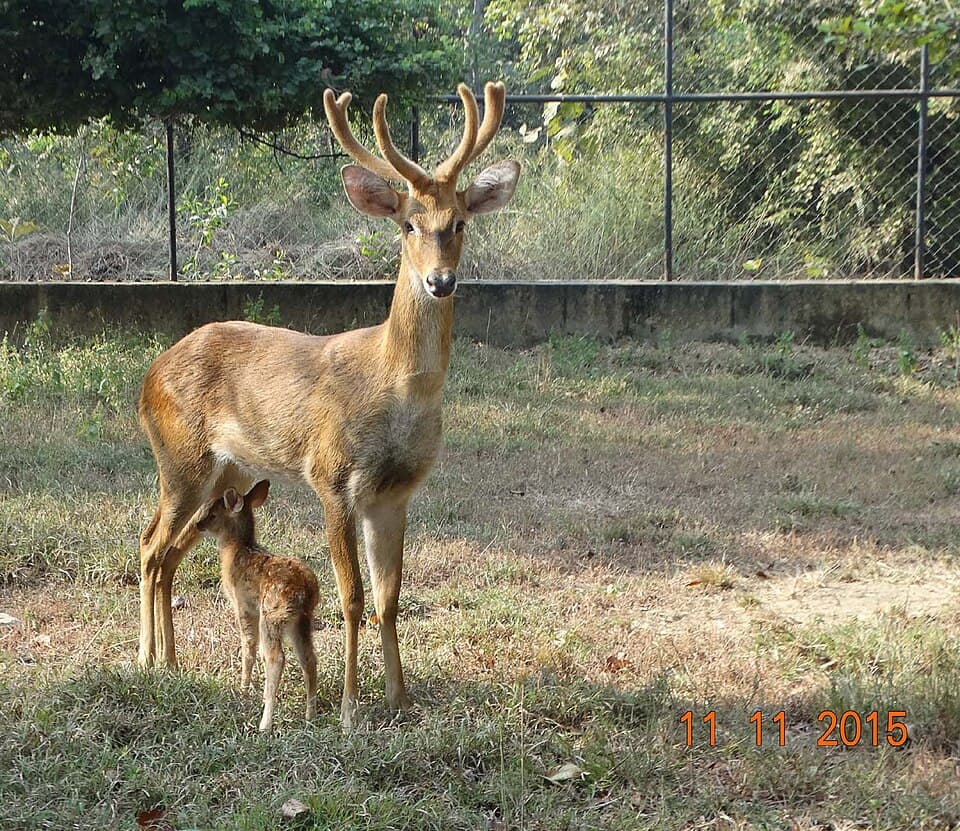
Photo: Sonampalli · CC BY-SA 4.0 · Wikimedia Commons Pygmy HogPorcula salvania
MammalEndemic · Assam grasslands
Dense, tall, dry alluvial grassland of the Manas landscape.
The smallest wild pig in the world, about 25 cm at the shoulder. The only suid that builds a roofed nest. Once thought extinct, it was rediscovered in 1971. The Pygmy Hog Conservation Programme has reintroduced captive-bred animals into Manas, Orang, Barnadi and Bornadi.
Assam

Photo: A. J. T. Johnsingh, WWF-India and NCF · CC BY-SA 3.0 · Wikimedia Commons Arunachal MacaqueMacaca munzala
MammalEndemic · Western Arunachal Pradesh
High-altitude temperate forest and cultivated valleys of Tawang and West Kameng, 2,000 to 3,500 m.
Described in 2005, one of the very few primates discovered anywhere in recent decades. The name means 'monkey of the deep forest' in the local Monpa language. Lives at an unusually high elevation for a macaque.
Arunachal Pradesh
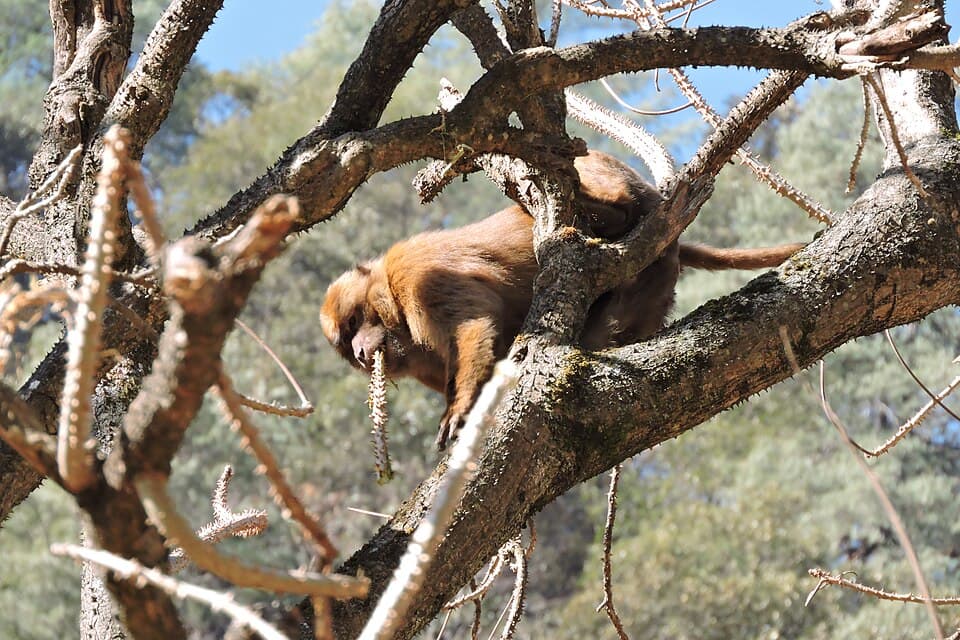
Photo: Kingshuk Mondal · CC BY 4.0 · Wikimedia Commons


_female_head.jpg)


Vulnerable
3 speciesFour-horned Antelope or ChousinghaTetracerus quadricornis
MammalEndemic · Indian subcontinent
Open dry deciduous forest with hills and grass, always near water.
The only wild bovid in the world with four horns. The rear pair is longer; the front pair is sometimes reduced to a stub. Solitary and largely restricted to India.
Madhya Pradesh · Maharashtra · Rajasthan · Gujarat · Odisha · Andhra Pradesh · Telangana · Karnataka · Chhattisgarh · Jharkhand · Uttar Pradesh · Bihar
Nilgiri LangurSemnopithecus johnii
MammalEndemic · Western Ghats
Evergreen shola forest and moist deciduous forest, 300 to 2,000 m.
Glossy black with a golden-brown head ruff. Poached for the supposed medicinal value of its flesh and organs, a threat unusual among Indian primates.
Kerala · Tamil Nadu · Karnataka
Nilgiri MartenMartes gwatkinsii
MammalEndemic · Western Ghats
Shola forest, montane grassland and plantation edges above 1,000 m.
The only marten in peninsular India and the sole mustelid of the southern Western Ghats. Recognised by a bright yellow to orange throat patch. Very rarely seen and almost never studied in the wild.
Kerala · Tamil Nadu · Karnataka
What the categories mean
IUCN Red List- EXExtinctNo reasonable doubt the last individual has died.
- EWExtinct in the WildSurvives only in cultivation, captivity or as a naturalised population outside its range.
- CRCritically EndangeredFacing an extremely high risk of extinction in the wild.
- ENEndangeredFacing a very high risk of extinction in the wild.
- VUVulnerableFacing a high risk of extinction in the wild.
- NTNear ThreatenedClose to qualifying as threatened, or likely to qualify soon. Not itself a threatened category.
- LCLeast ConcernAssessed, and does not qualify for any category above. Widespread and abundant species sit here.
The three that mean threatened. This page lists those and nothing else.
Outside the scale
- DDData DeficientNot enough information to assess the risk. It is a statement about the evidence, not about the species.
- NENot EvaluatedHas not yet been assessed against the criteria.
Recent status changes
12 to knowAssessments that have moved. Some of these species are no longer threatened and so are not in the list above.
Greater Adjutant
Downlisted from Endangered to Near Threatened in the 2023 Red List update, after the Hargila Army community programme in Assam raised nests in Kamrup from 28 in 2010 to more than 250. It should no longer be taught as Endangered.
Lesser Adjutant
Downlisted from Vulnerable to Near Threatened in 2023.
Painted Stork
Downlisted from Near Threatened to Least Concern in 2023.
Snow Leopard
Downlisted from Endangered to Vulnerable in 2017. Many Indian study materials still say Endangered.
Fishing Cat
Downlisted from Endangered to Vulnerable in 2016.
Asiatic Lion
The subspecies Panthera leo persica is assessed Endangered; the species Panthera leo is assessed Vulnerable. Both statements appear in print, so specify which you mean.
Himalayan Brown Bear
Often listed as Endangered or Critically Endangered in Indian material. The IUCN assesses the species Ursus arctos as Least Concern and has not assessed the Himalayan subspecies separately. It is Schedule I under the Wild Life (Protection) Act, which is a different thing from an IUCN category.
Red Sanders
Uplisted from Near Threatened to Endangered; older materials, including the handout, still say Near Threatened.
Indian Wild Ass
The species Equus hemionus is Near Threatened, not Endangered. The khur population in the Rann of Kachchh has grown steadily.
Blackbuck
Least Concern since 2017, not Near Threatened. It remains Schedule I in India.
Black-necked Crane
Downlisted from Vulnerable to Near Threatened in 2020.
Indian Leopard
Often taught as Near Threatened from older lists; the species has been Vulnerable since 2016.
What is being done
Species Recovery ProgrammeThe Government of India runs targeted recovery programmes for 22 entries covering 32 species, under the Integrated Development of Wildlife Habitats scheme. Three of them are Least Concern on the Red List and are on the national list all the same, because a programme answers to what has happened in India rather than to the species everywhere.
The Species Recovery Programme →Related current affairs
The topics that keep up with the news on this.