Ecology & Environment
Threatened Species of India
Critically Endangered, Endangered and Vulnerable species.
IUCN statuses change, so keep them updated from current affairs.
Three categories mean threatened: Critically Endangered, Endangered and Vulnerable. What each of them means, and the categories either side of them, is set out below the list.
Critically Endangered
10 speciesAndaman White-toothed ShrewCrocidura andamanensis
MammalEndemic · Andaman Islands
Leaf litter of tropical evergreen forest on South Andaman Island.
A nocturnal insectivore known from a handful of specimens. One of three shrews endemic to the islands, all Critically Endangered.
Andaman & Nicobar Islands
Jenkins's Andaman Spiny ShrewCrocidura jenkinsi
MammalEndemic · Andaman Islands
Forest floor of Mount Harriet, now Mount Manipur, on South Andaman.
Known only from the type locality. Distinguished by stiff, spiny guard hairs.
Andaman & Nicobar Islands
Nicobar White-tailed ShrewCrocidura nicobarica
MammalEndemic · Great Nicobar
Coastal forest of Great Nicobar around Campbell Bay.
Restricted to a very small area now overlapped by the Great Nicobar development project.
Andaman & Nicobar Islands
Kashmir Stag or HangulCervus hanglu hanglu
MammalEndemic · Kashmir Himalaya
Temperate riverine and coniferous forest, 1,700 to 4,000 m, almost entirely inside Dachigam National Park.
The only surviving red deer of the Indian subcontinent and the state animal of Jammu and Kashmir. Population about 300. Project Hangul and a second home at Tral Wildlife Sanctuary are the main interventions.
Jammu & Kashmir
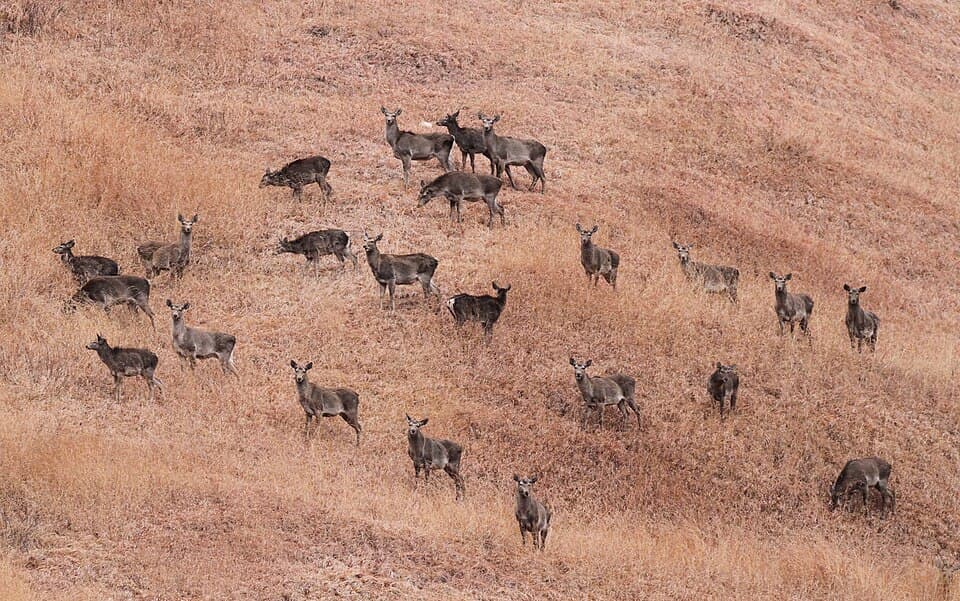
Photo: Tahirshawl · CC BY-SA 4.0 · Wikimedia Commons Elvira Rat or Large Rock RatCremnomys elvira
MammalEndemic · Eastern Ghats
Rocky slopes with dry deciduous and scrub forest in the Eastern Ghats around Salem.
A nocturnal, seed-eating rodent known from very few localities.
Tamil Nadu
Malabar CivetViverra civettina
MammalEndemic · Western Ghats
Lowland forest, cashew plantations and degraded coastal thickets of the Malabar coast.
Possibly already extinct. There has been no confirmed record for decades. Historically hunted for civetone, used in perfumery.
Kerala · Karnataka
Namdapha Flying SquirrelBiswamoyopterus biswasi
MammalEndemic · Namdapha
Tropical evergreen forest in the Noa-Dihing valley, Namdapha National Park.
Known from a single specimen collected in 1981. Among the rarest mammals in the world.
Arunachal Pradesh
Kondana Soft-furred RatMillardia kondana
MammalEndemic · Sinhagad plateau
Grass and scrub on the Sinhagad plateau near Pune, above 900 m.
Confined to an area of a few square kilometres under heavy tourism pressure.
Maharashtra
Chinese PangolinManis pentadactyla
Mammal
Subtropical and tropical forest, grassland and plantations of the north east and eastern Himalaya.
The world's most trafficked mammal group. Scales are smuggled for traditional medicine. Note that India has two pangolins: this one is Critically Endangered, the Indian pangolin is Endangered.
Assam · Arunachal Pradesh · Meghalaya · Nagaland · Manipur · Mizoram · Tripura · Sikkim · West Bengal
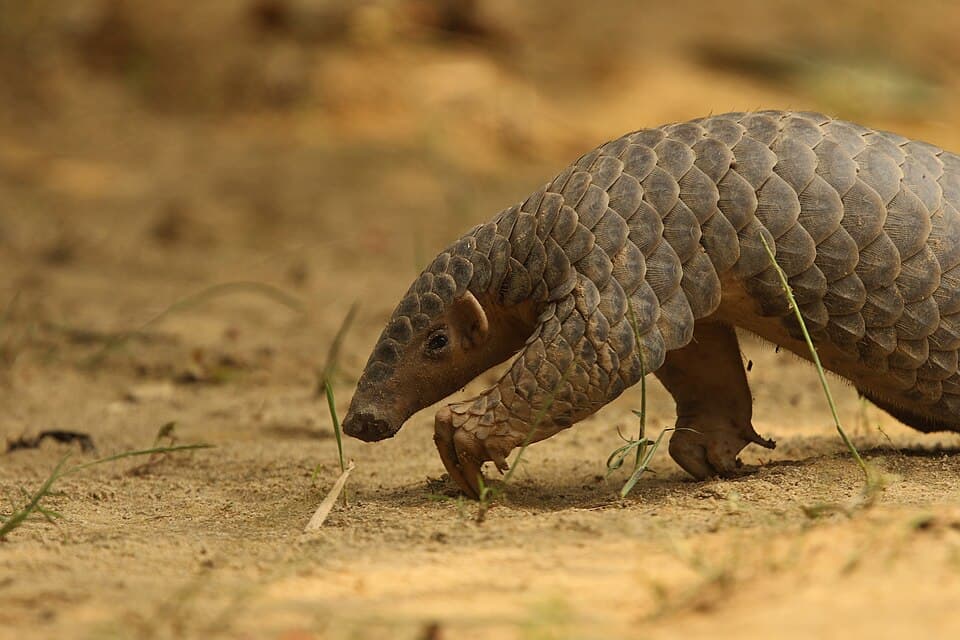
Photo: Adnan azad asif · CC BY-SA 4.0 · Wikimedia Commons Kolar Leaf-nosed BatHipposideros hypophyllus
MammalEndemic · Kolar district, Karnataka
One cave at Hanumanahalli.
Known from a single roost, which Karnataka notified as the Kolar Leaf-nosed Bat Conservation Reserve in 2019.
Karnataka


Endangered
24 speciesTigerPanthera tigris
Mammal
Almost every forest type from the mangroves of the Sundarbans and the shola grasslands of the Western Ghats to the terai and the cold forests of Arunachal.
India holds roughly 75 per cent of the world's wild tigers, about 3,682 at the last estimate, across 58 tiger reserves. An apex predator and umbrella species: protecting its range protects entire landscapes. National animal of India.
Madhya Pradesh · Karnataka · Uttarakhand · Maharashtra · Tamil Nadu · Assam · Kerala · Uttar Pradesh · Rajasthan · West Bengal · Bihar · Chhattisgarh · Odisha · Jharkhand · Andhra Pradesh · Telangana · Arunachal Pradesh · Mizoram · Goa
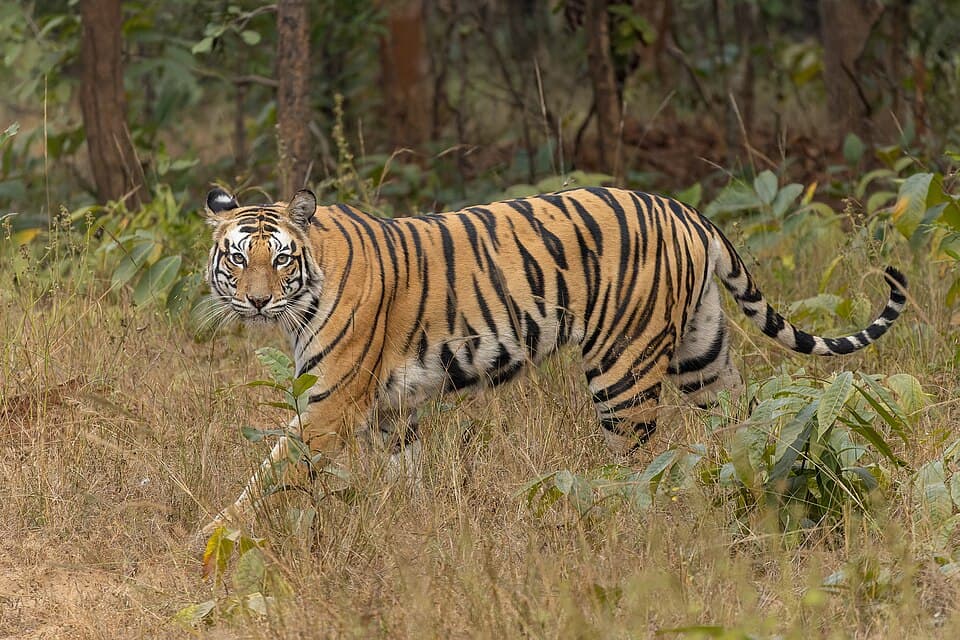
Photo: Tisha Mukherjee · CC BY-SA 4.0 · Wikimedia Commons Asiatic LionPanthera leo persica
MammalEndemic · Gir landscape, Gujarat
Dry deciduous teak forest, thorn scrub and adjoining farmland and coastal tracts of the Saurashtra peninsula.
The only wild lions outside Africa, about 891 animals in the 2025 census. Smaller than African lions, with a distinctive longitudinal fold of skin along the belly and a sparser mane that leaves the ears visible. Note the assessment nuance: the subspecies is Endangered, while the species Panthera leo is Vulnerable.
Gujarat
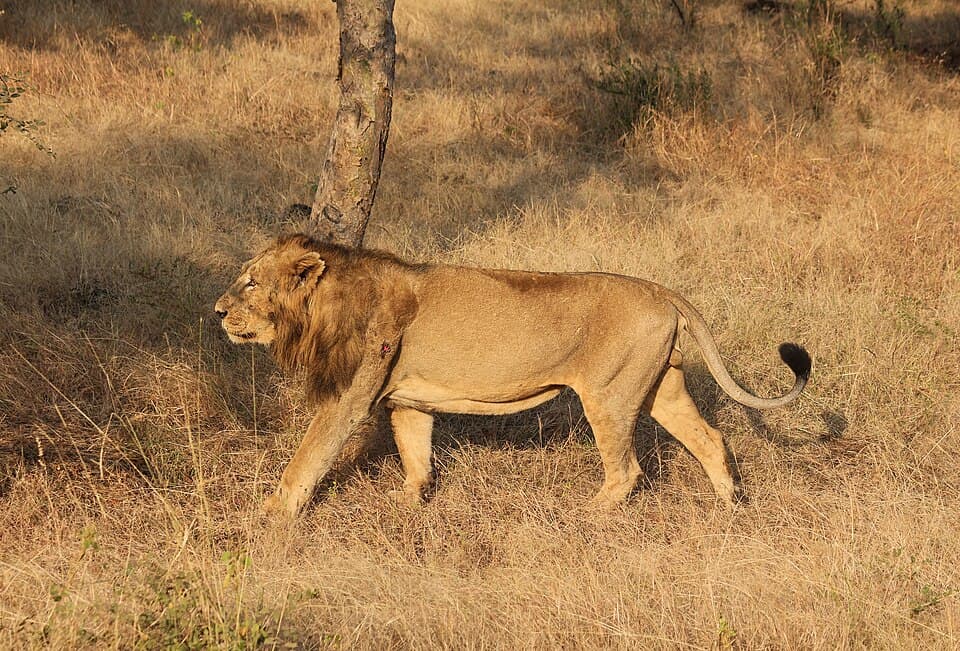
Photo: Bernard Gagnon · CC BY-SA 3.0 · Wikimedia Commons Asian ElephantElephas maximus
Mammal
Moist and dry deciduous forest, grassland and plantations across four population blocks: the Western Ghats, the north east, central India and the northern Himalayan foothills.
National Heritage Animal of India. A keystone species that opens forest canopy, disperses large seeds and creates water holes. About 30,000 animals, some 60 per cent of the world population. Project Elephant was launched in 1992.
Karnataka · Kerala · Tamil Nadu · Assam · Uttarakhand · Odisha · West Bengal · Jharkhand · Chhattisgarh · Meghalaya · Arunachal Pradesh · Nagaland · Uttar Pradesh
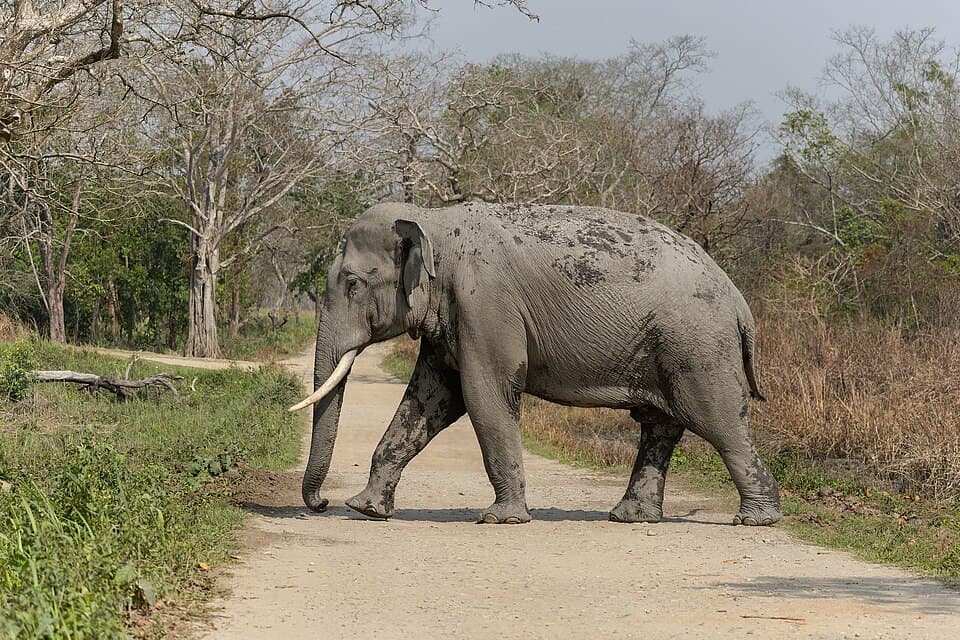
Photo: Tisha Mukherjee · CC BY-SA 4.0 · Wikimedia Commons Dhole or Indian Wild DogCuon alpinus
Mammal
Dense to open forest in the Western Ghats, central Indian highlands and the north east. Strongholds at Nagarhole, Bandipur and Periyar.
Hunts in packs and communicates with a distinctive whistle. Unusually among canids it has one fewer molar on each side of the lower jaw and lets pups eat first at a kill.
Karnataka · Kerala · Tamil Nadu · Maharashtra · Madhya Pradesh · Chhattisgarh · Odisha · Arunachal Pradesh · Assam · Andhra Pradesh
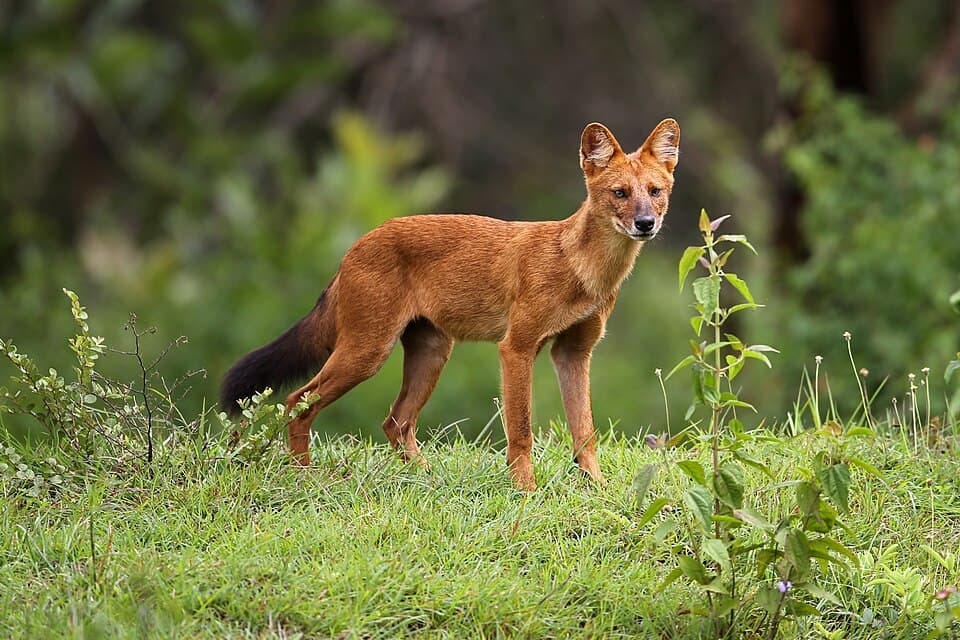
Photo: Davidvraju · CC BY-SA 4.0 · Wikimedia Commons Red PandaAilurus fulgens
Mammal
Temperate broadleaf and conifer forest with a dense bamboo understorey, 2,200 to 4,800 m. Singalila and Neora Valley are the key Indian sites.
State animal of Sikkim. The only living member of its family, Ailuridae. Feeds almost entirely on bamboo despite being a carnivore, and has a false thumb, an enlarged wrist bone, for gripping stems. Singalila runs India's conservation breeding and release programme.
Sikkim · West Bengal · Arunachal Pradesh · Meghalaya · Nagaland
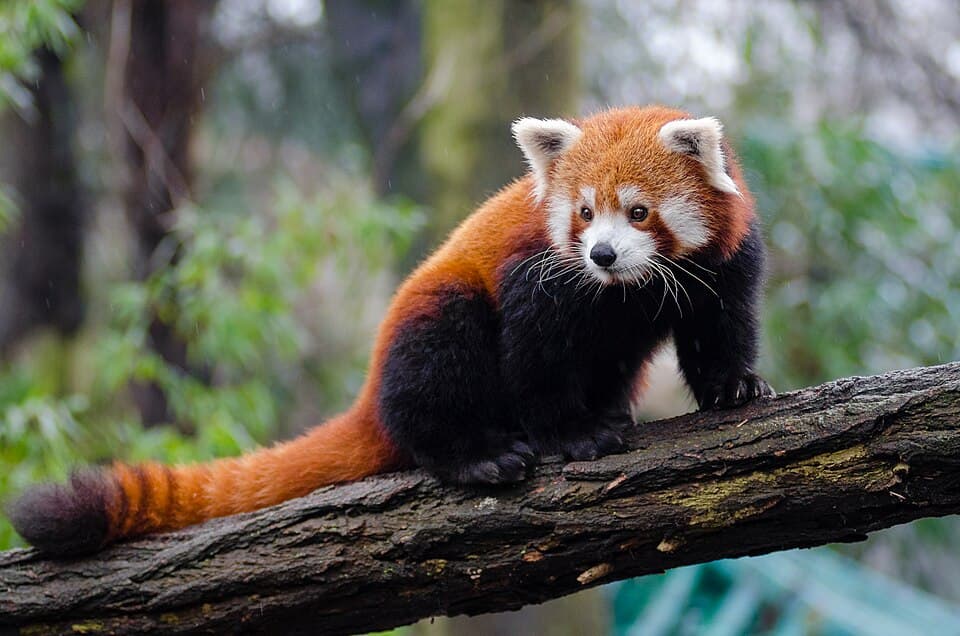
Photo: Mathias Appel · CC0 · Wikimedia Commons Golden LangurTrachypithecus geei
Mammal
Moist evergreen and riverine forest between the Sankosh and Manas rivers in western Assam. Manas, Chirang and Raimona hold the Indian population.
Described only in 1953. Regarded as sacred by local communities. The Indian range is bounded by rivers on three sides and Bhutan on the fourth, making it one of the most sharply delimited primate ranges anywhere.
Assam
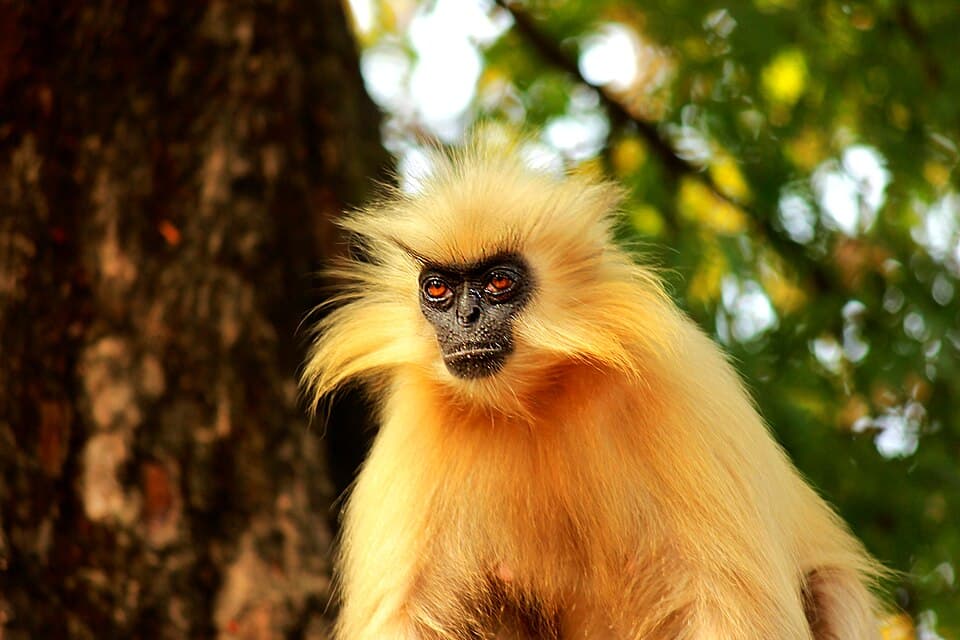
Photo: M.Swarnali · CC BY-SA 4.0 · Wikimedia Commons Western Hoolock GibbonHoolock hoolock
Mammal
Closed-canopy tropical evergreen and semi-evergreen forest south of the Brahmaputra and east of the Dibang.
India's only ape. Moves by brachiation and almost never comes to the ground, which makes canopy gaps caused by roads and tea gardens a fatal barrier. Mated pairs sing loud duets at dawn. Hoollongapar Gibbon Sanctuary is the flagship site.
Assam · Arunachal Pradesh · Meghalaya · Nagaland · Manipur · Mizoram · Tripura
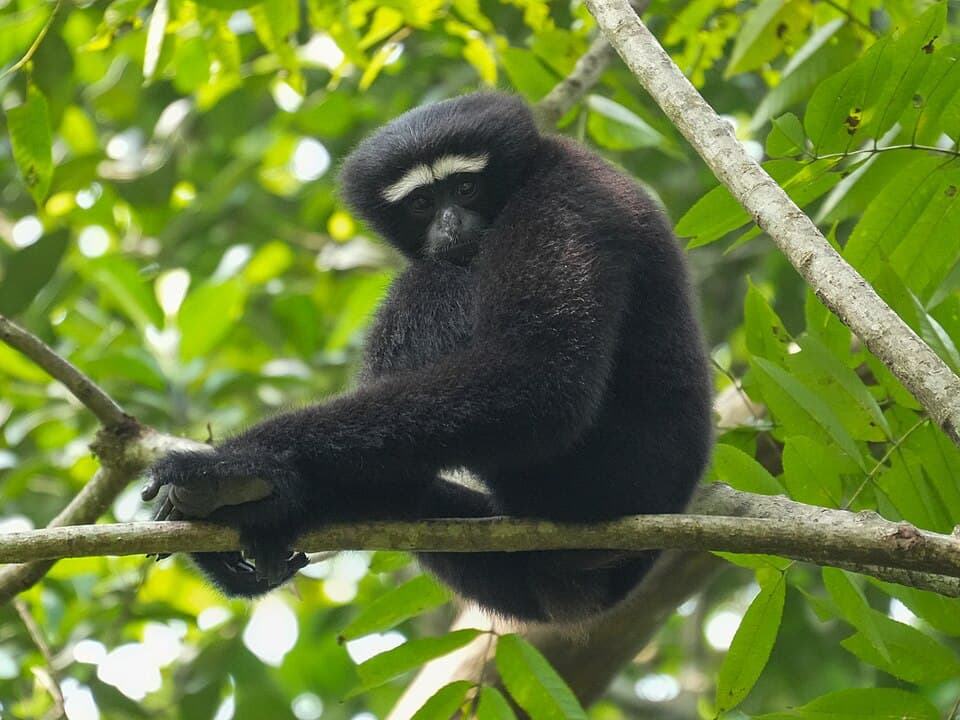
Photo: Timothy A. Gonsalves · CC BY-SA 4.0 · Wikimedia Commons Lion-tailed MacaqueMacaca silenus
MammalEndemic · Western Ghats
Upper canopy of wet evergreen rainforest, 600 to 1,400 m. Silent Valley, Anamalai and Kudremukh are the strongholds.
Named for the tufted tail. The silver-white mane around a black face is unmistakable. One of the most arboreal macaques, rarely descending to the ground, which makes it exceptionally sensitive to forest fragmentation by plantations.
Kerala · Tamil Nadu · Karnataka
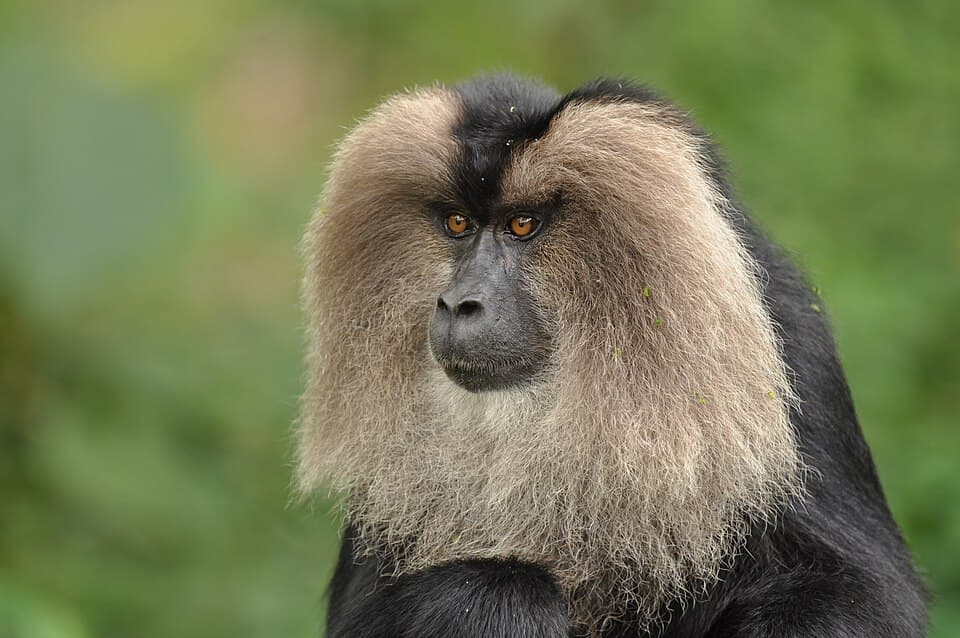
Photo: T. R. Shankar Raman · CC BY 3.0 · Wikimedia Commons Nilgiri TahrNilgiritragus hylocrius
MammalEndemic · Western Ghats
Shola grassland mosaic and steep rocky slopes, 1,200 to 2,600 m. Eravikulam National Park holds the largest single population.
State animal of Tamil Nadu and the only mountain ungulate in southern India. The sole species of its genus. Adult males, called saddlebacks, develop a pale grey saddle. The 2025 synchronised census counted 2,668 animals. Project Nilgiri Tahr began in 2023.
Tamil Nadu · Kerala
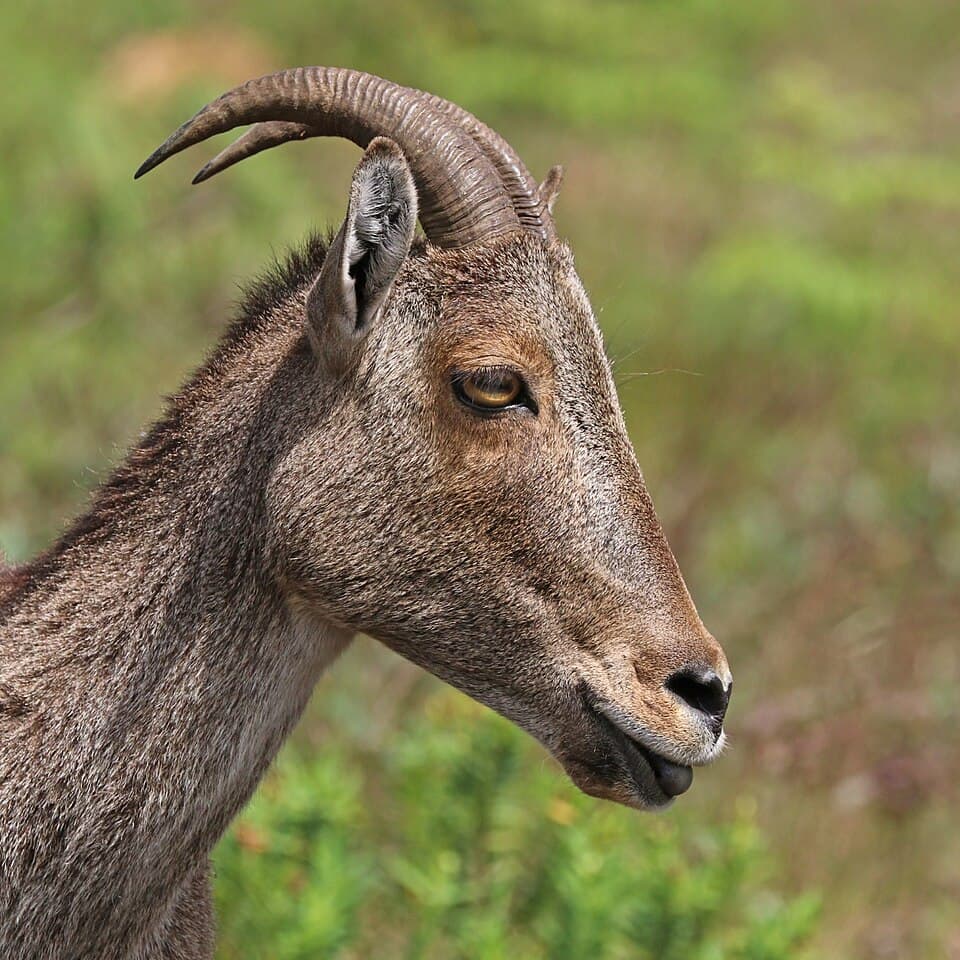
Photo: Charles J. Sharp · CC BY-SA 4.0 · Wikimedia Commons Sangai or Manipur Brow-antlered DeerRucervus eldii eldii
MammalEndemic · Loktak Lake, Manipur
Phumdis, the floating mats of vegetation on Loktak Lake, inside Keibul Lamjao National Park.
State animal of Manipur and the flagship of the only floating national park in the world. Called the dancing deer for its springy gait on the unstable phumdi surface, an adaptation of the hooves to spongy ground. Distinct from the Barasingha, which is a different species.
Manipur
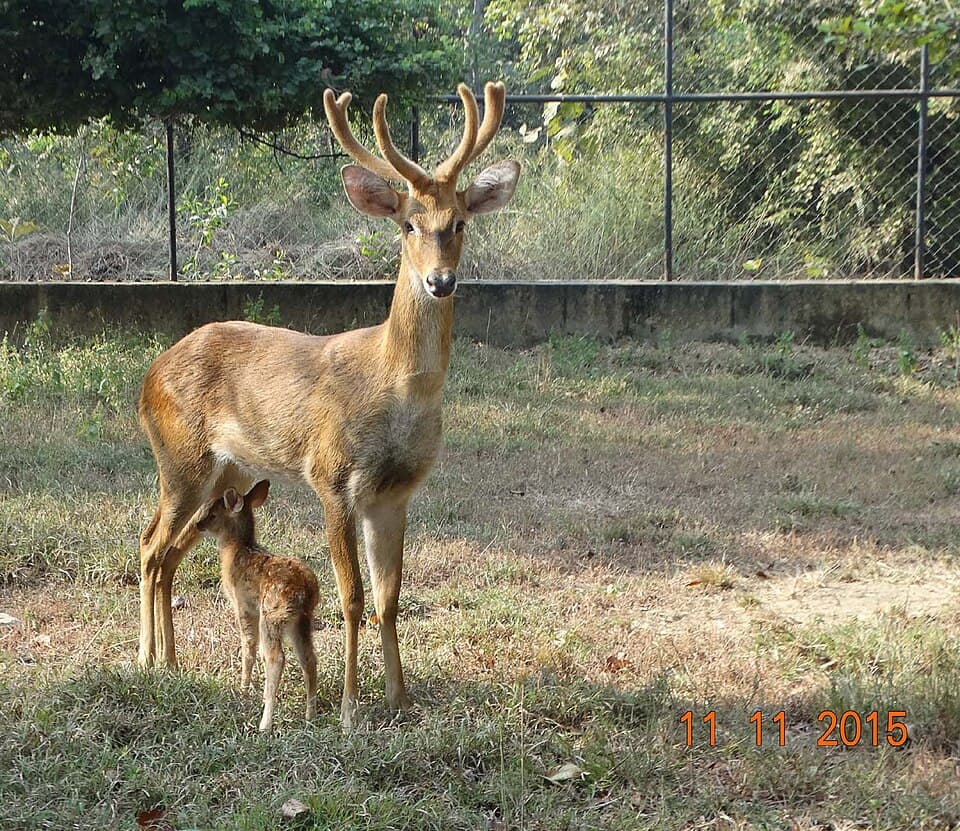
Photo: Sonampalli · CC BY-SA 4.0 · Wikimedia Commons Pygmy HogPorcula salvania
MammalEndemic · Assam grasslands
Dense, tall, dry alluvial grassland of the Manas landscape.
The smallest wild pig in the world, about 25 cm at the shoulder. The only suid that builds a roofed nest. Once thought extinct, it was rediscovered in 1971. The Pygmy Hog Conservation Programme has reintroduced captive-bred animals into Manas, Orang, Barnadi and Bornadi.
Assam

Photo: A. J. T. Johnsingh, WWF-India and NCF · CC BY-SA 3.0 · Wikimedia Commons Wild Water BuffaloBubalus arnee
Mammal
Alluvial grassland, swamps and river floodplains. Kaziranga and Manas hold the bulk of the world population; a small relict herd survives in Indravati.
State animal of Chhattisgarh. The ancestor of the domestic buffalo and the bearer of the widest horn spread of any living bovid. Genetic swamping by hybridisation with feral domestic buffalo is now a leading threat.
Assam · Chhattisgarh · Arunachal Pradesh · Meghalaya · Madhya Pradesh
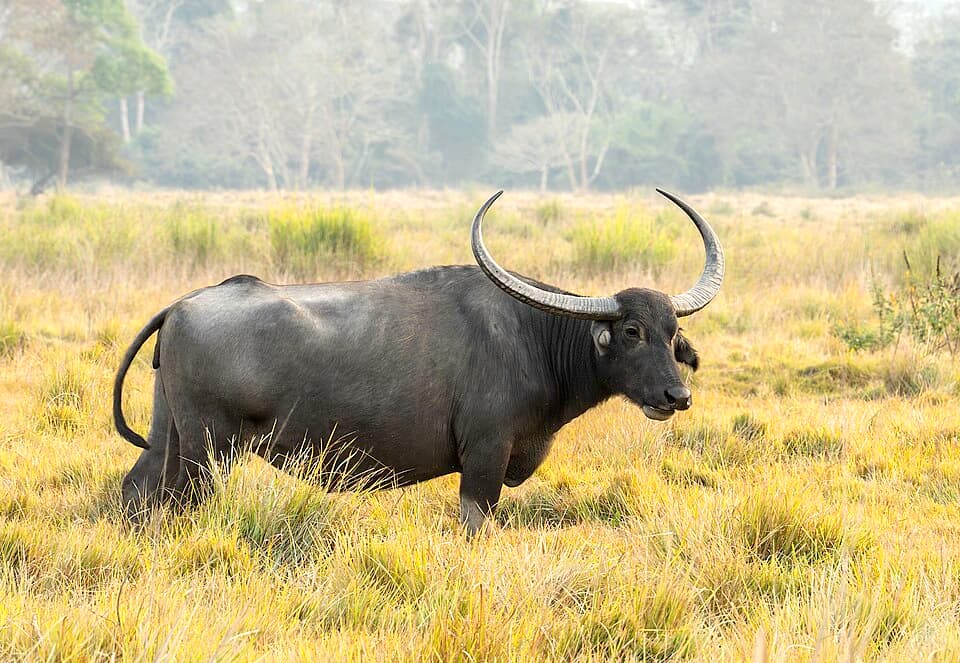
Photo: Joydeep Chakraborty · CC BY-SA 4.0 · Wikimedia Commons Himalayan Musk DeerMoschus leucogaster
Mammal
Subalpine birch, fir and rhododendron forest, 2,500 to 4,000 m. Kedarnath, Askot and the Valley of Flowers are key sites.
Has no antlers. The male carries downward-pointing tusk-like canines and a musk pod, one of the most valuable animal products in the world by weight, which drives relentless poaching. The pod is present only in males, but snaring kills both sexes.
Uttarakhand · Himachal Pradesh · Sikkim · Arunachal Pradesh · Jammu & Kashmir
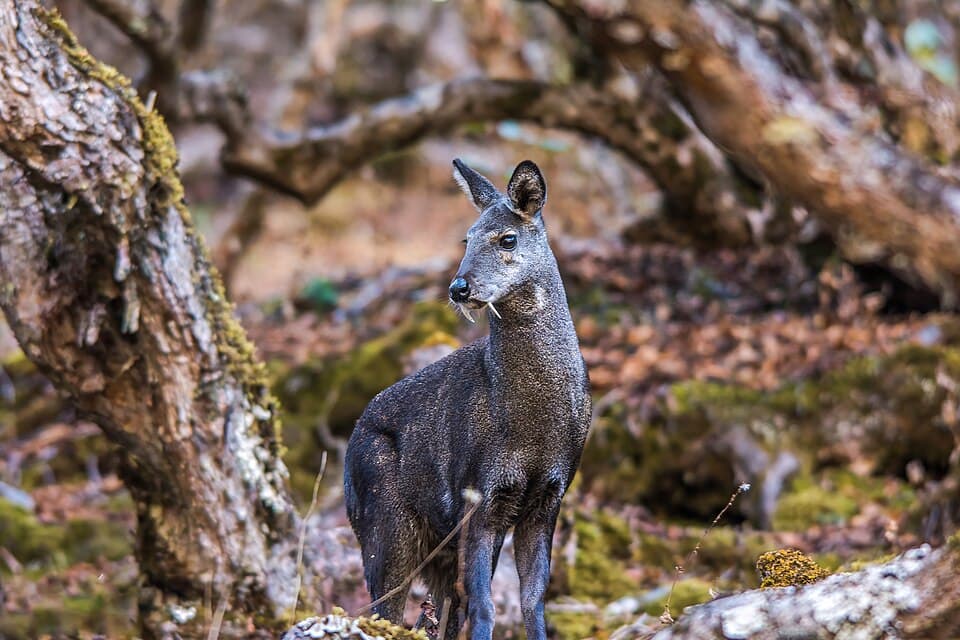
Photo: Gurung pratap · CC BY-SA 4.0 · Wikimedia Commons Hispid HareCaprolagus hispidus
Mammal
Dense tall grassland of the terai and Brahmaputra floodplain, especially early successional thatch grass.
The 'bristly rabbit', named for its coarse, dark, bristle-like fur. Unlike most hares it digs no burrow and depends on undisturbed grassland, so annual grassland burning is a direct threat.
Assam · West Bengal · Uttar Pradesh · Bihar · Uttarakhand
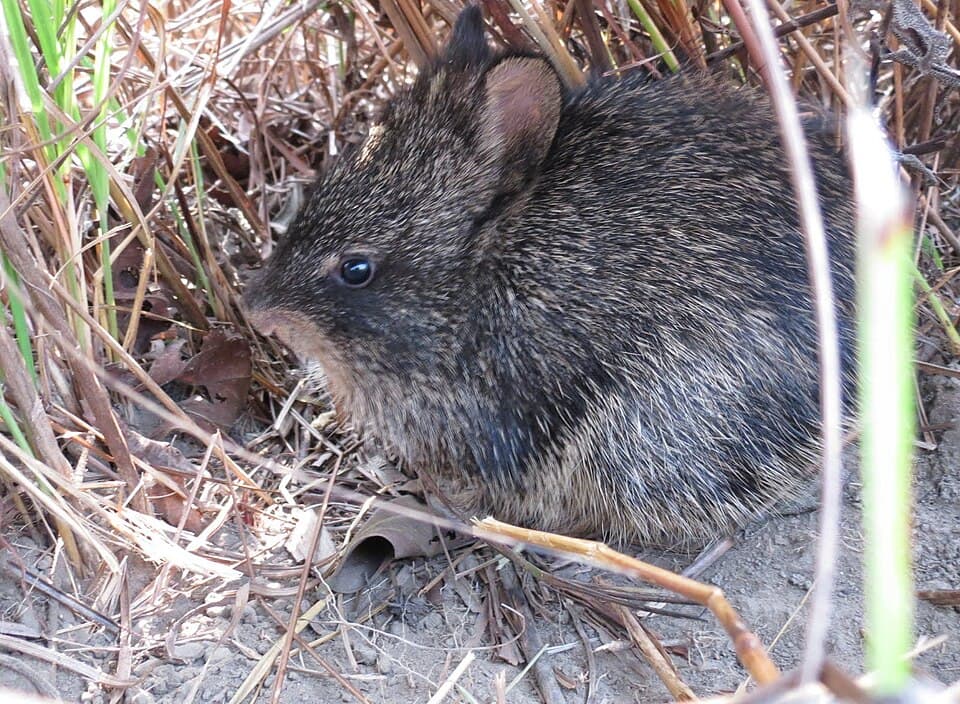
Photo: Bed Bahadur Khadka · CC BY 4.0 · Wikimedia Commons Indian Hog DeerAxis porcinus
Mammal
Tall, wet floodplain grassland. Kaziranga, Dudhwa and Jaldapara are strongholds.
Runs with the head held low, pushing through grass rather than leaping over it, which is the source of its name. Unusually for deer it is largely solitary.
Assam · Uttar Pradesh · Uttarakhand · West Bengal · Arunachal Pradesh · Punjab
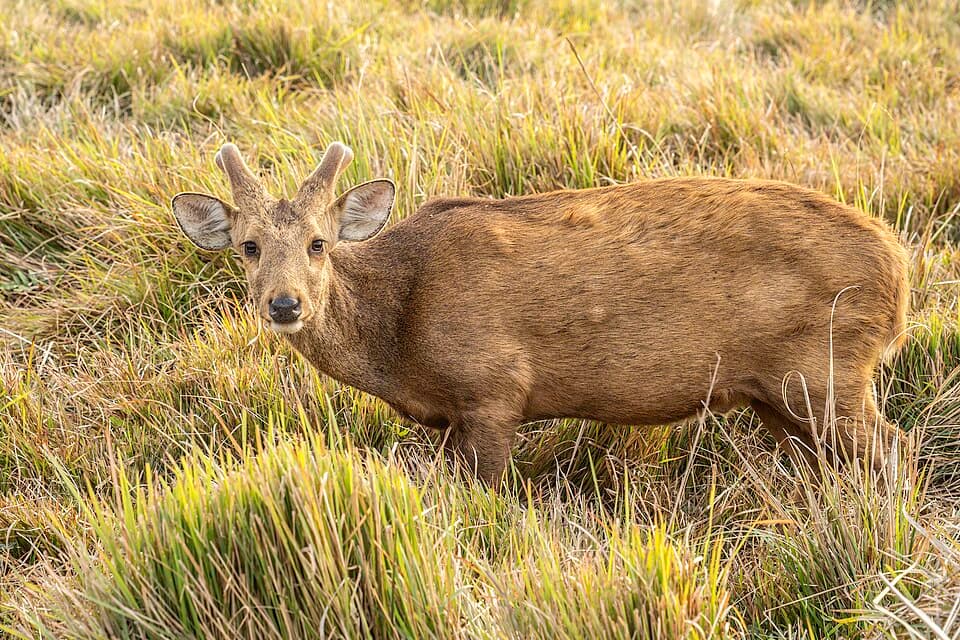
Photo: Joydeep Chakraborty · CC BY-SA 4.0 · Wikimedia Commons Bengal Slow LorisNycticebus bengalensis
Mammal
Tropical evergreen and semi-evergreen forest of the north east.
The only venomous primate in India. A gland on the inner elbow produces a secretion that becomes toxic when mixed with saliva. Nocturnal, extremely slow-moving, and heavily trafficked for the pet and medicine trade.
Assam · Arunachal Pradesh · Meghalaya · Nagaland · Manipur · Mizoram · Tripura

Photo: Helena Snyder · CC BY-SA 3.0 · Wikimedia Commons Phayre's Leaf MonkeyTrachypithecus phayrei
Mammal
Semi-evergreen and bamboo forest of the north east. Sepahijala and the Trishna landscape are key sites.
State animal of Tripura, known there as the spectacled langur for the white rings around the eyes.
Tripura · Assam · Mizoram · Manipur
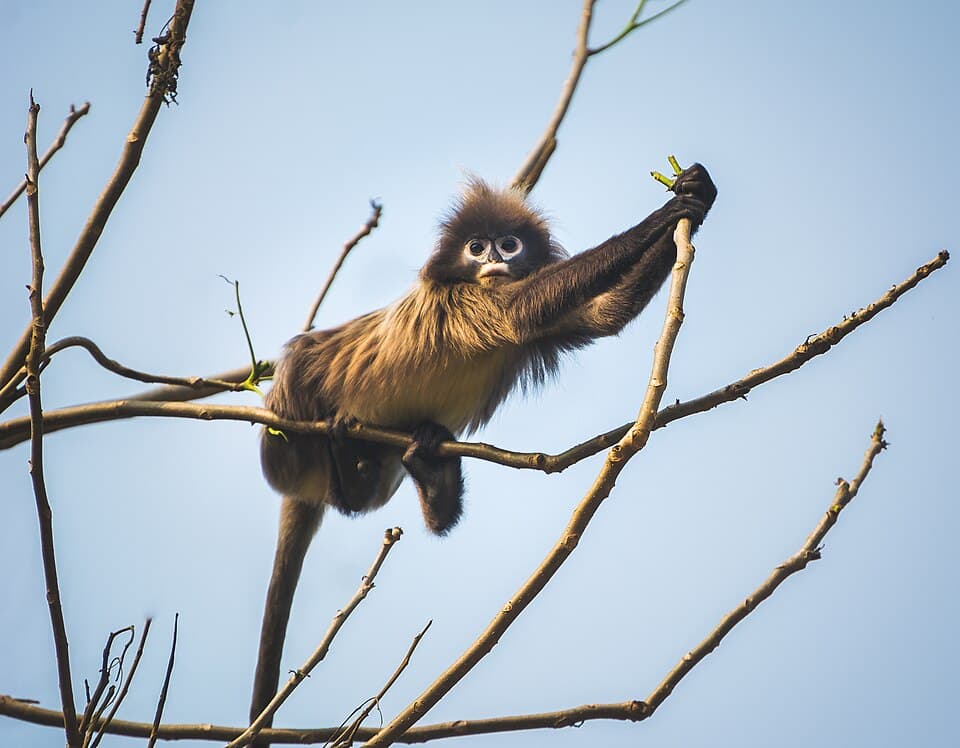
Photo: Md. Tareq Aziz Touhid · CC BY-SA 4.0 · Wikimedia Commons Arunachal MacaqueMacaca munzala
MammalEndemic · Western Arunachal Pradesh
High-altitude temperate forest and cultivated valleys of Tawang and West Kameng, 2,000 to 3,500 m.
Described in 2005, one of the very few primates discovered anywhere in recent decades. The name means 'monkey of the deep forest' in the local Monpa language. Lives at an unusually high elevation for a macaque.
Arunachal Pradesh
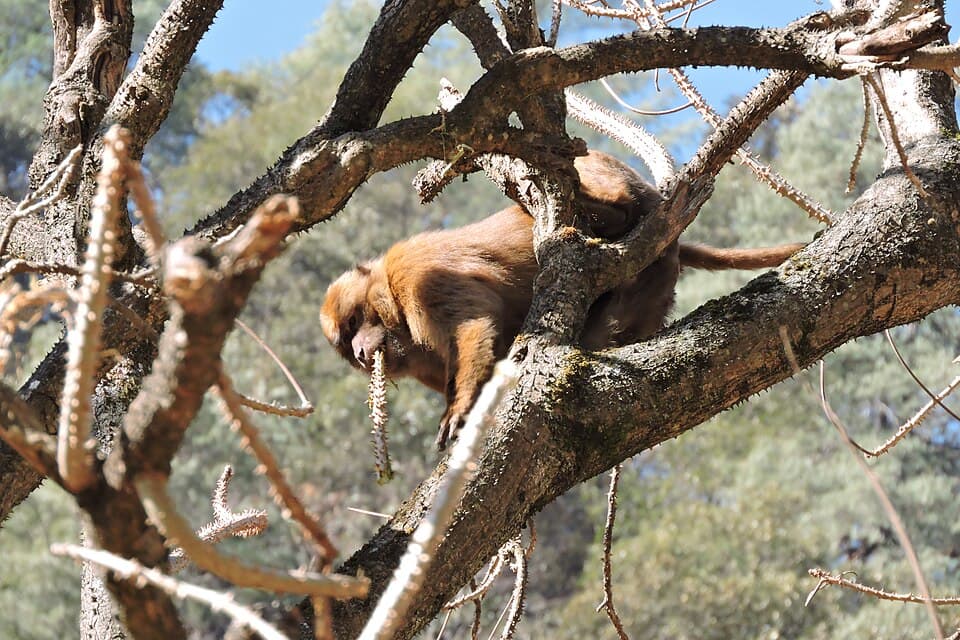
Photo: Kingshuk Mondal · CC BY 4.0 · Wikimedia Commons Indian PangolinManis crassicaudata
Mammal
Dry and moist deciduous forest, scrub and even farmland across peninsular and northern India.
The only mammal covered in keratin scales. Rolls into an impenetrable ball when threatened, a defence that works against leopards but makes it trivially easy for poachers to pick up. Eats ants and termites with a tongue longer than its body.
Madhya Pradesh · Maharashtra · Rajasthan · Gujarat · Odisha · Karnataka · Tamil Nadu · Andhra Pradesh · Telangana · Chhattisgarh · Bihar · Jharkhand · Punjab
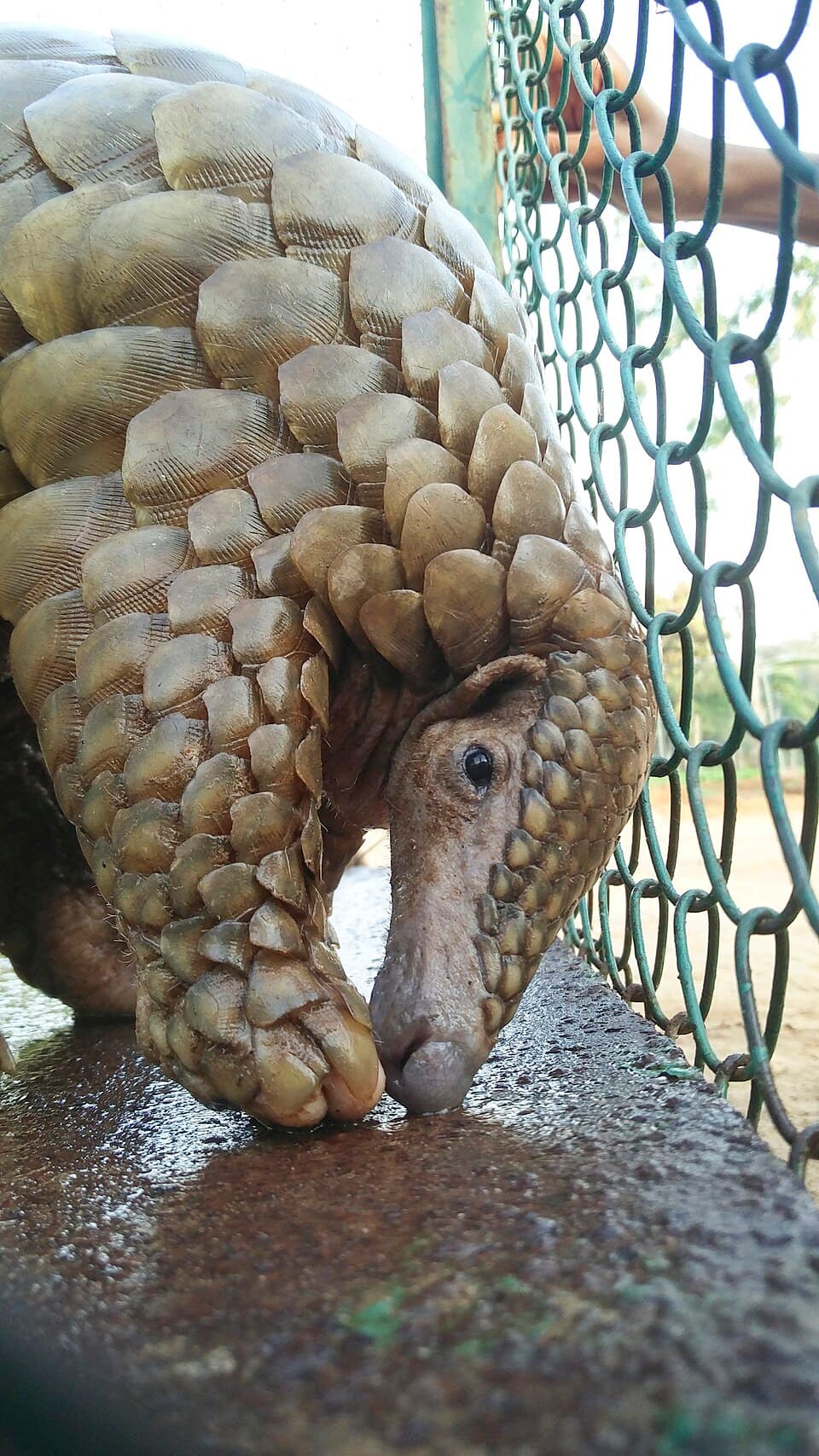
Photo: Vickey Chauhan · CC BY-SA 4.0 · Wikimedia Commons Ganges River DolphinPlatanista gangetica
Mammal
Deep pools and confluences of the Ganga, Brahmaputra, Meghna and their tributaries, including the Chambal and Kulsi.
National Aquatic Animal of India. Functionally blind: it has no crystalline lens and navigates entirely by echolocation, swimming on its side with a flipper trailing the bottom. Vikramshila in Bihar is the dedicated sanctuary. Project Dolphin was announced in 2020.
Uttar Pradesh · Bihar · West Bengal · Assam · Jharkhand · Madhya Pradesh · Rajasthan
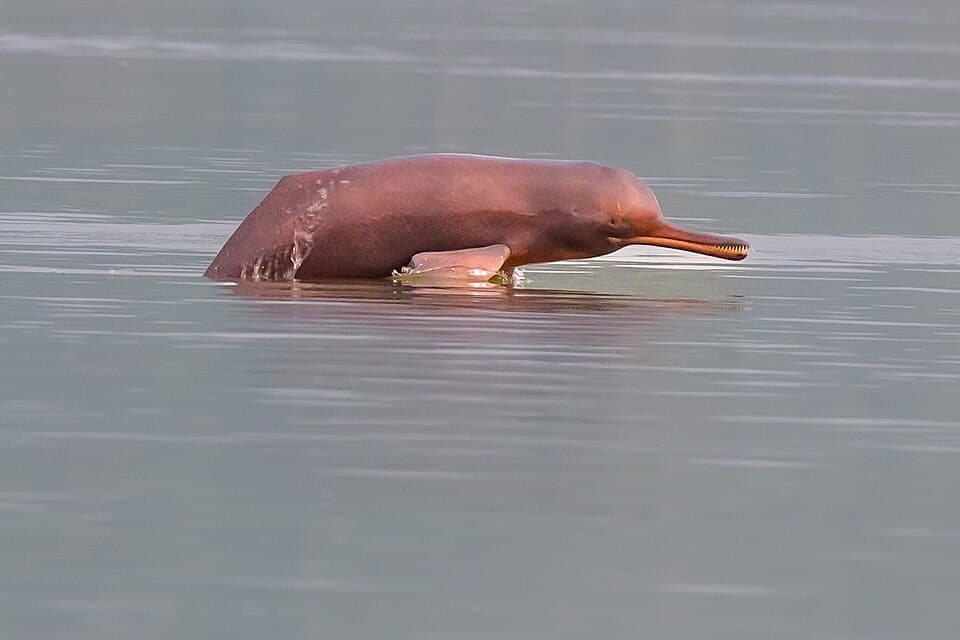
Photo: Munshi Abul Barakat · CC BY 4.0 · Wikimedia Commons Indus River DolphinPlatanista minor
Mammal
The Beas river between Talwara and Harike, the only Indian population.
Rediscovered in the Beas in 2007 after being presumed locally extinct. The Beas Conservation Reserve, a Ramsar site, exists largely to protect it. State aquatic animal of Punjab.
Punjab
Irrawaddy DolphinOrcaella brevirostris
Mammal
Brackish lagoons and estuaries. Chilika Lake holds one of the largest single populations in the world.
Has a rounded head with no beak and can spit jets of water. Known to cooperate with fishermen by driving fish towards their nets.
Odisha · West Bengal
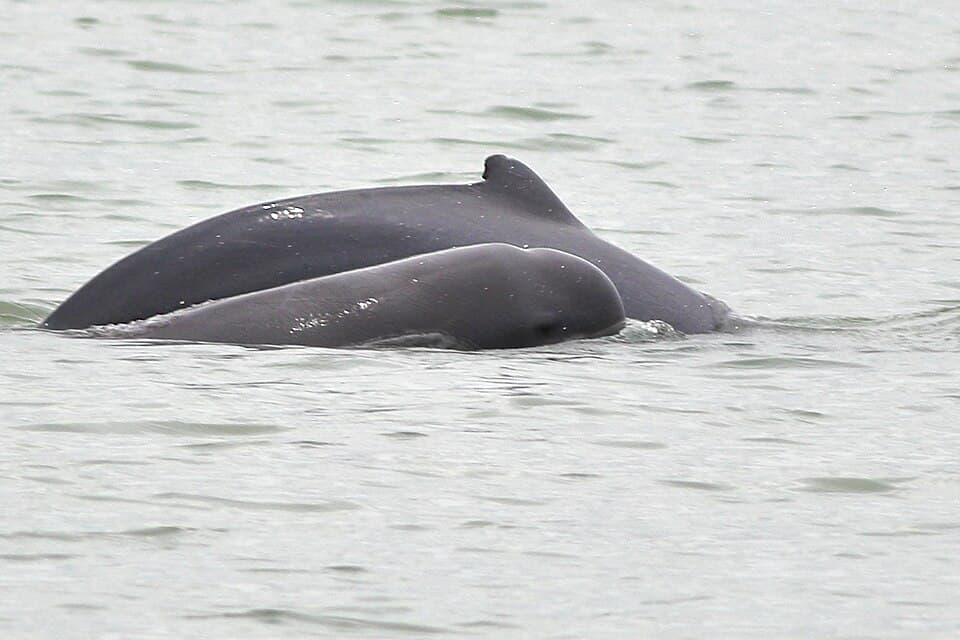
Photo: Dibyendu Ash · CC BY 4.0 · Wikimedia Commons Blue WhaleBalaenoptera musculus
Mammal
Deep offshore waters of the Arabian Sea and Bay of Bengal, with a distinct northern Indian Ocean population.
The largest animal that has ever lived. The Arabian Sea population is non-migratory and genetically distinct, which is unusual for the species.
Kerala · Tamil Nadu · Maharashtra · Gujarat · Andaman & Nicobar Islands · Lakshadweep
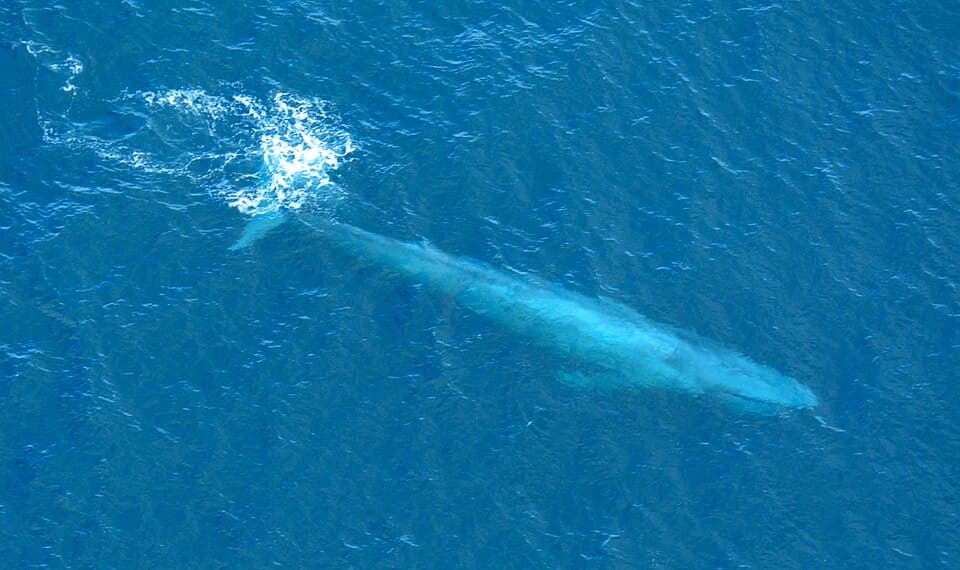
Photo: Don Ramey Logan · CC BY-SA 3.0 · Wikimedia Commons Woolly Flying SquirrelEupetaurus cinereus
Mammal
Steep cliffs and caves in arid conifer zones of the north western Himalaya, 2,400 to 3,600 m.
The largest gliding mammal in the world, rediscovered in 1994 after 70 years without a record. Feeds largely on pine needles, a very unusual diet for a mammal.
Jammu & Kashmir · Himachal Pradesh


.jpg)
.jpg)


_female_head.jpg)


_at_Kaziranga_National_Park,_Assam,_India_1.jpg)


_at_Kaziranga_National_Park,_Assam,_India_2.jpg)


Vulnerable
25 speciesSnow LeopardPanthera uncia
Mammal
Alpine and subalpine rocky steppe above the treeline, 3,000 to 5,400 m. Hemis is the flagship site.
The 'ghost of the mountains'. It cannot roar: the hyoid structure differs from other big cats. The very long tail stores fat and is wrapped around the body for warmth. Downlisted from Endangered to Vulnerable in 2017. The Snow Leopard Population Assessment in India put the number at 718. State animal of Ladakh and Himachal Pradesh.
Ladakh · Himachal Pradesh · Uttarakhand · Sikkim · Arunachal Pradesh · Jammu & Kashmir
Indian Rhinoceros or Greater One-horned RhinocerosRhinoceros unicornis
Mammal
Alluvial floodplain grassland and swamps. Kaziranga holds about 70 per cent of the world population; also Orang, Pobitora, Manas, Jaldapara, Gorumara and Dudhwa.
State animal of Assam. Has a single horn of compacted keratin, not bone, and armour-like skin folds. Pobitora has the highest density of rhinos anywhere in the world. A conservation success story: numbers rose from around 200 in the early twentieth century to over 4,000.
Assam · West Bengal · Uttar Pradesh · Bihar
Gaur or Indian BisonBos gaurus
Mammal
Moist and dry deciduous forest with grassy glades, up to about 2,800 m in the Western Ghats and the north east.
The largest wild cattle in the world and the tallest bovid. Distinguished by white 'stockings' on all four legs and a prominent dorsal ridge. State animal of Goa and Bihar. Successfully reintroduced to Bandhavgarh from Kanha in 2011.
Karnataka · Kerala · Tamil Nadu · Maharashtra · Madhya Pradesh · Chhattisgarh · Odisha · Assam · Meghalaya · Goa · Jharkhand · Bihar · Tripura
Sloth BearMelursus ursinus
Mammal
Dry and moist deciduous forest, scrub and rocky outcrops with termite mounds and caves.
Specialised for eating termites: it lacks the two upper incisors, leaving a gap through which it vacuums insects with an audible sound heard 100 metres away. Carries its cubs on its back, uniquely among bears. The species behind the historic 'dancing bear' trade, ended in 2009. Daroji in Karnataka is a dedicated sanctuary.
Madhya Pradesh · Chhattisgarh · Maharashtra · Karnataka · Odisha · Rajasthan · Gujarat · Andhra Pradesh · Telangana · Jharkhand · Tamil Nadu · Kerala · Bihar · Uttar Pradesh
Asiatic Black BearUrsus thibetanus
Mammal
Temperate broadleaf and conifer forest of the Himalaya and north east, 1,200 to 3,300 m.
The white or cream V-shaped crescent on the chest gives it the name moon bear. A major driver of human-wildlife conflict in Kashmir and Himachal, where orchards draw bears to villages.
Jammu & Kashmir · Himachal Pradesh · Uttarakhand · Arunachal Pradesh · Sikkim · Assam · Manipur · Nagaland · Meghalaya · West Bengal
Clouded LeopardNeofelis nebulosa
Mammal
Dense tropical and subtropical evergreen forest of the north east and eastern Himalaya.
Has the longest canine teeth relative to skull size of any living cat, often compared with the extinct sabre-tooths. Its ankles rotate so far that it can climb down trunks head first and hang upside down from branches. State animal of Meghalaya. Tripura has a national park named after it.
Arunachal Pradesh · Assam · Meghalaya · Nagaland · Manipur · Mizoram · Tripura · Sikkim · West Bengal
Fishing CatPrionailurus viverrinus
Mammal
Mangroves, reedbeds, marshes and tidal creeks. The Sundarbans, Bhitarkanika, Chilika and the Coringa mangroves are strongholds.
State animal of West Bengal. Partially webbed feet and a double-layered coat make it a strong swimmer; it taps the water surface to mimic insects and lure fish. Downlisted from Endangered to Vulnerable in 2016. Almost entirely dependent on wetlands, so it is the natural flagship for wetland conservation.
West Bengal · Odisha · Andhra Pradesh · Assam · Bihar · Uttar Pradesh · Tamil Nadu
DugongDugong dugon
Mammal
Shallow seagrass meadows. The Gulf of Mannar and Palk Bay hold the largest Indian population.
The only strictly herbivorous marine mammal and the sole surviving member of its family. State animal of the Andaman and Nicobar Islands. India notified a Dugong Conservation Reserve in Palk Bay in 2022, the first of its kind in the country.
Tamil Nadu · Andaman & Nicobar Islands · Gujarat · Lakshadweep
Barasingha or Swamp DeerRucervus duvaucelii
Mammal
Two distinct forms: hard-ground barasingha on the maidans of Kanha, and wetland forms in the terai at Dudhwa and in Assam.
State animal of Madhya Pradesh. The name means twelve-tined, from the branched antlers. The Kanha hard-ground subspecies recovered from about 66 animals in 1970 to over 800, one of India's best documented recoveries, and has been reintroduced to Satpura and Bandhavgarh.
Madhya Pradesh · Uttar Pradesh · Assam · Uttarakhand · West Bengal
Four-horned Antelope or ChousinghaTetracerus quadricornis
MammalEndemic · Indian subcontinent
Open dry deciduous forest with hills and grass, always near water.
The only wild bovid in the world with four horns. The rear pair is longer; the front pair is sometimes reduced to a stub. Solitary and largely restricted to India.
Madhya Pradesh · Maharashtra · Rajasthan · Gujarat · Odisha · Andhra Pradesh · Telangana · Karnataka · Chhattisgarh · Jharkhand · Uttar Pradesh · Bihar
Nilgiri LangurSemnopithecus johnii
MammalEndemic · Western Ghats
Evergreen shola forest and moist deciduous forest, 300 to 2,000 m.
Glossy black with a golden-brown head ruff. Poached for the supposed medicinal value of its flesh and organs, a threat unusual among Indian primates.
Kerala · Tamil Nadu · Karnataka
Capped LangurTrachypithecus pileatus
Mammal
Tropical evergreen and moist deciduous forest north and east of the Brahmaputra.
Named for the dark cap of hair on the crown that contrasts sharply with a pale golden or orange belly.
Assam · Arunachal Pradesh · Meghalaya · Nagaland · Manipur · Tripura
Stump-tailed MacaqueMacaca arctoides
Mammal
Dense evergreen and semi-evergreen forest of the north east.
Also called the bear macaque for its shaggy coat and very short tail. The bright red face darkens with age and sun exposure.
Assam · Arunachal Pradesh · Meghalaya · Nagaland · Manipur · Mizoram · Tripura
Eastern Hoolock GibbonHoolock leuconedys
Mammal
Evergreen forest east of the Dibang river in Arunachal Pradesh, the only Indian range.
Separated from the western hoolock by the white brow patches, which are divided rather than joined, and by a pale genital tuft.
Arunachal Pradesh
Nilgiri MartenMartes gwatkinsii
MammalEndemic · Western Ghats
Shola forest, montane grassland and plantation edges above 1,000 m.
The only marten in peninsular India and the sole mustelid of the southern Western Ghats. Recognised by a bright yellow to orange throat patch. Very rarely seen and almost never studied in the wild.
Kerala · Tamil Nadu · Karnataka
Smooth-coated OtterLutrogale perspicillata
Mammal
Rivers, reservoirs, mangroves and estuaries. The Chambal, Cauvery, Ropar and Sundarbans hold good numbers.
The largest otter in South Asia and highly social, hunting in coordinated family groups that drive fish into the shallows.
Karnataka · Kerala · Tamil Nadu · Uttar Pradesh · Madhya Pradesh · Punjab · Odisha · West Bengal · Assam · Gujarat · Maharashtra
Asian Small-clawed OtterAonyx cinereus
Mammal
Hill streams, paddy fields and mangrove creeks in the Western Ghats and the north east.
The smallest otter in the world. Its claws are reduced to blunt spikes and the paws are highly dexterous, used to feel under stones for crabs and molluscs rather than to catch fish.
Kerala · Karnataka · Tamil Nadu · Assam · Arunachal Pradesh · Meghalaya · West Bengal · Sikkim
Himalayan SerowCapricornis thar
Mammal
Steep, forested and rocky slopes between 2,000 and 4,000 m in the Himalaya, and lower hills in the north east.
A goat-antelope, part goat and part antelope in appearance, with large mule-like ears. State animal of Mizoram. First recorded in Assam's Manas landscape and in Spiti at unusually high elevation in recent years.
Himachal Pradesh · Uttarakhand · Sikkim · Arunachal Pradesh · Jammu & Kashmir · West Bengal · Assam · Meghalaya · Mizoram · Nagaland
TakinBudorcas taxicolor
Mammal
Bamboo and rhododendron thickets and alpine meadow, 2,000 to 4,500 m, in the eastern Himalaya.
A heavy-set goat-antelope sometimes called the gnu goat. Secretes an oily substance over its coat that acts as a natural raincoat. The Mishmi takin occurs only in Arunachal Pradesh within India.
Arunachal Pradesh
Wild YakBos mutus
Mammal
Alpine tundra and cold desert steppe above 4,000 m, in eastern Ladakh and along the northern borders.
Far larger than the domestic yak. Dense two-layered fur and enlarged lungs and heart let it function at elevations where most large mammals cannot. Very few remain in India.
Ladakh · Sikkim · Arunachal Pradesh
Indo-Pacific Finless PorpoiseNeophocaena phocaenoides
Mammal
Shallow coastal waters, mangrove channels and lagoons, including Chilika and the Sundarbans.
Has no dorsal fin at all, only a low ridge of tubercles along the back. Frequently killed as bycatch in gillnets.
Odisha · West Bengal · Tamil Nadu · Gujarat · Maharashtra · Kerala
Sperm WhalePhyseter macrocephalus
Mammal
Deep offshore waters and submarine canyons of the Arabian Sea and Bay of Bengal.
The largest toothed predator on earth and the deepest-diving mammal, reaching beyond 2,000 m. Has the largest brain of any animal.
Kerala · Tamil Nadu · Andaman & Nicobar Islands · Lakshadweep · Maharashtra · Gujarat
Indian LeopardPanthera pardus fusca
Mammal
Every forest type and much farmland across India, the most adaptable of the big cats.
The species Panthera pardus is Vulnerable. The 2022 estimate is about 13,874, and it is the cat behind most human wildlife conflict in India.
Andhra Pradesh · Arunachal Pradesh · Assam · Bihar · Chhattisgarh · Goa · Gujarat · Haryana · Himachal Pradesh · Jammu & Kashmir · Jharkhand · Karnataka · Kerala · Madhya Pradesh · Maharashtra · Manipur · Meghalaya · Mizoram · Nagaland · Odisha · Punjab · Rajasthan · Sikkim · Tamil Nadu · Telangana · Tripura · Uttar Pradesh · Uttarakhand · West Bengal
Himalayan WolfCanis lupus chanco
Mammal
The trans Himalaya of Ladakh, Spiti, Uttarakhand and Sikkim above 3,500 metres.
Assessed as Vulnerable in 2023, the first assessment of the Himalayan lineage on its own.
Ladakh · Himachal Pradesh · Uttarakhand · Sikkim
Sun BearHelarctos malayanus
Mammal
Lowland forest of the north east, Assam, Arunachal, Manipur, Mizoram, Nagaland.
The smallest bear, and the least known of India's four.
Assam · Arunachal Pradesh · Manipur · Mizoram · Nagaland
What the categories mean
IUCN Red List- EXExtinctNo reasonable doubt the last individual has died.
- EWExtinct in the WildSurvives only in cultivation, captivity or as a naturalised population outside its range.
- CRCritically EndangeredFacing an extremely high risk of extinction in the wild.
- ENEndangeredFacing a very high risk of extinction in the wild.
- VUVulnerableFacing a high risk of extinction in the wild.
- NTNear ThreatenedClose to qualifying as threatened, or likely to qualify soon. Not itself a threatened category.
- LCLeast ConcernAssessed, and does not qualify for any category above. Widespread and abundant species sit here.
The three that mean threatened. This page lists those and nothing else.
Outside the scale
- DDData DeficientNot enough information to assess the risk. It is a statement about the evidence, not about the species.
- NENot EvaluatedHas not yet been assessed against the criteria.
Recent status changes
12 to knowAssessments that have moved. Some of these species are no longer threatened and so are not in the list above.
Greater Adjutant
Downlisted from Endangered to Near Threatened in the 2023 Red List update, after the Hargila Army community programme in Assam raised nests in Kamrup from 28 in 2010 to more than 250. It should no longer be taught as Endangered.
Lesser Adjutant
Downlisted from Vulnerable to Near Threatened in 2023.
Painted Stork
Downlisted from Near Threatened to Least Concern in 2023.
Snow Leopard
Downlisted from Endangered to Vulnerable in 2017. Many Indian study materials still say Endangered.
Fishing Cat
Downlisted from Endangered to Vulnerable in 2016.
Asiatic Lion
The subspecies Panthera leo persica is assessed Endangered; the species Panthera leo is assessed Vulnerable. Both statements appear in print, so specify which you mean.
Himalayan Brown Bear
Often listed as Endangered or Critically Endangered in Indian material. The IUCN assesses the species Ursus arctos as Least Concern and has not assessed the Himalayan subspecies separately. It is Schedule I under the Wild Life (Protection) Act, which is a different thing from an IUCN category.
Red Sanders
Uplisted from Near Threatened to Endangered; older materials, including the handout, still say Near Threatened.
Indian Wild Ass
The species Equus hemionus is Near Threatened, not Endangered. The khur population in the Rann of Kachchh has grown steadily.
Blackbuck
Least Concern since 2017, not Near Threatened. It remains Schedule I in India.
Black-necked Crane
Downlisted from Vulnerable to Near Threatened in 2020.
Indian Leopard
Often taught as Near Threatened from older lists; the species has been Vulnerable since 2016.
What is being done
Species Recovery ProgrammeThe Government of India runs targeted recovery programmes for 22 entries covering 32 species, under the Integrated Development of Wildlife Habitats scheme. Three of them are Least Concern on the Red List and are on the national list all the same, because a programme answers to what has happened in India rather than to the species everywhere.
The Species Recovery Programme →Related current affairs
The topics that keep up with the news on this.