Ecology & Environment
Threatened Species of India
Critically Endangered, Endangered and Vulnerable species.
IUCN statuses change, so keep them updated from current affairs.
Three categories mean threatened: Critically Endangered, Endangered and Vulnerable. What each of them means, and the categories either side of them, is set out below the list.
Critically Endangered
5 speciesGanges SharkGlyphis gangeticus
Fish
Turbid, freshwater and brackish stretches of the Ganga, Hooghly and Mahanadi.
One of very few true river sharks in the world. Its tiny eyes point upwards, an adaptation to hunting in muddy water. Often confused with the bull shark.
West Bengal · Bihar · Uttar Pradesh · Odisha · Maharashtra · Gujarat
Pondicherry SharkCarcharhinus hemiodon
Fish
Inshore coastal waters and river mouths of the Bay of Bengal.
Rediscovered after decades with no confirmed record. Listed in Schedule I of the Wild Life (Protection) Act.
Tamil Nadu · Andhra Pradesh · Odisha · West Bengal
Largetooth SawfishPristis pristis
Fish
Shallow coastal waters, estuaries and the lower reaches of large rivers.
The toothed rostrum is used to slash through shoals of fish. Sawfishes are among the most threatened marine fish in the world.
Gujarat · Maharashtra · Odisha · West Bengal · Tamil Nadu
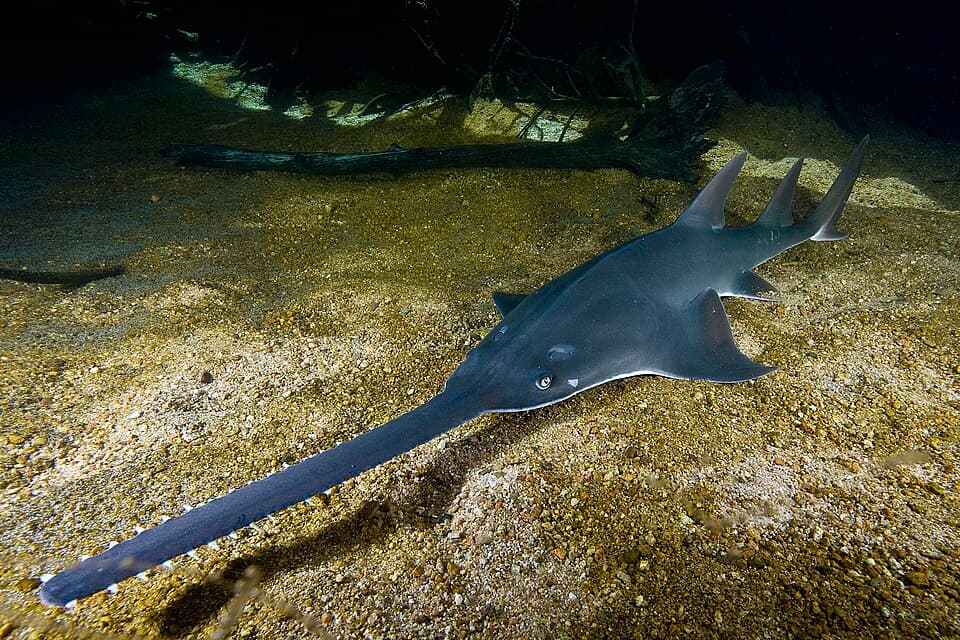
Photo: Simon Fraser University - University Communications · CC BY 2.0 · Wikimedia Commons Green SawfishPristis zijsron
Fish
Shallow inshore waters and mangrove estuaries.
Extremely vulnerable to entanglement because the rostrum snags in almost any net.
Gujarat · Tamil Nadu · Odisha · Andhra Pradesh

Photo: Superchilum · CC BY-SA 4.0 · Wikimedia Commons Hump-backed MahseerTor remadevii
FishEndemic · Cauvery basin
Fast-flowing pools and rapids of the Cauvery and its tributaries, especially around Bhavani and the Moyar.
The 'tiger of the water', a legendary angling fish. Formally described only in 2018 and assessed as Critically Endangered the same year. Threatened by introduced mahseer stocked from other basins.
Karnataka · Tamil Nadu · Kerala


Endangered
3 speciesWhale SharkRhincodon typus
Fish
Warm coastal and offshore waters. The Saurashtra coast off Gujarat is a globally important aggregation site.
The largest fish in the world, reaching 12 metres or more, and a filter feeder on plankton. Each individual carries a unique spot pattern used like a fingerprint. It became the first fish protected under Schedule I of the Wild Life (Protection) Act, in 2001, after a campaign in Gujarat.
Gujarat · Kerala · Tamil Nadu · Maharashtra · Goa · Lakshadweep · Andaman & Nicobar Islands
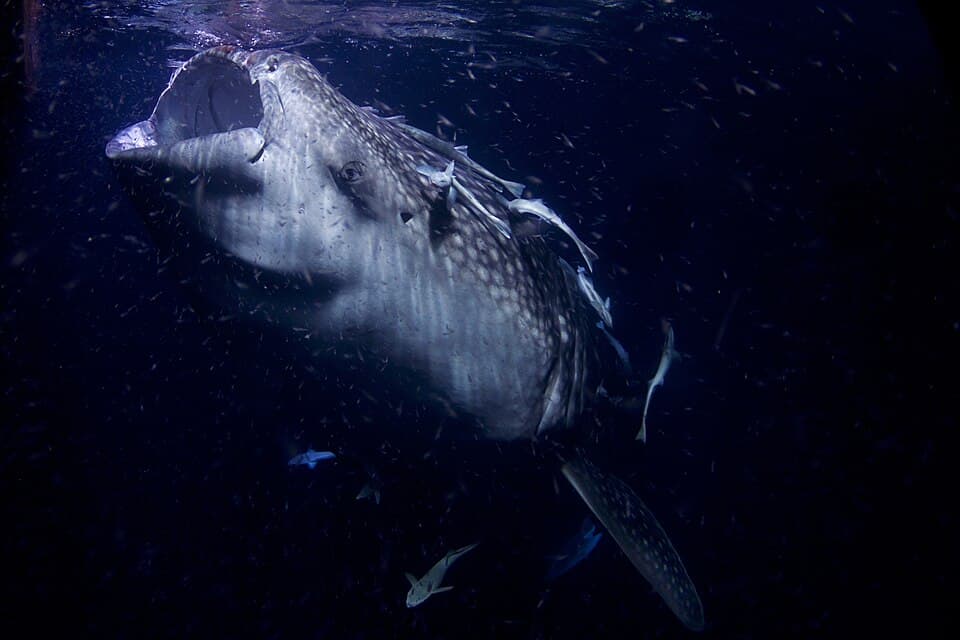
Photo: Arturo de Frias Marques · CC BY-SA 4.0 · Wikimedia Commons Golden MahseerTor putitora
Fish
Fast-flowing, cold, well-oxygenated Himalayan rivers such as the Ganga, Beas, Kosi and Ramganga.
A long-distance migratory carp that moves upstream to spawn, so barrages and dams cut its life cycle. Prized as a sport fish and an indicator of river health.
Uttarakhand · Himachal Pradesh · Jammu & Kashmir · Uttar Pradesh · Bihar · West Bengal · Assam · Arunachal Pradesh
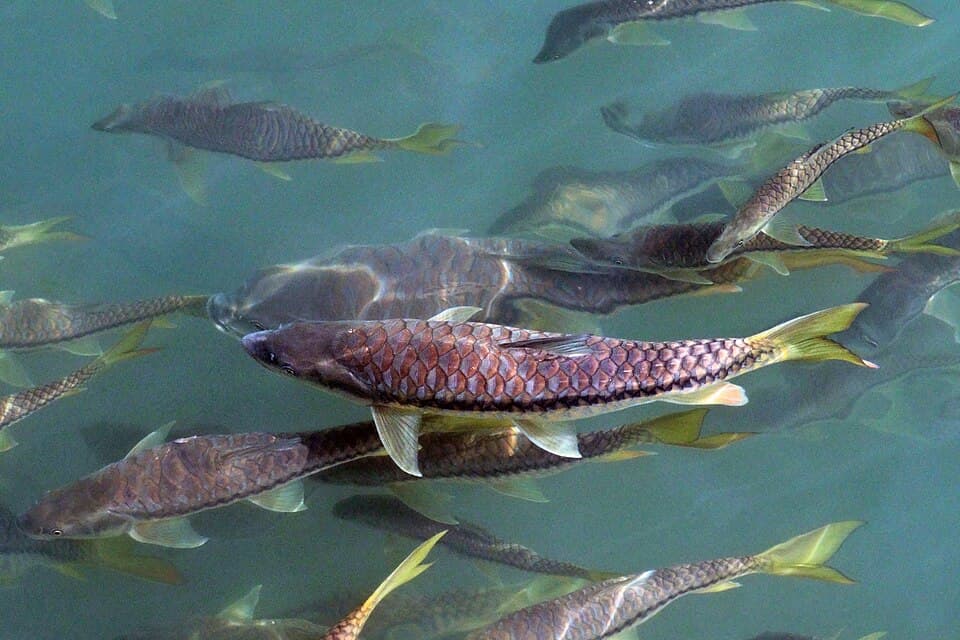
Photo: Charles J. Sharp · CC BY-SA 4.0 · Wikimedia Commons Knifetooth SawfishAnoxypristis cuspidata
Fish
Shallow coastal waters and estuaries.
Differs from the Pristis sawfishes in having a rostrum without teeth on the basal quarter.
Gujarat · Maharashtra · Tamil Nadu · Odisha · West Bengal

_Babai_River.jpg)
What the categories mean
IUCN Red List- EXExtinctNo reasonable doubt the last individual has died.
- EWExtinct in the WildSurvives only in cultivation, captivity or as a naturalised population outside its range.
- CRCritically EndangeredFacing an extremely high risk of extinction in the wild.
- ENEndangeredFacing a very high risk of extinction in the wild.
- VUVulnerableFacing a high risk of extinction in the wild.
- NTNear ThreatenedClose to qualifying as threatened, or likely to qualify soon. Not itself a threatened category.
- LCLeast ConcernAssessed, and does not qualify for any category above. Widespread and abundant species sit here.
The three that mean threatened. This page lists those and nothing else.
Outside the scale
- DDData DeficientNot enough information to assess the risk. It is a statement about the evidence, not about the species.
- NENot EvaluatedHas not yet been assessed against the criteria.
Recent status changes
12 to knowAssessments that have moved. Some of these species are no longer threatened and so are not in the list above.
Greater Adjutant
Downlisted from Endangered to Near Threatened in the 2023 Red List update, after the Hargila Army community programme in Assam raised nests in Kamrup from 28 in 2010 to more than 250. It should no longer be taught as Endangered.
Lesser Adjutant
Downlisted from Vulnerable to Near Threatened in 2023.
Painted Stork
Downlisted from Near Threatened to Least Concern in 2023.
Snow Leopard
Downlisted from Endangered to Vulnerable in 2017. Many Indian study materials still say Endangered.
Fishing Cat
Downlisted from Endangered to Vulnerable in 2016.
Asiatic Lion
The subspecies Panthera leo persica is assessed Endangered; the species Panthera leo is assessed Vulnerable. Both statements appear in print, so specify which you mean.
Himalayan Brown Bear
Often listed as Endangered or Critically Endangered in Indian material. The IUCN assesses the species Ursus arctos as Least Concern and has not assessed the Himalayan subspecies separately. It is Schedule I under the Wild Life (Protection) Act, which is a different thing from an IUCN category.
Red Sanders
Uplisted from Near Threatened to Endangered; older materials, including the handout, still say Near Threatened.
Indian Wild Ass
The species Equus hemionus is Near Threatened, not Endangered. The khur population in the Rann of Kachchh has grown steadily.
Blackbuck
Least Concern since 2017, not Near Threatened. It remains Schedule I in India.
Black-necked Crane
Downlisted from Vulnerable to Near Threatened in 2020.
Indian Leopard
Often taught as Near Threatened from older lists; the species has been Vulnerable since 2016.
What is being done
Species Recovery ProgrammeThe Government of India runs targeted recovery programmes for 22 entries covering 32 species, under the Integrated Development of Wildlife Habitats scheme. Three of them are Least Concern on the Red List and are on the national list all the same, because a programme answers to what has happened in India rather than to the species everywhere.
The Species Recovery Programme →Related current affairs
The topics that keep up with the news on this.