Ecology & Environment
Threatened Species of India
Critically Endangered, Endangered and Vulnerable species.
IUCN statuses change, so keep them updated from current affairs.
Three categories mean threatened: Critically Endangered, Endangered and Vulnerable. What each of them means, and the categories either side of them, is set out below the list.
Critically Endangered
6 speciesGuggul or Indian Bdellium TreeCommiphora wightii
Plant
Arid rocky tracts and sand dunes of the Thar and the Kachchh, and dry scrub in the Deccan.
Yields guggul, an oleo-gum resin tapped from the bark and used in Ayurveda for arthritis, obesity and lipid disorders. Destructive tapping plus very slow growth drives the decline.
Rajasthan · Gujarat · Madhya Pradesh · Maharashtra · Karnataka
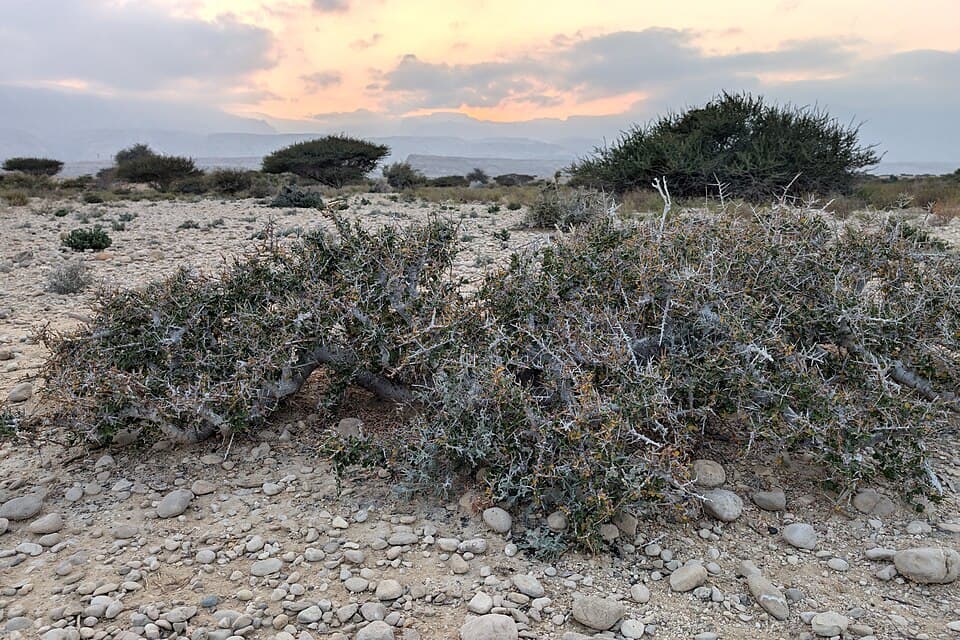
Photo: Krzysztof Ziarnek, Kenraiz · CC BY-SA 4.0 · Wikimedia Commons Eulophia obtusaEulophia obtusa
Plant
Moist grassland and sal forest edges in the Terai, notably near Dudhwa and the Pilibhit belt.
A terrestrial orchid rediscovered in India in 2008 after more than a century. Depends on specific soil fungi, which makes transplanting almost impossible.
Uttar Pradesh · West Bengal · Assam
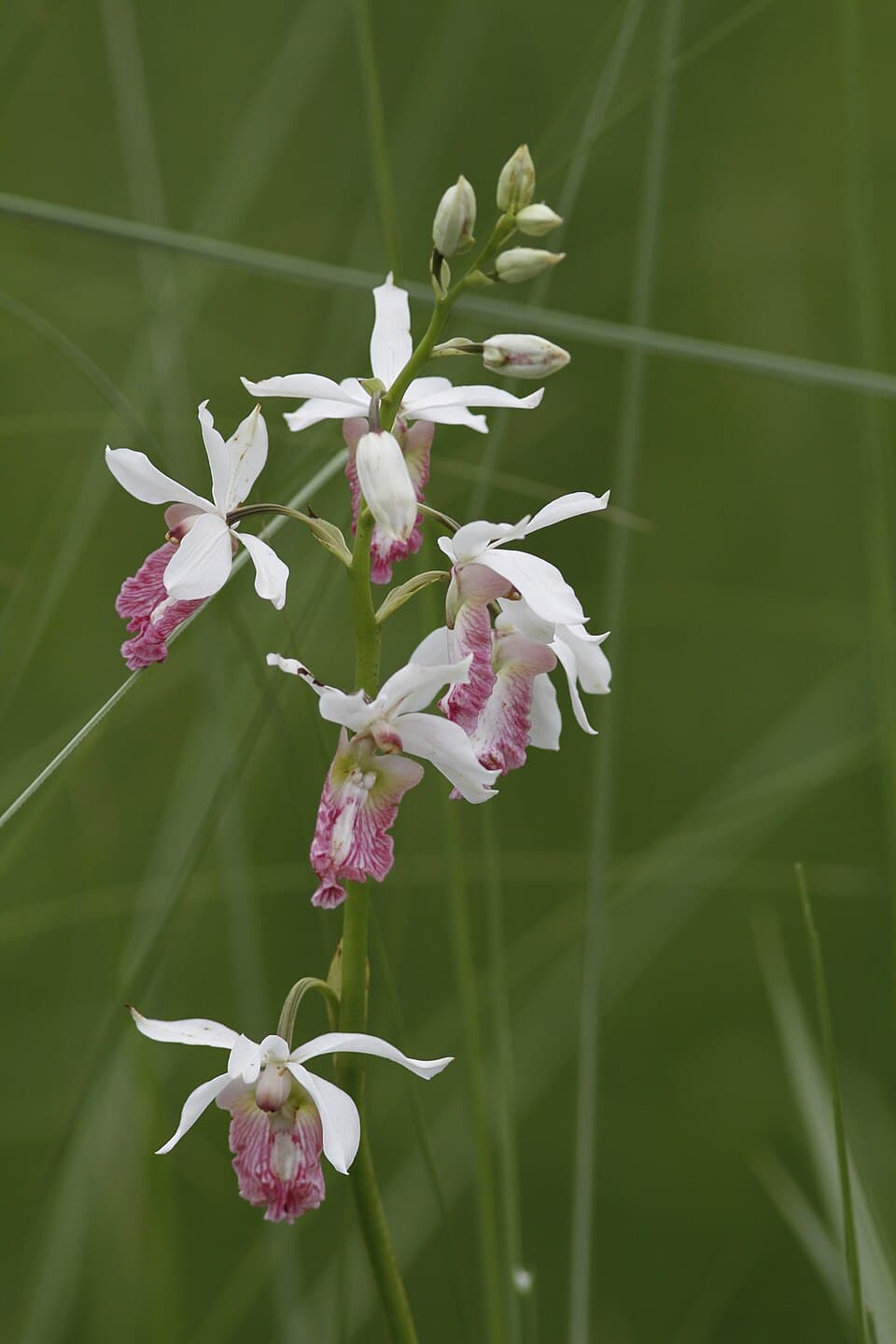
Photo: MSH Sourav · CC BY-SA 4.0 · Wikimedia Commons Pyrostria laljiiPyrostria laljii
PlantEndemic · Andaman Islands
Semi-evergreen forest of South Andaman, in the Wandoor and Jarawa reserve belt.
Described in 2019 and the first Indian record of its genus, a member of the coffee family Rubiaceae. Named after the botanist Lal Ji Singh. A slender tree with a distinctive hollow-based trunk.
Andaman & Nicobar Islands
Dipterocarpus bourdilloniiDipterocarpus bourdillonii
PlantEndemic · Western Ghats
Lowland wet evergreen forest below 800 m.
A giant emergent timber tree of the dipterocarp family. Regeneration is poor because the winged fruit needs closed canopy to germinate.
Kerala · Tamil Nadu · Karnataka
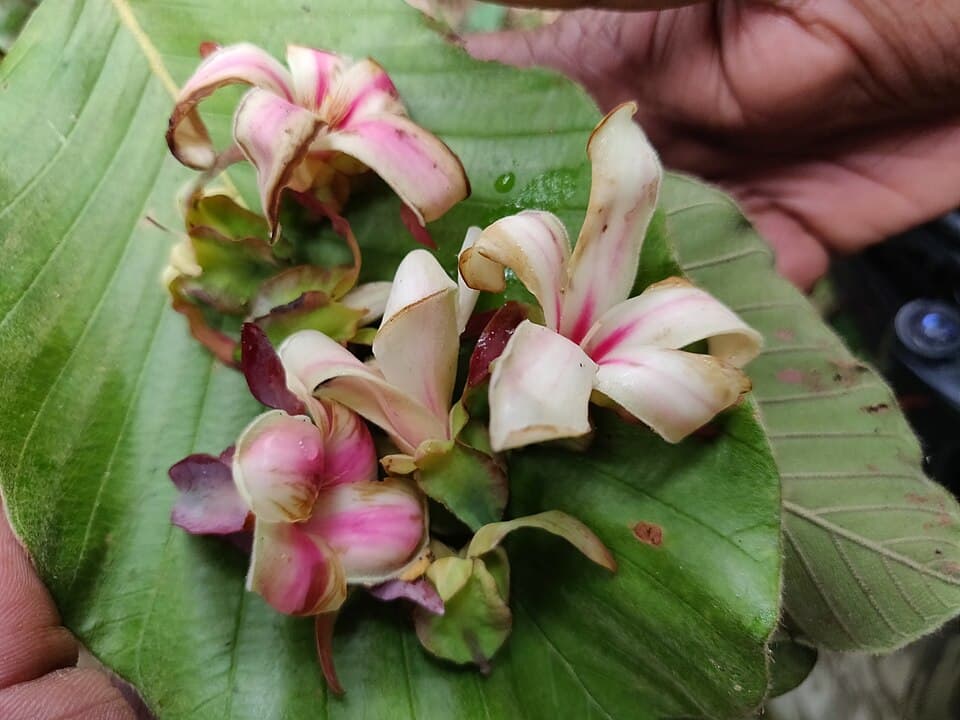
Photo: T R Shankar Raman · CC BY 4.0 · Wikimedia Commons Madhuca insignisMadhuca insignis
PlantEndemic · Western Ghats, Karnataka
Riparian evergreen forest along the Kumaradhara and Netravati rivers.
Rediscovered in 2000 after being presumed extinct for over a century. Threatened by hydroelectric projects on its river banks.
Karnataka
Syzygium travancoricumSyzygium travancoricum
PlantEndemic · Western Ghats, Kerala
Fragments of Myristica swamp forest in Travancore and the Kollam belt.
Survives largely in sacred groves. Myristica swamps are among the most threatened freshwater swamp systems in India.
Kerala
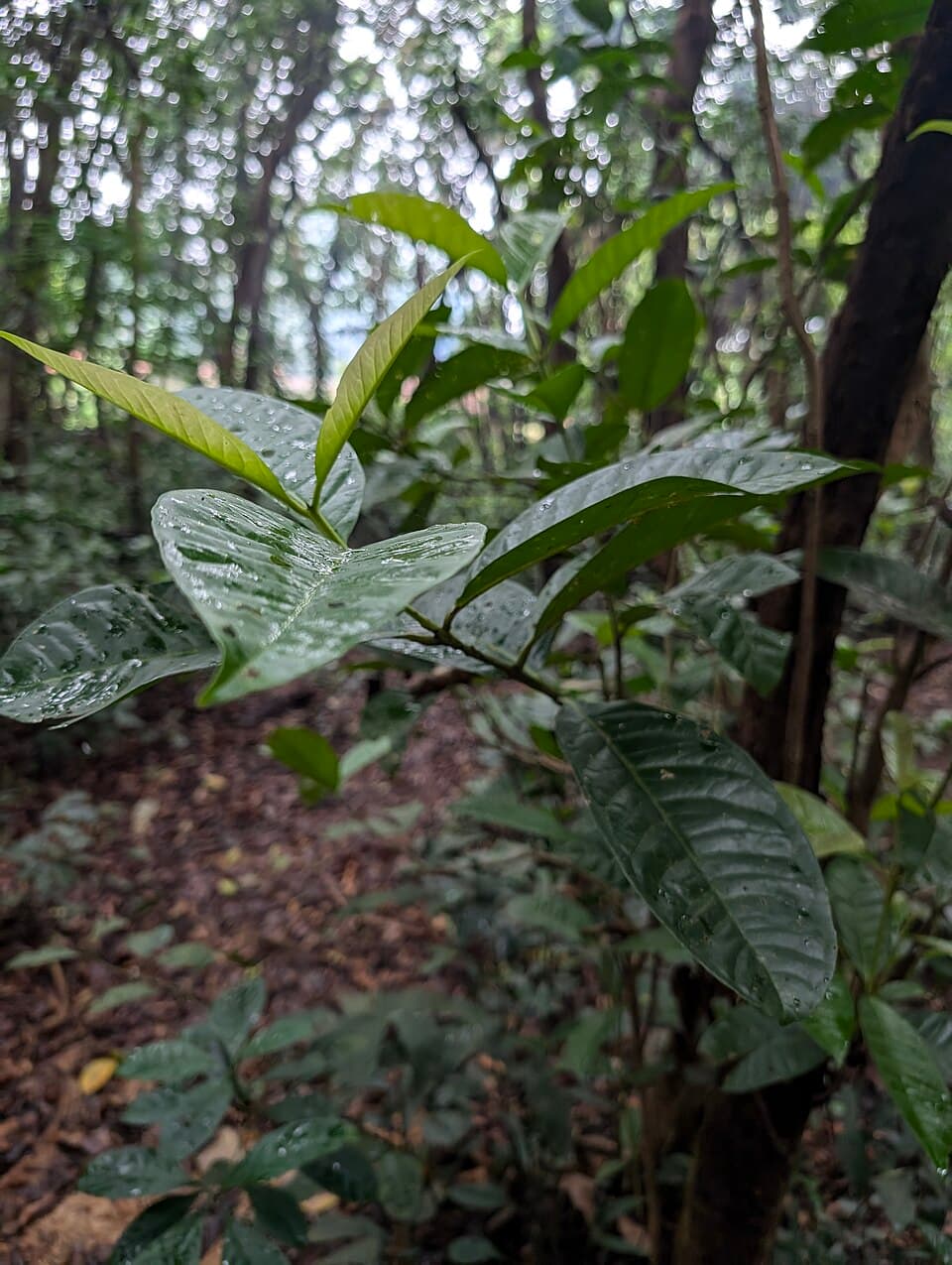
Photo: Vijayanrajapuram · CC BY-SA 4.0 · Wikimedia Commons


Endangered
5 speciesNepenthes khasiana or Khasi Pitcher PlantNepenthes khasiana
PlantEndemic · Meghalaya
Nutrient-poor, humid slopes and sandstone ledges of the Khasi and Jaintia hills.
The only pitcher plant native to India. Leaves are modified into pitchers that trap and digest insects, an adaptation to soils very poor in nitrogen. Known locally as memang-koksi, the devil's flower basket. Threatened by collection and by limestone quarrying.
Meghalaya
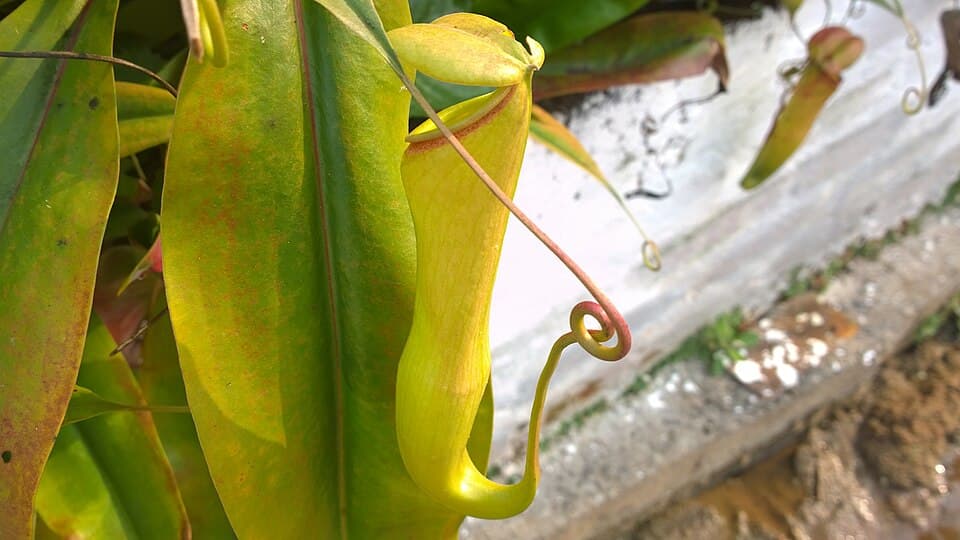
Photo: Hgm2016 · CC BY-SA 4.0 · Wikimedia Commons Globba andersoniiGlobba andersonii
PlantEndemic · Eastern Himalaya
Moist, shaded rocky slopes and stream banks in the Teesta valley, near Sikkim's border with Darjeeling.
A wild ginger known as the dancing ladies. Rediscovered in 2015 after nearly 130 years. Recognised by white flowers with a hooded orange-yellow lip and pendulous inflorescences.
Sikkim · West Bengal
SundariHeritiera fomes
Plant
The Sundarbans, which take their name from it.
Top dying disease and rising salinity are the threats.
West Bengal
Cycas beddomeiCycas beddomei
PlantEndemic · Tirumala hills
The Tirumala hills of Andhra Pradesh.
The only cycad on CITES Appendix I.
Andhra Pradesh
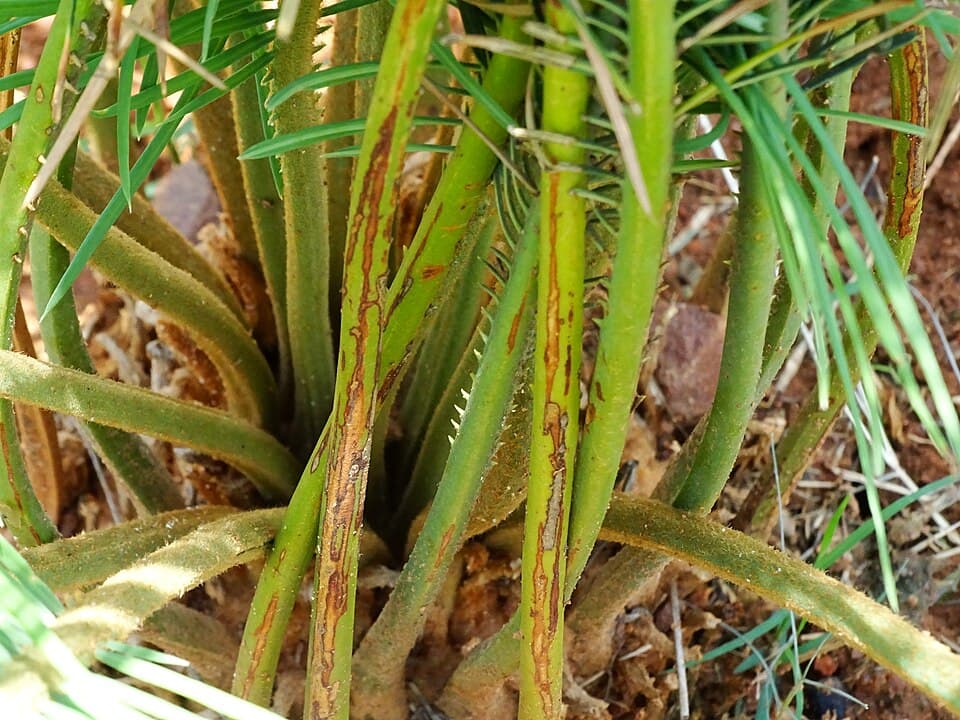
Photo: Forestowlet · CC0 · Wikimedia Commons Red SandersPterocarpus santalinus
PlantEndemic · Seshachalam and Palakonda hills, Andhra Pradesh
Dry deciduous forest on the rocky slopes of the Seshachalam and Palakonda hills of the southern Eastern Ghats.
Reassessed as Endangered in 2021, three years after it was downlisted to Near Threatened, for the poaching of its heartwood. On CITES Appendix II.
Andhra Pradesh
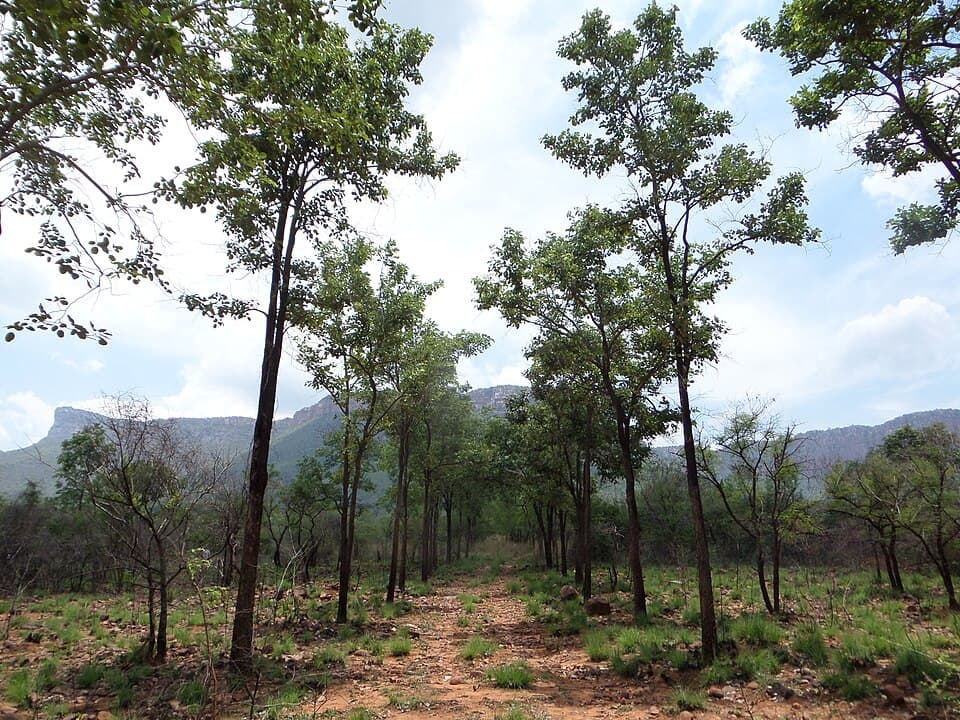
Photo: rajaraman sundaram · CC BY 3.0 · Wikimedia Commons


Vulnerable
1 speciesIndian SandalwoodSantalum album
Plant
Dry deciduous and scrub forest of the Deccan, with the classic belt in southern Karnataka and northern Tamil Nadu.
A hemi-parasite: it draws water and nutrients through haustoria attached to the roots of neighbouring host plants, so it cannot be grown in isolation. The fragrant heartwood forms only after about fifteen years. State tree of Karnataka. Smuggling and spike disease are the principal threats.
Karnataka · Tamil Nadu · Kerala · Andhra Pradesh · Telangana · Maharashtra · Madhya Pradesh
What the categories mean
IUCN Red List- EXExtinctNo reasonable doubt the last individual has died.
- EWExtinct in the WildSurvives only in cultivation, captivity or as a naturalised population outside its range.
- CRCritically EndangeredFacing an extremely high risk of extinction in the wild.
- ENEndangeredFacing a very high risk of extinction in the wild.
- VUVulnerableFacing a high risk of extinction in the wild.
- NTNear ThreatenedClose to qualifying as threatened, or likely to qualify soon. Not itself a threatened category.
- LCLeast ConcernAssessed, and does not qualify for any category above. Widespread and abundant species sit here.
The three that mean threatened. This page lists those and nothing else.
Outside the scale
- DDData DeficientNot enough information to assess the risk. It is a statement about the evidence, not about the species.
- NENot EvaluatedHas not yet been assessed against the criteria.
Recent status changes
12 to knowAssessments that have moved. Some of these species are no longer threatened and so are not in the list above.
Greater Adjutant
Downlisted from Endangered to Near Threatened in the 2023 Red List update, after the Hargila Army community programme in Assam raised nests in Kamrup from 28 in 2010 to more than 250. It should no longer be taught as Endangered.
Lesser Adjutant
Downlisted from Vulnerable to Near Threatened in 2023.
Painted Stork
Downlisted from Near Threatened to Least Concern in 2023.
Snow Leopard
Downlisted from Endangered to Vulnerable in 2017. Many Indian study materials still say Endangered.
Fishing Cat
Downlisted from Endangered to Vulnerable in 2016.
Asiatic Lion
The subspecies Panthera leo persica is assessed Endangered; the species Panthera leo is assessed Vulnerable. Both statements appear in print, so specify which you mean.
Himalayan Brown Bear
Often listed as Endangered or Critically Endangered in Indian material. The IUCN assesses the species Ursus arctos as Least Concern and has not assessed the Himalayan subspecies separately. It is Schedule I under the Wild Life (Protection) Act, which is a different thing from an IUCN category.
Red Sanders
Uplisted from Near Threatened to Endangered; older materials, including the handout, still say Near Threatened.
Indian Wild Ass
The species Equus hemionus is Near Threatened, not Endangered. The khur population in the Rann of Kachchh has grown steadily.
Blackbuck
Least Concern since 2017, not Near Threatened. It remains Schedule I in India.
Black-necked Crane
Downlisted from Vulnerable to Near Threatened in 2020.
Indian Leopard
Often taught as Near Threatened from older lists; the species has been Vulnerable since 2016.
What is being done
Species Recovery ProgrammeThe Government of India runs targeted recovery programmes for 22 entries covering 32 species, under the Integrated Development of Wildlife Habitats scheme. Three of them are Least Concern on the Red List and are on the national list all the same, because a programme answers to what has happened in India rather than to the species everywhere.
The Species Recovery Programme →Related current affairs
The topics that keep up with the news on this.